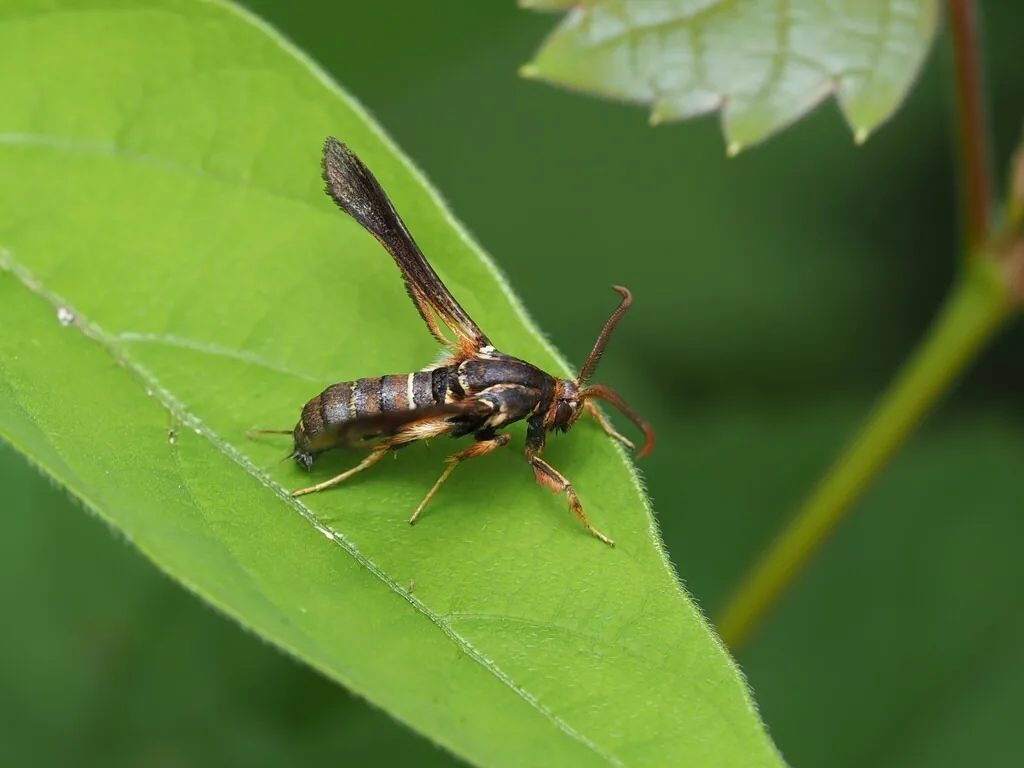
How to identify it
Look-alikes
| Look-alike | How to tell them apart |
|---|---|
| Paper wasps | The moth resembles some paper wasps, and males even fly like wasps.[1] |
Where it lives
UK Extension calls it potentially the most destructive insect attacking grapes in Kentucky.[1]
Biology and life cycle
Moths fly from July through early August; females lay about 350 eggs on soil, leaves and weeds.[1]
Larvae spend about 22 months feeding in roots, completing the cycle in two years.[1]
Damage and signs
- Vines show poor growth and fruit set and can die; several borers can girdle the whole root system.[1]
Health risk
It feeds on plants; UK Extension mentions no risk to people.[1]
Control
Prevention
In midsummer, check within 18 inches of vine bases for empty pupal skins; act if more than 5 percent of vines have them.[1]
Pesticides
Treat only if necessary, timing a coarse spray around the vine base to when adults begin emerging.[1]
Common questions
Sources
- University of Kentucky Entomology (ENTFACT), “Grape Root Borer (ENTFACT-220).” entomology.mgcafe.uky.edu/ef220 (accessed 2026-10-06)
- iNaturalist, “Vitacea polistiformis taxon page (order and family).” www.inaturalist.org/taxa/178669 (accessed 2026-10-06)