🐝 Honey Bees β€” Identification & Responsible Removal

Apis mellifera Β· Hymenoptera: Apidae

Honey bees are not pests in the conventional sense. They are domesticated and wild pollinators in serious population decline, and most pest control professionals will not exterminate them. If you have honey bees on your property, your first call is a beekeeper, not an exterminator.

BeeHymenopteraApidaePollinatorRelocationConservation
🐝
Risk Level
Low (Beneficial Pollinator)
πŸ”¬
PestControlBasics Editorial Team
Reviewed by Derek Giordano Β· Updated 2026

πŸ” Identification

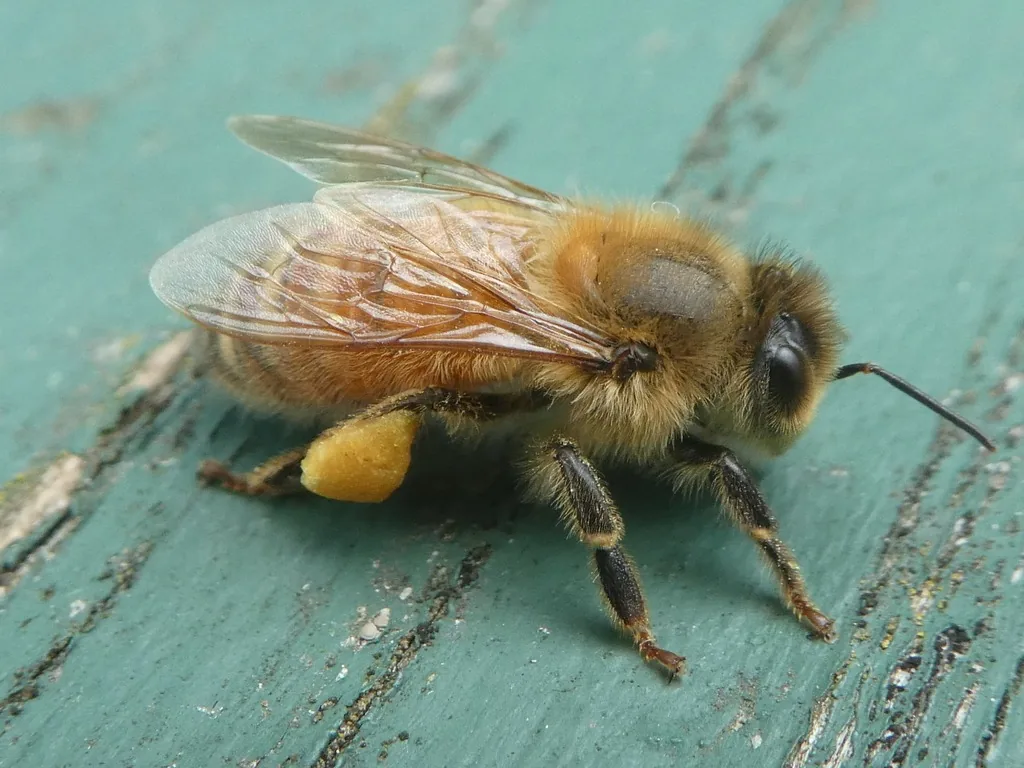
Honey bees (Apis mellifera) are golden-brown to amber with distinct dark abdominal banding, fuzzy thorax, and a body length of 12-15mm β€” slightly smaller and noticeably fuzzier than typical wasps. They lack the bold yellow-and-black warning pattern that yellow jackets and paper wasps display. Workers carry visible pollen baskets (corbiculae) on their hind legs when returning to the hive; no wasp does this.

Distinguishing honey bees from other bees is the most consequential identification step on this page, because the appropriate response differs sharply by species. Bumble bees are larger, rounder, and more uniformly fuzzy, with bands of yellow, orange, or even red. Carpenter bees look superficially like bumble bees but have a shiny, hairless black abdomen and bore round holes into wood. Mason bees and leafcutter bees are solitary, smaller, and frequently mistaken for flies. None of these other bees produce honey or live in large colonies, and none warrant the same removal approach.

If you're seeing a tight cluster of thousands of bees on a tree branch, fence post, or building exterior, that's a swarm: a queen and a portion of her colony scouting for a new home. Swarms typically dissipate on their own within 24-72 hours. They are at their least defensive state during a swarm β€” workers are gorged on honey from the parent hive and have no brood or stores to protect. A nearly stationary swarm is the easiest situation a beekeeper can collect.

🧬 Biology & Behavior

Honey bees are eusocial, with colonies of 20,000 to 80,000 workers, a single queen, and a few hundred drones during peak season. Colonies are perennial β€” the queen and a core of workers overwinter on stored honey, then expand in spring and reproduce by swarming in late spring through midsummer. A single colony can produce two or three swarms in a good year, which is the species' primary mechanism for spread.

Inside a structure (wall void, soffit cavity, chimney), an established colony builds wax comb downward from the highest point and stores honey, pollen, and brood within it. After even one season, a wall-void colony will contain 20-40 pounds of honey and comb. This is critical to understand because chemical extermination of an in-wall colony without comb removal causes a much worse secondary problem β€” the comb melts in summer heat, honey leaks through drywall, and the rotting brood and abandoned colony attracts wax moths, hive beetles, rodents, and other secondary pests for months or years.

Honey bees are defensive of the hive but not aggressive away from it. Foragers visiting flowers in a garden almost never sting unless physically pressed or stepped on. Defensiveness rises sharply within roughly 10 feet of the hive entrance, particularly during nectar dearth (mid to late summer), and is dramatically higher in Africanized populations (A. m. scutellata hybrids) established in parts of the southwestern US.

⚠️ Health & Property Risk

Honey bee stings are painful but medically routine for most people. The risk profile inverts sharply for two groups: people with a documented bee venom allergy (anaphylaxis risk requires epinephrine auto-injector access and emergency response within minutes) and people in close proximity to a defensive colony, particularly Africanized colonies in the southwestern US that respond to disturbance with dozens or hundreds of stings rather than one or two.

Structural risk from an in-wall colony is the most underestimated issue. Even a successful chemical extermination leaves 20+ pounds of comb, brood, and honey inside the wall. Within a season this typically produces visible honey staining on interior drywall, structural odor, and a secondary infestation of wax moths and small hive beetles. The cleanup cost (drywall removal, comb extraction, deodorizing, secondary pest treatment) routinely exceeds the original beekeeper-led live-removal cost by 3-5x. This is why responsible pest control operators decline to spray established honey bee colonies in walls and refer to a beekeeper for cut-out removal instead.

πŸ”§ What to Do (and Not Do)

Swarm on a branch or visible exterior surface: Do not spray. Call a local beekeeper or your state beekeepers' association swarm hotline β€” most maintain a list of beekeepers willing to collect swarms for free or for a nominal fee. Most swarms relocate within 1-3 days on their own if left undisturbed, but capture by a beekeeper is preferable because it prevents the swarm from moving into a wall void.

Established colony in a wall void, soffit, chimney, or roof: This is a cut-out, a specialized job that combines beekeeping with light construction. A live cut-out removes the comb, brood, queen, and workers, and seals the cavity. Costs typically range from $300 to $900+ depending on access difficulty. Some beekeepers offer this service; some pest control companies have a beekeeper on staff or partner with one. Do not have an exterminator spray the colony and seal the entrance β€” this is the root cause of the worst structural-pest situations most cleanup specialists ever see.

A few bees visiting flowers or a water source: Do nothing. Foraging bees are a sign of a healthy yard. If you have a pollinator-friendly garden and bees are present, you are doing something right. If a single bee enters your house, open a window β€” bees orient strongly toward light and leave on their own within a few minutes.

πŸ‘· When to Call a Pro

Call a beekeeper for swarms and accessible colonies (in trees, exposed eaves, freestanding sheds, etc.). Call a cut-out specialist or beekeeper-licensed pest control operator for in-wall, in-soffit, or in-chimney colonies. Call a conventional pest control company only as a last resort, only when (a) the colony is documented Africanized and (b) the structural risk of leaving the comb in place is being separately managed. Africanized colonies in established range (Arizona, Nevada, southern California, southern Texas, southern New Mexico, parts of Florida) do warrant a different threshold because of the disproportionate sting risk.

❓ FAQ

Should I just spray a honey bee swarm with wasp killer?
No. A swarm is a temporary cluster of bees scouting for a new home; left alone, it typically relocates within 1-3 days. Spraying a swarm with pyrethroid wasp killer is both ecologically destructive (bees are in significant population decline) and often unsuccessful at the scale of a 10,000-bee cluster β€” the outer layer of bees absorbs the spray and the inner mass remains alive. The right action is to call a local beekeeper or your state beekeepers' association swarm hotline β€” most will collect the swarm for free or a small fee, often the same day.
There's a colony inside my wall. Why won't a pest control company just spray it?
Most reputable pest control operators decline to spray established in-wall honey bee colonies because killing the colony without removing the 20+ pounds of comb, brood, and honey creates a much worse problem within months. The abandoned comb melts in summer heat, honey leaks through drywall, and the rotting hive attracts wax moths, hive beetles, rodents, and ants. The right approach is a live cut-out by a beekeeper or beekeeper-licensed cut-out specialist, which removes the bees and the comb and seals the cavity. Cut-outs cost $300-$900+ but prevent the much larger cleanup expense that follows extermination, which routinely runs into the thousands once drywall replacement and secondary pest treatment are accounted for.
Are honey bees protected by law?
Honey bees are not federally protected as endangered, but state-level regulations vary. Several states require pest control operators to attempt non-lethal removal before extermination, particularly for swarms and accessible colonies. Federally, the pesticide label law (FIFRA) requires anyone using a pesticide to follow label directions, and most insecticide labels prohibit application to flowering plants in ways that would expose bees during foraging. The practical effect is that mass-spraying a swarm of honey bees is often a label violation even where it isn't explicitly illegal, and homeowners who do it themselves can be subject to state penalties in addition to whatever ecological damage results.
How do I tell honey bees from yellow jackets or carpenter bees?
Honey bees are fuzzy, golden-brown to amber with darker abdominal banding, and carry visible pollen on their hind legs when returning to the nest. Yellow jackets are smooth, sharply yellow-and-black, with a noticeably narrower waist, and live in paper nests (in walls, underground, or hanging). Carpenter bees look like large bumble bees but have a shiny, hairless black abdomen and bore round 1/2-inch holes into wood. The pollen baskets on the legs are the single most reliable diagnostic feature for honey bees in flight, and the body fuzziness combined with the lack of a wasp-style narrow waist separates all bees from all wasps reliably.
If I do nothing, will the colony in my wall die out?
No, not on its own. Honey bee colonies are perennial in temperate climates β€” the queen and a core of workers overwinter on stored honey and expand again the following spring. A wall-void colony that's tolerated for one season typically grows and swarms the following spring, often producing daughter colonies in nearby structures. The colony will also continue producing comb and honey, increasing the eventual structural cleanup cost. The best long-term outcome is removal by cut-out as soon as the colony is identified, before swarms have spread the population to other parts of the property or the neighborhood.
DG
Derek Giordano
Certified Pest Control Operator Β· Former Business Owner
Derek ran his own pest control company in Florida for several years, servicing thousands of regular customers. All content is based on hands-on field experience and current EPA & university extension guidelines.
πŸ“š Sources: USDA Honey Bee Health Β· EPA Pollinator Protection Β· Penn State Extension β€” Honey Bees
Published: May 13, 2026 Β· Updated: May 13, 2026

Why pest control operators refer honey bee jobs out

The conventional understanding that pest control companies will handle anything that flies and stings has a clear exception for honey bees, and the exception isn't sentimentality. It's three concrete operational reasons that have hardened into industry practice over the past two decades. The first is liability exposure: many state regulators investigate complaints about honey bee extermination, particularly during the spring swarm season, and a documented pattern of refusing to attempt non-lethal options can support a license action. The second is the structural-pest tail. An in-wall extermination produces predictable secondary infestations of wax moths, small hive beetles, ants, and rodents drawn to the abandoned comb and honey; companies that take these jobs typically end up doing free follow-up work for the same client within six to twelve months, and the math works against them. The third is reputational: as public concern about pollinator decline has grown, customer reviews and social media react badly to companies seen exterminating bees. The net result across the industry is a strong preference to refer honey bee work to beekeepers and to keep a list of cut-out specialists for the in-wall jobs that require licensed structural work alongside live removal. Customers who push for extermination anyway often find that pricing reflects the risk: a hostile-removal quote on an established colony commonly runs $1,500-$3,000, comparable to or higher than a live cut-out from a beekeeper who specializes in this work.

What a live cut-out actually involves

The term cut-out describes a removal that opens the structure containing the colony, extracts the bees and comb intact, and seals the cavity afterward. A typical residential cut-out begins with a thermal-imaging or stethoscope-assisted survey to map the colony's exact extent inside the wall, which is rarely confined to the area where bees are entering and exiting. The technician then opens the appropriate section of wall β€” usually exterior siding, but interior drywall is sometimes preferred for cleanup reasons β€” using hand tools that minimize vibration, because aggressive vibration triggers defensive response. Comb is cut out section by section and either tied into frames for transfer to a Langstroth hive or saved for honey extraction. The queen is located and confined; the remaining workers are vacuumed gently into a bee-rated transport box (a beevac, which uses controlled low suction to avoid injury) and reunited with the queen. The cavity is then cleaned of residual honey, treated with a deterrent to discourage future colonization, and sealed mechanically. The whole job takes four to eight hours for an accessible single-story colony and a full day or more for soffits, chimneys, or multi-story access. The bees are typically rehomed by the beekeeper rather than disposed of, which is both the ecological case for cut-outs and the reason most beekeepers will do them at lower cost than the equivalent extermination β€” they recover an entire honey-producing colony in the process.

Africanized bees: where the threshold is different

The default of non-lethal removal applies to standard European honey bee subspecies, which represent the vast majority of US colonies. Africanized honey bees (Apis mellifera scutellata hybrids) are present in established populations across Arizona, Nevada, southern California, southern Texas, southern New Mexico, and parts of Florida, with intermittent reports further north. Behaviorally, Africanized colonies respond to disturbance with substantially larger numbers of defensive workers, pursue intruders further (often 100+ yards), and remain agitated longer (sometimes hours). Stings per incident commonly run in the dozens or hundreds rather than the one or two typical of European colonies, and there have been multiple fatalities across the established range. Identification by appearance alone is unreliable β€” Africanized and European workers are visually similar β€” and behavioral observation requires getting close enough to provoke a defensive response, which is precisely what you want to avoid. The practical implication for homeowners in the affected range is that a colony or swarm should be evaluated by a beekeeper or extension agent familiar with regional populations before any decision about live removal vs. extermination. In areas with high Africanized prevalence, the operational default sometimes inverts: extermination becomes the safer first option, and live removal is reserved for confirmed European colonies. This is one of the few situations where conventional residential pest control practice and conservation-oriented beekeeping practice arrive at the same conclusion.