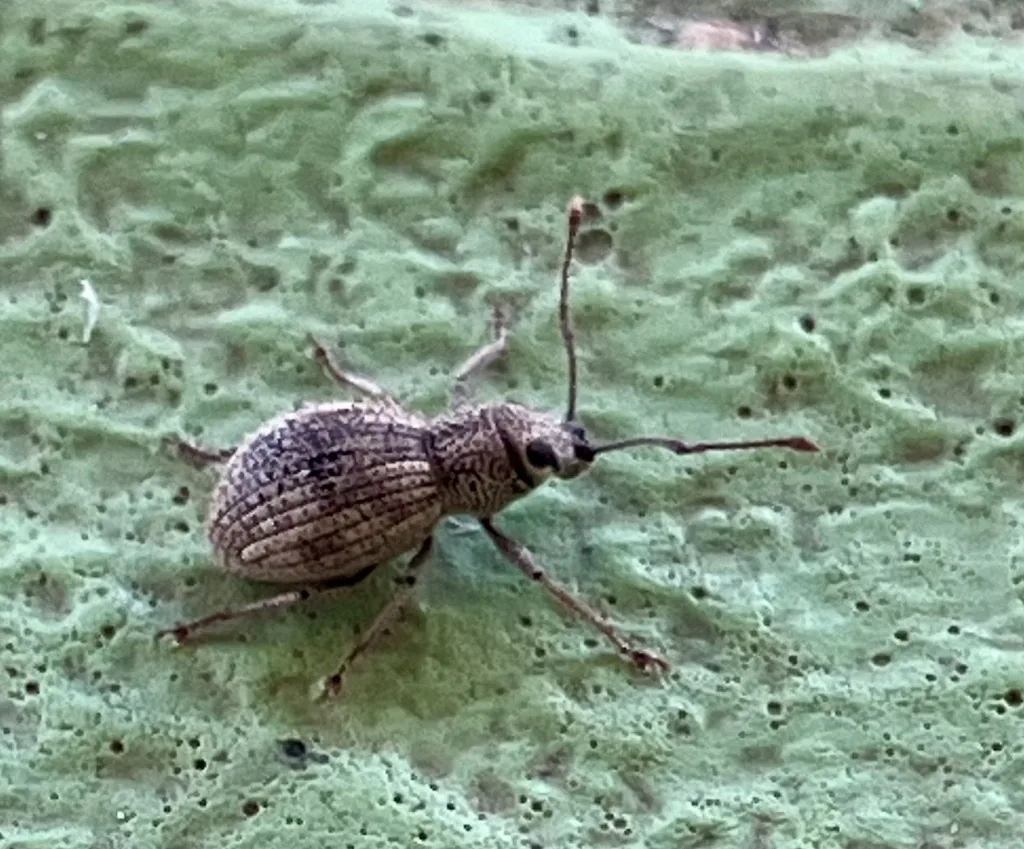
How to identify it
Look-alikes
| Look-alike | How to tell them apart |
|---|---|
| Strawberry root weevil | A close relative that is also a common accidental invader of homes.[1] |
Where it lives
Minnesota Extension finds it mainly in southern Minnesota, and Iowa State calls it a common accidental invader in Iowa.[1][2]
Biology and life cycle
Larvae live in the soil and feed on small roots of aster, clover and turfgrass.[1][2]
Adults chew leaves of various annuals and perennials and are found in homes in July and August.[2]
Damage and signs
- Root feeding by larvae causes no apparent damage, and controlling them in the soil is neither practical nor necessary.[1]
Health risk
None; they can't bite or sting and are only a nuisance.[1][2]
Control
Keep them out
Seal cracks and gaps and make sure screens and doors fit snugly to keep adults out.[1][2]
Traps and physical control
Vacuum or sweep up weevils indoors; household aerosol insecticides are not very effective, and pesticides indoors aren't necessary.[1][2]
Pesticides
When numbers are very high, a residual insecticide such as permethrin or bifenthrin around the foundation may help somewhat, though products sold to the public are not very effective against weevils.[1][2]
Common questions
- What are the small gray beetles with snouts in my house?
- In midsummer they are often imported longhorned weevils or strawberry root weevils wandering in from outside.[1][2]
- Are these weevils harmful?
- No. They don't damage the house or furnishings and can't bite or sting.[1]
- Will they come back next year?
- Numbers vary from year to year; a bad year doesn't mean another will follow.[2]
Sources
- Iowa State University Extension and Outreach (Yard and Garden), “Imported Longhorned Weevil.” yardandgarden.extension.iastate.edu/encyclopedia/imported-longhorned-weevil (accessed 2026-10-15)
- University of Minnesota Extension, “Home-invading weevils.” extension.umn.edu/garden-and-home/home-maintenance/household-insects/home-invading-weevils (accessed 2026-10-15)
- iNaturalist, “Calomycterus setarius taxon page (order and family).” www.inaturalist.org/taxa/215778 (accessed 2026-10-06)