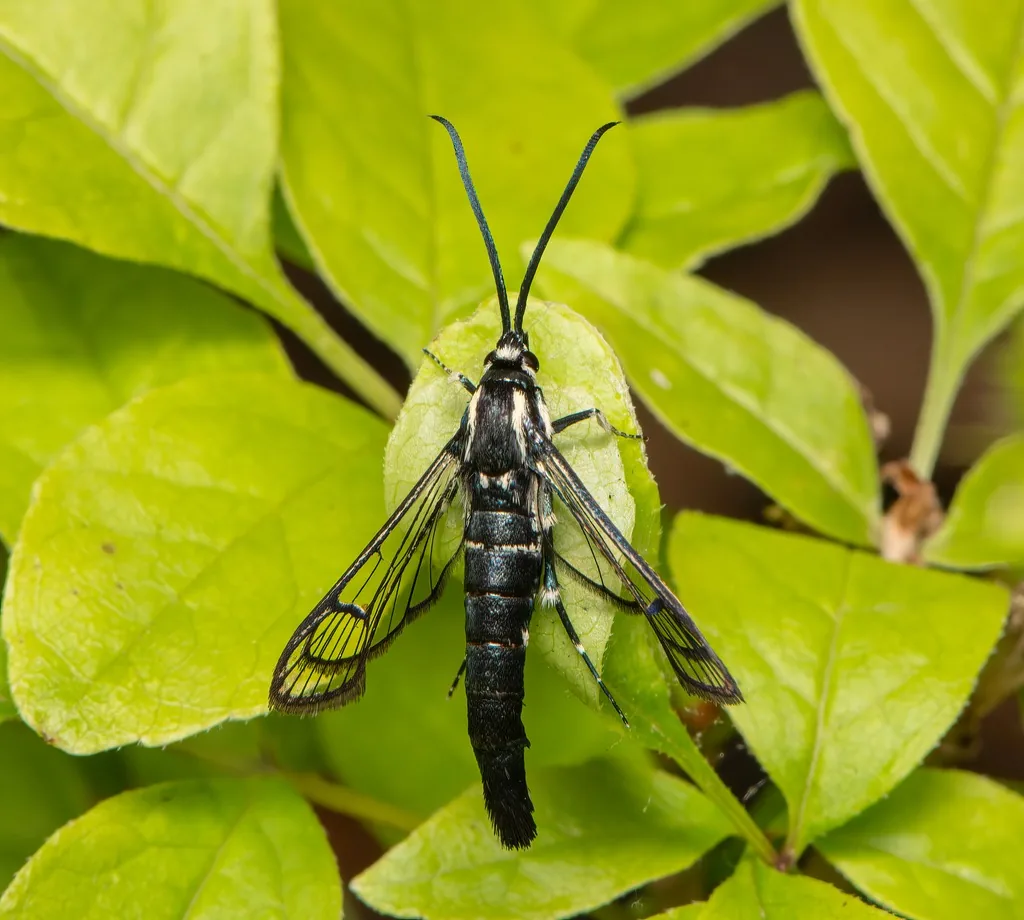
How to identify it
Look-alikes
| Look-alike | How to tell them apart |
|---|---|
| Peachtree borer | The peachtree borer hits young trees at or below the soil line; the lesser borer attacks older trees higher up.[1] |
Where it lives
It's a native North American pest of peach, cherry, plum, nectarine and apricot.[1]
Biology and life cycle
Moths fly by day, most actively from 10 a.m. to 2 p.m., in two generations a year.[1]
Females lay about 400 eggs near wounds, and larvae enter through cracks from winter injury, pruning scars or machinery.[1]
Damage and signs
- Bark peels from damaged areas, inviting other pests and diseases, and branches can be girdled and die.[1]
Health risk
It feeds on trees; UK Extension mentions no risk to people.[1]
Control
Prevention
Prevention is key: once larvae are under the bark, chemical control is usually ineffective.[1]
Pesticides
Sprays are timed to egg hatch, 7 to 14 days after pheromone traps first catch moths.[1]
Common questions
Sources
- University of Kentucky Entomology (ENTFACT), “Lesser Peachtree Borer (ENTFACT-213).” entomology.mgcafe.uky.edu/ef213 (accessed 2026-10-06)
- iNaturalist, “Synanthedon pictipes taxon page (order and family).” www.inaturalist.org/taxa/232121 (accessed 2026-10-06)