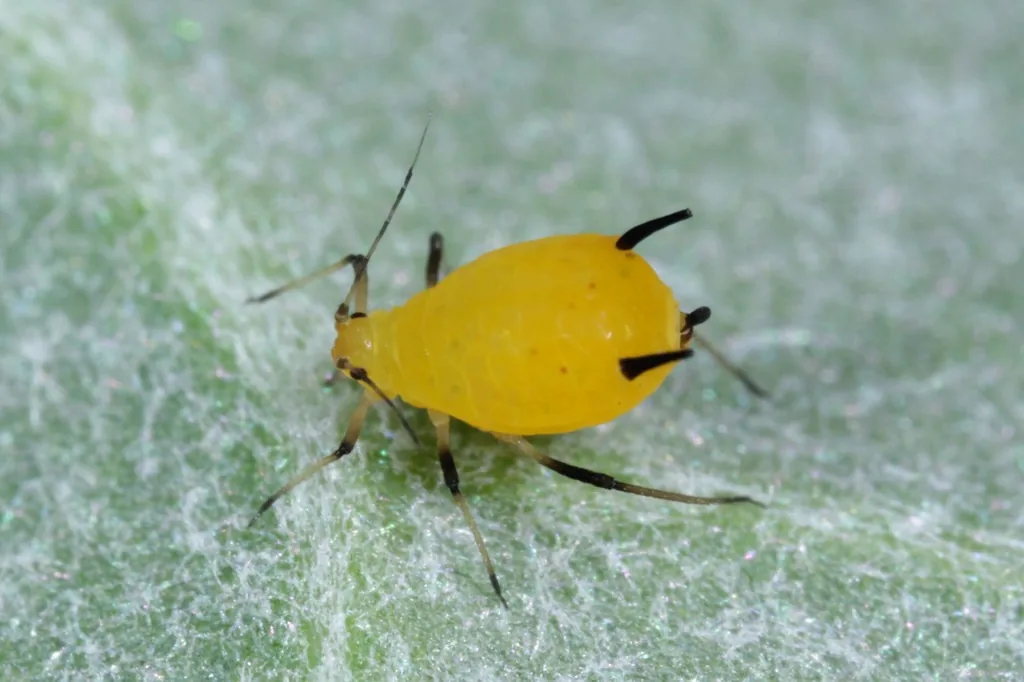
How to identify it
Look-alikes
| Look-alike | How to tell them apart |
|---|---|
| Other aphids | The bright yellow body with black appendages is distinctive.[1] |
Where it lives
It's found in tropical to warm temperate regions worldwide and probably originated in the Mediterranean.[1]
Biology and life cycle
Nymphs feed in colonies on shoot tips that can grow quite large, passing through five instars.[1]
Damage and signs
- Colonies feed on tender shoots of oleander and related plants such as milkweed.[1]
Health risk
It feeds on plants; UF/IFAS mentions no risk to people.[1]
Control
Prevention
Reduce watering, pruning and fertilizing to limit tender shoots.[1]
Traps and physical control
On small milkweeds grown for monarchs, prune out infested shoots.[1]
Common questions
Sources
- University of Florida IFAS Extension (Featured Creatures), “Oleander Aphid, Aphis nerii (EENY-247).” edis.ifas.ufl.edu/publication/IN520 (accessed 2026-10-06)
- iNaturalist, “Aphis nerii taxon page (order and family).” www.inaturalist.org/taxa/71154 (accessed 2026-10-06)