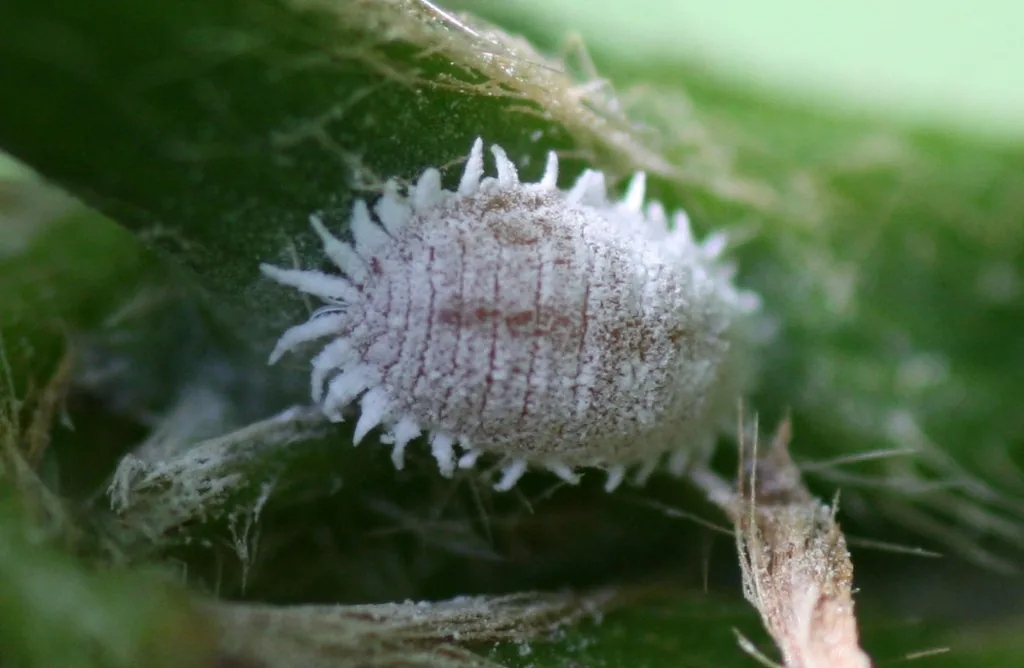
How to identify it
Look-alikes
| Look-alike | How to tell them apart |
|---|---|
| Other mealybugs | Mealybugs are most active in warm, dry weather.[1] |
Where it lives
UF/IFAS profiles it as a pest in Florida.[1]
Biology and life cycle
It has been recorded on more than 55 host plants, including papaya, hibiscus, avocado, citrus, cotton, tomato, eggplant, peppers and beans.[1]
Damage and signs
- Feeding injects a toxin that causes yellowing, stunting, leaf deformation and early leaf and fruit drop.[1]
Health risk
It feeds on plants; UF/IFAS mentions no risk to people.[1]
Control
Pesticides
General mealybug insecticides exist, but none are registered specifically for papaya mealybug; follow labels for your plant.[1]
Common questions
Sources
- University of Florida IFAS Extension (Featured Creatures), “Papaya Mealybug, Paracoccus marginatus (EENY-302).” edis.ifas.ufl.edu/publication/IN579 (accessed 2026-10-06)
- iNaturalist, “Paracoccus marginatus taxon page (order and family).” www.inaturalist.org/taxa/922656 (accessed 2026-10-06)