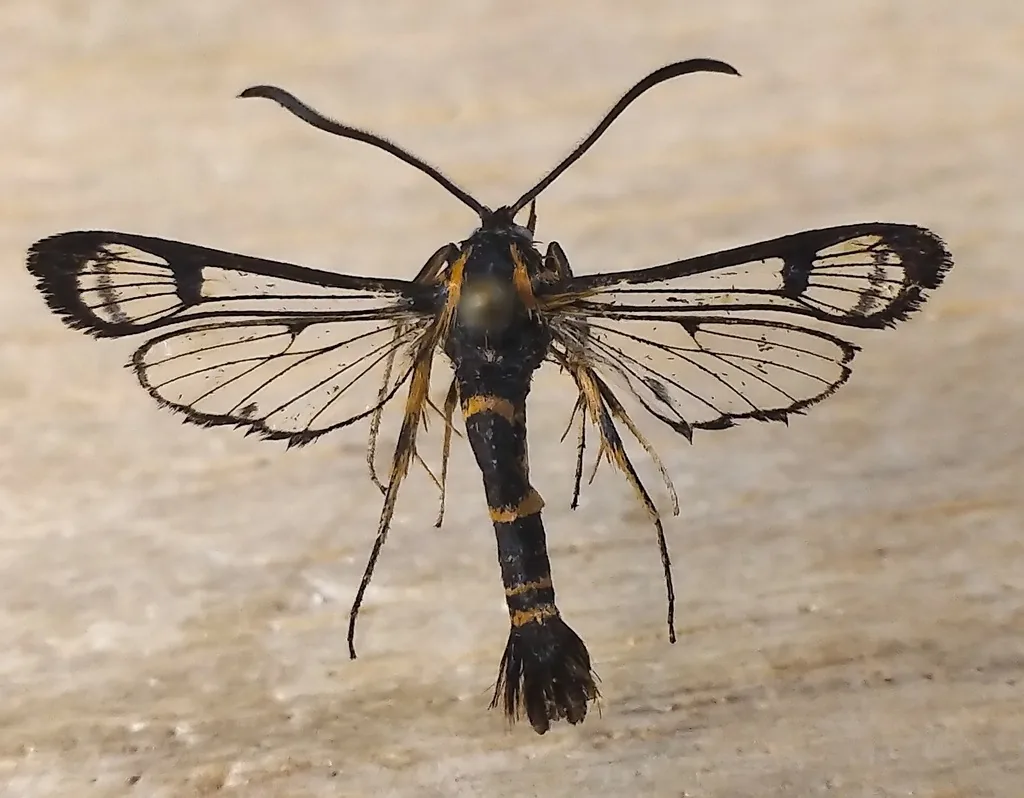
How to identify it
Look-alikes
| Look-alike | How to tell them apart |
|---|---|
| Bark beetle pitch tubes | Bark beetle pitch tubes are usually under 1/2 inch with a round hole near the center, much smaller than pitch moth masses.[1] |
Where it lives
The sequoia pitch moth ranges from California to British Columbia, mostly on Monterey pine in Northern California coastal cities; the Douglas-fir pitch moth ranges from Northern California to Alaska.[1]
Biology and life cycle
Egg-laying females prefer bark near pruning wounds and other injuries, and often reinfest old masses.[1]
Damage and signs
- Larvae do little harm to cambium or wood; they rarely girdle or kill trees but may kill or break limbs on young trees.[1]
Health risk
They feed on conifers; UC IPM mentions no risk to people.[1]
Control
Prevention
Protect trees from injury and avoid unnecessary pruning, since wounds attract egg-laying moths.[1]
Monterey, Aleppo, Bishop, Japanese black, ponderosa and shore pines are most susceptible; Canary Island and Italian stone pines least.[1]
Common questions
Sources
- University of California Statewide IPM Program, “Pest Notes: Pitch Moths (Publication 7479).” ipm.ucanr.edu/PMG/PESTNOTES/pn7479.html (accessed 2026-10-06)
- iNaturalist, “Synanthedon novaroensis taxon page (order and family).” www.inaturalist.org/taxa/232120 (accessed 2026-10-06)