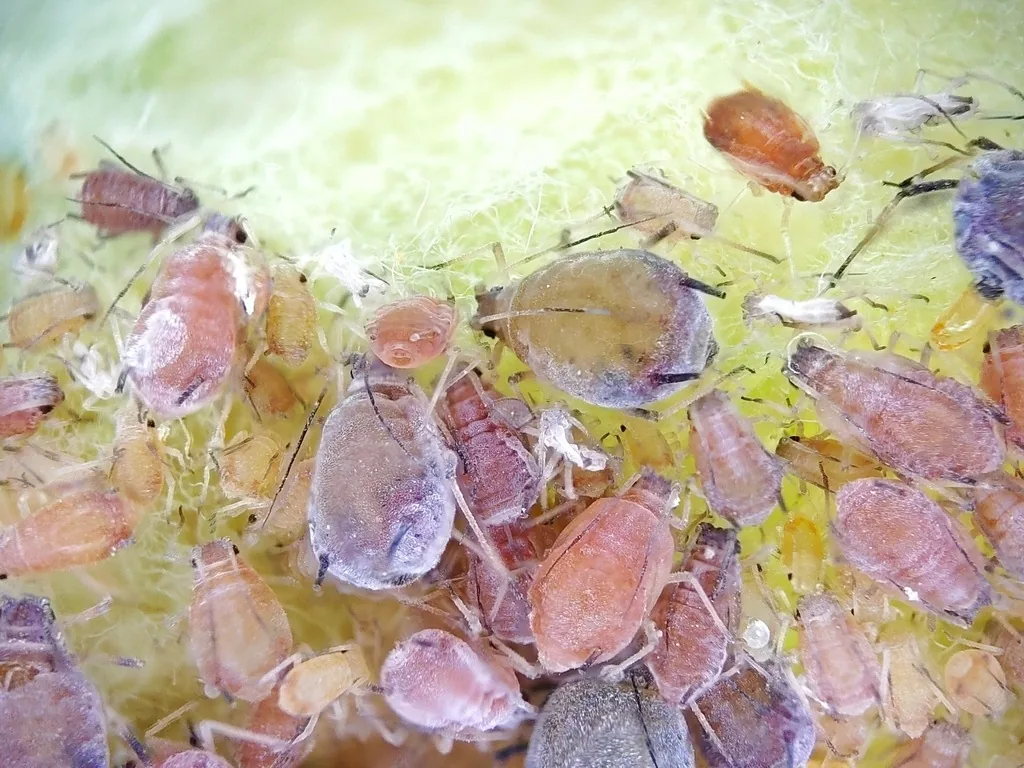
How to identify it
Look-alikes
| Look-alike | How to tell them apart |
|---|---|
| Other apple aphids | Green apple and apple-grain aphids also feed on apples, but the rosy apple aphid does the most damage.[1] |
Where it lives
UK Extension describes it as one of three aphids that attack apple foliage in Kentucky.[1]
Biology and life cycle
It overwinters as black eggs on apple twigs; nymphs hatch shortly after silver tip.[1]
By midsummer winged forms move to dock and narrow-leaved plantain, returning to apples in fall.[1]
Damage and signs
Health risk
It feeds on plants; UK Extension mentions no risk to people.[1]
Control
Prevention
Monitor trees closely; once leaves curl tightly, spray coverage and control get harder.[1]
Biological control
Predators often control it, so open curled leaves to see whether aphids or predators remain before deciding.[1]
Common questions
Sources
- University of Kentucky Entomology (ENTFACT), “Rosy Apple Aphid (ENTFACT-211).” entomology.mgcafe.uky.edu/ef211 (accessed 2026-10-06)
- iNaturalist, “Dysaphis plantaginea taxon page (order and family).” www.inaturalist.org/taxa/343383 (accessed 2026-10-06)