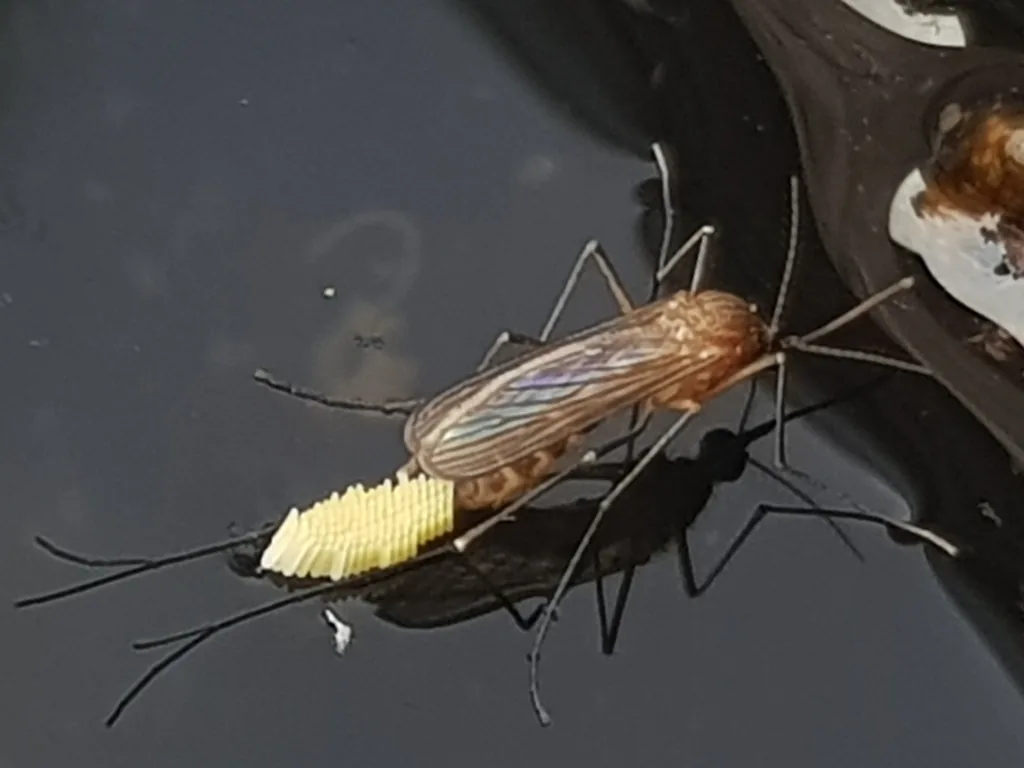
How to identify it
Look-alikes
| Look-alike | How to tell them apart |
|---|---|
| Northern house mosquito | Its close relative; the two interbreed in a broad zone between about 36 and 39 degrees north.[1] |
Where it lives
In the U.S. it ranges from Virginia across the southern plains to southern California and north to southern Iowa; it's in all 67 Florida counties.[1]
Biology and life cycle
Females lay egg rafts at night on nutrient-rich standing water, from waste water to bird baths, old tires and other containers.[1]
Larvae need five to eight days to develop at warm temperatures, and one female can lay up to five rafts.[1]
Damage and signs
- Females take blood at night from mammals and birds, biting opportunistically.[1]
Health risk
It transmits West Nile virus and is the principal vector of St. Louis encephalitis virus in the southern U.S.[1]
Control
Prevention
Wear long sleeves and insect repellent for nighttime outdoor activity.[1]
Sanitation
Change water in pet dishes often and in bird baths at least weekly, remove unneeded containers and old tires, and keep ditches flowing.[1]
Pesticides
Larvicides applied where larvae concentrate kill the most immature mosquitoes with the least pesticide.[1]
Common questions
Sources
- University of Florida IFAS Extension (Featured Creatures), “Southern House Mosquito, Culex quinquefasciatus (EENY-457).” edis.ifas.ufl.edu/publication/IN837 (accessed 2026-10-06)
- iNaturalist, “Culex quinquefasciatus taxon page (order and family).” www.inaturalist.org/taxa/155309 (accessed 2026-10-06)