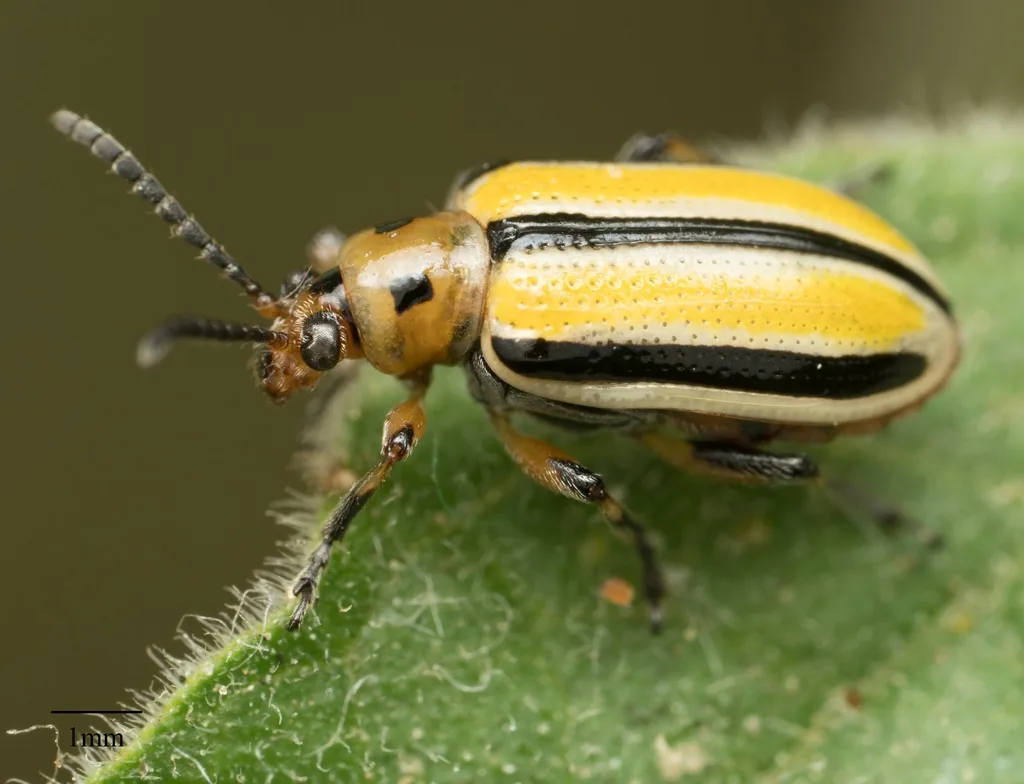
How to identify it
Look-alikes
| Look-alike | How to tell them apart |
|---|---|
| Striped cucumber beetle | Looks similar, but the two feed on different plants.[1] |
Where it lives
It's active May through August in Minnesota and usually found in low numbers.[1]
Biology and life cycle
Females lay clusters of orange eggs under leaves; most new adults emerge in August.[1]
It likely overwinters in the soil, and it's unclear whether there are one or two generations.[1]
Damage and signs
- Adults and larvae eat leaves of tomatillos, potatoes, tomatoes and other nightshades; larvae can badly defoliate tomatillos.[1]
Health risk
It feeds on plants; Minnesota Extension mentions no risk to people.[1]
Control
Keep them out
Row covers work if you rotate away from last year's nightshades and cover before beetles arrive.[1]
Sanitation
Remove nightshade weeds such as ground cherry.[1]
Traps and physical control
Handpick beetles and larvae into soapy water and squash egg clusters.[1]
Common questions
Sources
- University of Minnesota Extension, “Three-lined potato beetles (Yard and garden insects).” extension.umn.edu/garden-and-home/yard-and-garden/yard-and-garden-insects/threelined-potato-beetles (accessed 2026-10-06)
- iNaturalist, “Lema daturaphila taxon page (order and family).” www.inaturalist.org/taxa/203403 (accessed 2026-10-06)