Lyme Disease Vector 36–48 Hour Attachment Window Permethrin = Best Defense

Ticks

Ixodes scapularis · Amblyomma americanum · Dermacentor variabilis

Lyme disease is the fastest-growing vector-borne illness in the U.S. — over 476,000 cases diagnosed annually. The good news: Lyme transmission typically requires 36–48 hours of tick attachment. A daily check catches most ticks before transmission occurs.

Lyme Cases/Year476,000+ diagnosed annually
Transmission Time36–48 hours attached (Lyme)
Peak RiskMay–July and October
Best PreventionPermethrin clothing + daily checks
🫡
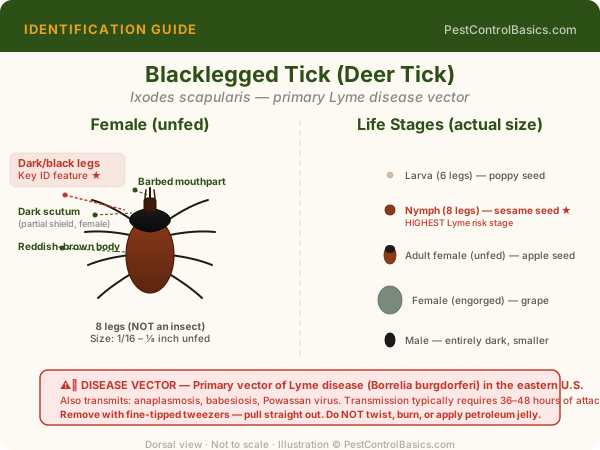
Black-Legged Deer Tick
Primary Lyme Disease Vector
Size (unfed)Sesame seed — 1–2mm
ColorReddish-brown body, dark black legs
RangeNortheast, Midwest, Atlantic coast
HabitatLeaf litter, tall grass, wooded edges
Peak SeasonMay–July (nymphs); October (adults)
Lyme RiskHigh — 30% carry Borrelia
Remove Within36 hours — prevents transmission
Do NOT UsePetroleum jelly, heat, or twisting
📐 FIELD GUIDE ILLUSTRATION
Blacklegged tick / deer tick (Ixodes scapularis) identification illustration with labeled anatomical features — PestControlBasics.com

Original illustration by PestControlBasics.com. Use anatomical labels above to confirm your identification.

Species Guide

Four ticks you need to know — very different disease risks

🫡
Black-Legged (Deer) Tick
Ixodes scapularis
Lyme Disease Vector
The primary Lyme disease vector in the eastern U.S. Sesame-seed sized when unfed — nymphs are even smaller (poppy seed). Black legs, reddish-brown body. 30% of adults and 20% of nymphs in endemic areas carry Borrelia burgdorferi. Northeast and upper Midwest. Peak risk: May–July (nymph season) and October (adult season). Also vectors Anaplasmosis, Babesiosis, and Powassan virus.
Lone Star Tick
Amblyomma americanum
STARI · Alpha-Gal Syndrome
Aggressive human biter — all three life stages bite humans (most ticks prefer other hosts as larvae). Identified by a white dot on the female's back. Vectors STARI (Southern Tick-Associated Rash Illness) and — uniquely — causes Alpha-Gal Syndrome: an acquired allergy to red meat triggered by the tick's saliva. Found throughout the Southeast and expanding north. Also vectors Ehrlichiosis and Heartland virus.
🫡
American Dog Tick
Dermacentor variabilis
Rocky Mountain Spotted Fever
Larger than deer ticks — easier to spot. Brown with whitish/gray markings. Most common tick in the eastern U.S. Primary vector of Rocky Mountain Spotted Fever (RMSF) — which is actually most common in the South and Mid-Atlantic, not the Rocky Mountains. RMSF has a 20–25% fatality rate if untreated. Also transmits Tularemia. Found in grassy, scrubby habitat along paths and trails.
🫡
Rocky Mountain Wood Tick
Dermacentor andersoni
RMSF · Tick Paralysis
Primary tick pest in the Rocky Mountain states — Colorado, Utah, Montana, Wyoming. Vectors Rocky Mountain Spotted Fever, Colorado tick fever, and Tularemia. Also causes tick paralysis — a progressive paralysis caused by a neurotoxin in the tick's saliva that resolves within 24 hours of tick removal. Adults are active in spring when snow is still on the ground at altitude.
🟥
Asian Longhorned Tick
Haemaphysalis longicornis
Invasive — Spreading Fast
Invasive from East Asia — established in the eastern U.S. since 2017. Reproduces parthenogenetically (females don't need males) — populations can explode rapidly. Vectors Theileria orientalis (Ikeda) which infects cattle and sheep, causing severe economic losses. Still being evaluated for human disease transmission. Report sightings to your state agriculture department.
🫡
Western Black-Legged Tick
Ixodes pacificus
Lyme Disease (West Coast)
The western counterpart to the deer tick — primary Lyme vector on the Pacific Coast. Found in California, Oregon, Washington, and Nevada. Lower Lyme transmission rate than its eastern relative (lower percentage of infected ticks) but still clinically significant. Active year-round in mild Pacific Coast climates. Found in chaparral, oak woodland edges, and coastal scrub.
Disease Risk

What ticks actually transmit — and how serious each is

DiseaseTick VectorRegionU.S. Cases/YearSeverity
Lyme DiseaseBlack-legged tickNortheast, Midwest476,000+High — chronic if untreated
Rocky Mountain Spotted FeverAmerican dog tickSoutheast, Mid-Atlantic~6,000Extreme — 20% fatal if untreated
AnaplasmosisBlack-legged tickNortheast, upper Midwest~5,000Moderate — responds to doxycycline
EhrlichiosisLone star tickSoutheast, South-Central~2,000Moderate — responds to doxycycline
Alpha-Gal SyndromeLone star tickSoutheast, expanding~450,000 est.Lifelong red meat allergy
BabesiosisBlack-legged tickNortheast coastal~3,000High — severe in elderly/immunocomp.
Powassan VirusBlack-legged tickNortheast, Great Lakes~25/yearRare but 10% fatal — no treatment
TularemiaDog tick, wood tickCentral U.S.~200High — responds to antibiotics
⚠ The Lyme Bullseye Rash — Critical to Recognize

The classic "bullseye" rash (erythema migrans) appears in 70–80% of Lyme cases — an expanding red ring with central clearing, 2 inches or larger. It appears 3–30 days after a bite. If you see this rash — with or without a known tick bite — seek immediate medical attention. Early Lyme responds well to doxycycline. Late-stage Lyme can cause chronic arthritis, neurological damage, and cardiac complications that are much harder to treat.

Tick Removal — Do It Right

How to remove a tick safely — and what not to do

1
Use fine-tipped tweezers
Grab the tick as close to the skin surface as possible. Do not use your fingers — the pressure can force infected material into the wound.
2
Pull upward steadily
Apply steady, even upward pressure without twisting or jerking. Twisting can cause the mouthparts to break off and remain in the skin.
3
Clean the bite site
Thoroughly clean the bite area with rubbing alcohol, iodine, or soap and water after removal. Wash hands thoroughly.
4
Save the tick
Place in a sealed bag or alcohol-filled jar. Label with the date. Testing services can identify the species and test for pathogens if you develop symptoms.
✕ What NOT to Do

Do not use petroleum jelly, nail polish, or heat (lighter, match) to "force" the tick out. These methods cause the tick to release more saliva — potentially increasing disease transmission risk. Do not twist or jerk — breaks mouthparts off in skin. Do not crush the tick with bare fingers. Do not flush down the drain — this doesn't kill ticks.

Prevention Protocol

The layered defense that actually works

Permethrin-Treated Clothing — Most Effective

Treating outdoor clothing and gear with permethrin is the single most effective personal tick protection measure. Permethrin bonds to fabric fibers and survives 6+ wash cycles. It kills ticks on contact — they don't need to bite through the fabric. Apply to boots, pants, socks, and shirts. Kills ticks within seconds of contact. Safe when dry — never apply to skin.

DEET or Picaridin on Skin

Apply 25–30% DEET or 20% Picaridin to exposed skin areas not covered by permethrin-treated clothing. Repels but does not kill ticks. CDC-recommended. Both effective for 5–8 hours.

Daily Full-Body Tick Checks

Check entire body within 2 hours of outdoor activity. Priority areas: scalp, ears, underarms, groin, behind knees, between toes. Use a mirror or have someone check your back and scalp. Shower within 2 hours of coming indoors — this helps wash off unattached ticks and makes checking easier.

Yard Treatment

Bifenthrin or permethrin yard spray applied along the lawn edge where it meets woodland or tall grass reduces tick populations by 68–100% in studies. Focus treatment on the transition zone — ticks questing (waiting for hosts) primarily in this 9-foot border zone, not in the middle of a maintained lawn. Apply spring and late summer for maximum coverage.

👖
Clothing Treatment — #1 Recommendation
Sawyer Permethrin Clothing & Gear Insect Repellent
Why it's #1: Permethrin kills ticks on contact — not just repels them. A tick that crawls onto treated clothing falls off dead within seconds. Survives 6 wash cycles. Apply to dry clothing outdoors, hang to dry for 2–4 hours before wearing. Treat: pants, socks, shoes, shirts, hats, and any gear (backpacks, tents). Colorless and odorless when dry. The single highest-impact tick prevention action available.
★★★★★
Best Prevention
🌿
Yard Treatment — Perimeter Control
Bifenthrin Yard Spray — Lawn/Woodland Edge
How to apply: Use a hose-end sprayer to treat the 9-foot transition zone between maintained lawn and any wooded area, tall grass, or groundcover. Also treat along fence lines and under decks. Apply in late April (catches nymphs) and again in late August (catches adults before peak fall season). A single targeted application of the lawn-woodland edge is more effective than blanket treatment of the entire yard.
★★★★Ⓒ
Highly Effective
⚠ Full Guide: Lyme Disease Prevention — 476,000 cases/year. Symptoms, the 36-hour window, and full prevention protocol.
📅 See when this pest peaks in your region Use Free Tool →
🔔 Get a free season alert before this pest peaks Use Free Tool →
DG
Derek Giordano
Certified Pest Control Operator · Former Business Owner
Derek ran his own pest control company in Florida for several years, servicing thousands of regular customers. All content is based on hands-on field experience and current EPA & university extension guidelines.
🧪 Recommended Treatment Products
Permethrin Clothing Treatment DEET Repellent Picaridin Repellent Oil of Lemon Eucalyptus Metarhizium (Biological)
Full product guides with mixing rates, safety info, and brand comparisons. → Browse All 121 Pesticide Guides

Related Resources

📚 Full Pest Library🧪 DIY vs. Pro Quiz💰 Cost Guide🌿 IPM Guide🔍 Find a Pro
🔗 Related Pests
Rocky Mountain Spotted Fever Lone Star Tick American Dog Tick
Compare similar pests to confirm your identification. → Use our ID Flowchart
🔮
Reviewed by Derek GiordanoContent on PestControlBasics.com is developed with input from certified pest management professionals and cross-referenced against EPA, CDC, and university extension guidance. Last reviewed: April 2026.
📚 Sources: CDC Tick Prevention · CDC Lyme Disease
Published: Jan 1, 2025 · Updated: Apr 7, 2026

Tick check protocols: timing and technique that matter

Tick-borne disease prevention rests heavily on prompt tick removal after exposure, since transmission of pathogens including Lyme disease bacteria typically requires hours of attachment. The protocol that produces best results: full-body visual inspection within a few hours of any outdoor activity in tick habitat, paying particular attention to areas where ticks preferentially attach (hairline, behind ears, armpits, waistband, behind knees, between toes). Showering within two hours of exposure mechanically removes loose ticks and provides another inspection opportunity. Found ticks are removed with fine-tip tweezers, grasping as close to the skin as possible, and pulled straight out with steady pressure — not twisted, not burned with a match, not coated with petroleum jelly (all popular advice that backfires by causing the tick to regurgitate gut contents into the bite site). Removed ticks are saved in a sealed plastic bag with a date label; if symptoms develop, the tick itself can be tested or used to identify species. Photographing the bite site immediately and at 24-hour intervals helps document any developing rash for medical assessment.

When professional treatment is genuinely worth the cost

Professional pest control isn't always the right answer, but several specific situations genuinely justify the cost over DIY treatment. Severe bed bug infestations rarely yield to homeowner treatment because the required combination of vacuuming, encasements, structural treatment, and follow-up monitoring exceeds what most homeowners execute consistently. Subterranean termite treatment requires equipment (subslab injection) and product (commercial-grade termiticide quantities) not accessible to consumers, and inspection findings often dictate specific treatment that homeowners can't do safely. Roof and attic rodent problems benefit from professional exclusion that addresses access points consumers don't find. Mosquito reduction programs using barrier treatments and breeding-site management produce substantially better results than consumer foggers and yard sprays. Persistent cockroach problems in multi-unit buildings need coordination consumers can't provide. The pattern: professional treatment justifies itself when scale, access, regulatory product restrictions, or coordination requirements exceed what DIY can practically accomplish. Routine ant trails, occasional wasp nests, fruit fly outbreaks, and the like remain reasonable DIY targets where the cost-benefit math favors handling it yourself with the right products and information.

Tick-borne disease landscape: more than Lyme

Public awareness of tick-borne disease focuses heavily on Lyme disease, but the broader landscape of tick-transmitted pathogens has expanded meaningfully and warrants awareness for residents of tick-active regions. Anaplasmosis and ehrlichiosis are increasingly reported and present with non-specific flu-like symptoms that can be missed without specific testing. Babesiosis, a malaria-like blood parasite, is increasingly common in coordinate ranges with Lyme. Powassan virus, while rare, is increasingly detected and can produce serious neurological disease with no specific treatment. Alpha-gal syndrome — a developed allergy to mammalian meat following lone star tick bites — affects increasing numbers of residents in expanding lone star tick range. Rocky Mountain spotted fever remains a serious risk particularly in the south-central states. The implication for residents: tick exposure with subsequent unexplained symptoms warrants prompt medical evaluation with specific tick-borne disease testing, not just empirical antibiotics for presumed Lyme. Saving removed ticks for identification has practical value when symptoms develop weeks later and species matters for diagnostic direction.

Tick questing behavior and where they actually find hosts

Ticks find hosts by questing — climbing onto vegetation at a specific height range that maximizes contact with passing animals of their preferred host size. Different tick species quest at different heights, and the heights track the host they're adapted to. Larval and nymphal blacklegged ticks quest low, often in leaf litter or on grasses just a few inches off the ground, where they intercept small mammals. Adult blacklegged ticks quest higher, on the order of one to three feet, where they intercept deer and humans. Lone star ticks tend to quest somewhat higher and are more aggressive about pursuing nearby hosts. Knowing the questing height of the species you're concerned about changes where on the property the risk actually concentrates. The lawn isn't typically the high-risk zone; the edge of the property where lawn meets woods, the leaf litter under shrubs, and the area around stone walls and woodpiles are where most tick encounters happen. Property-level tick reduction that focuses on these microhabitats — leaf litter removal, edge clearing, treatment of transition zones — is dramatically more effective than treating open lawn that ticks aren't using anyway.

Why product instructions are often suboptimal in practice

Pesticide labels are legal documents written to satisfy regulatory requirements, not field guides written to maximize success in a specific home. The instructions cover the broadest reasonable use case, which means they're rarely tuned for the specific construction type, climate, or pest pressure you're dealing with. A label might call for application every six weeks because that's what the registration data supports across a wide range of conditions, but the actual reapplication interval that matches the residual life of the active ingredient in your specific application context could be shorter or longer. This is not an invitation to ignore label directions — doing so is illegal and frequently dangerous — but it does mean that following the label is the floor, not the ceiling, of good practice. Knowledgeable users overlay the label with conditions-aware judgment: shorter re-treatment intervals during heavy rain or high humidity, denser application in known harborage, and supplementary monitoring after treatment to verify that the work actually performed as expected. The label tells you what's permitted; experience tells you what's optimal within that envelope.

Deer pressure and the long arc of tick density

Deer don't carry the pathogens that ticks transmit, but they are the primary reproductive host for adult blacklegged ticks, and deer density and tick density are correlated across a wide range of conditions. Properties with high deer pressure tend to have higher long-term tick density, and reductions in local deer populations tend to produce reductions in tick density on a multi-year time scale. The implication for individual property owners is that high deer pressure is a structural risk factor that's hard to address at the property level, but it's worth recognizing so that the tick management plan accounts for it. Deer fencing, where local regulations and property size allow, is one of the few interventions that meaningfully reduces tick reproductive opportunities on the property. Plantings that deer avoid can reduce deer movement through specific zones of the property. None of these are quick fixes, but in properties where ticks are a chronic concern, addressing deer access is one of the few interventions with durable effects rather than recurring annual costs.

🗺️ US Distribution — Tick Control & Lyme Disease Prevention

Common Occasional Not Present
States Present
49
Occasional
2
Primary Region
Continental US
📊 Source: University extension services, USDA, CDC vector data, and published entomological surveys.