HomePest LibraryLone Star Tick
Aggressive Host-Seeker — Southeast & Midwest
🕷

Lone Star Tick

Amblyomma americanum

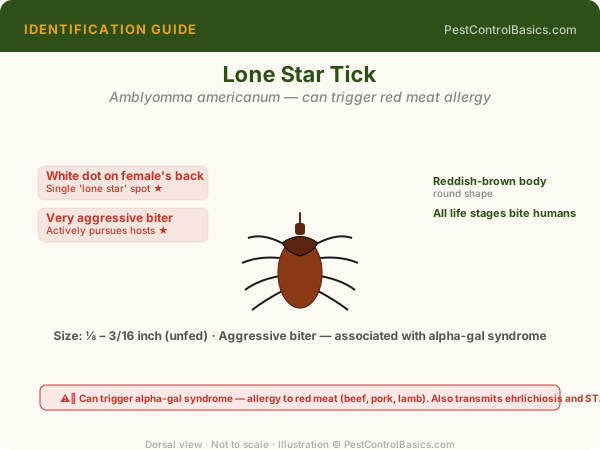
Unlike deer ticks that wait passively on vegetation, lone star ticks actively follow scent trails and chase hosts — a behavior called "questing with locomotion." The female has a distinctive white spot on her back. Their bite can trigger alpha-gal syndrome, a potentially lifelong red meat and mammalian product allergy.

BehaviorActively follows movement — hunts hosts
Female IDSingle white spot on back
Alpha-gal riskCan trigger red meat allergy — lifelong
Disease riskEhrlichiosis, Heartland virus, STARI
RangeSoutheast, Mid-Atlantic, Midwest — expanding
📐 FIELD GUIDE ILLUSTRATION
Lone Star Tick identification illustration with labeled anatomical features — PestControlBasics.com

Original illustration by PestControlBasics.com. Use anatomical labels above to confirm your identification. For photo references, see the identification section below.

Identification

The white spot and aggressive behavior

The lone star tick gets its name from the single white spot (or "lone star") in the center of the female's back — one of the clearest identifying features of any U.S. tick species. Males have a different appearance: white decorative markings around the outer edge of the body rather than a single central spot.

Aggressive questing behavior: Most tick species practice "passive questing" — they climb to the tip of a grass blade or leaf and wait with outstretched front legs for a host to brush past. Lone star ticks are different: they detect host-produced chemicals (carbon dioxide, body heat, volatile fatty acids) and actively run toward the source. They can travel several feet pursuing a potential host. This behavior makes them particularly difficult to avoid in heavily infested areas.

Range expansion: Historically associated with the Southeast and South-Central U.S., lone star ticks have been expanding northward and westward for decades. They are now established well into the Midwest and Mid-Atlantic states and are increasingly found in New England.

Alpha-Gal Syndrome

The red meat allergy connection

Alpha-gal syndrome (AGS) is a tick-bite-triggered allergy to alpha-galactose — a carbohydrate found in the tissues of most mammals except humans and other primates. Lone star tick saliva appears to sensitize the immune system to alpha-gal, and subsequent exposure to red meat (beef, pork, lamb, venison) or other mammalian products (dairy, gelatin) can trigger delayed allergic reactions ranging from hives and gastrointestinal symptoms to life-threatening anaphylaxis.

What makes AGS particularly unusual: the allergic reaction is delayed — typically occurring 3–6 hours after eating the triggering food, making the connection to food hard to identify. Many patients suffer multiple reactions before the diagnosis is made.

AGS may be permanent. Current evidence suggests that avoiding subsequent lone star tick bites may allow some patients to gradually lose their sensitivity over years, but re-exposure reliably triggers re-sensitization.

Prevention is the only strategy: No treatment prevents AGS after sensitization — only bite prevention through permethrin clothing, DEET, tick checks, and avoiding heavy tick habitat.

💡 Ehrlichiosis — The Other Disease Risk

Ehrlichiosis (caused by Ehrlichia chaffeensis) is the primary bacterial infection transmitted by lone star ticks. Symptoms: fever, headache, and muscle aches appearing 1–2 weeks after a bite. Treated with doxycycline. Milder than RMSF but still requires prompt treatment. Report any flu-like illness following a tick bite to your doctor and mention the exposure.

DG
Derek Giordano
Certified Pest Control Operator · Former Business Owner
Derek ran his own pest control company in Florida for several years, servicing thousands of regular customers. All content is based on hands-on field experience and current EPA & university extension guidelines.

Related Resources

📚 Full Pest Library🧪 DIY vs. Pro Quiz💰 Cost Guide🌿 IPM Guide🔍 Find a Pro
🔗 Related Pests
Rocky Mountain Spotted Fever American Dog Tick Ticks
Compare similar pests to confirm your identification. → Use our ID Flowchart
🔮
Reviewed by Derek GiordanoContent on PestControlBasics.com is developed with input from certified pest management professionals and cross-referenced against EPA, CDC, and university extension guidance. Last reviewed: April 2026.
📚 Sources: CDC Tick Prevention · CDC Lyme Disease
Published: Jan 1, 2025 · Updated: Apr 7, 2026

Pet tick control and the household reservoir

Pets — dogs especially — bring ticks into the home and yard, where they can drop off and reattach to humans. Veterinary tick prevention (oral monthly products, topical drops, tick collars) reduces but doesn't eliminate this route. After outdoor exposure, a tick check on pets following the same pattern as humans (ears, between toes, groin, neck) catches the obvious cases. Wash pet bedding regularly in hot water during tick season. Indoor environment treatment is rarely needed if pet prevention is current and tick checks are done; the household reservoir is usually pet-mediated. In high-pressure regions, treating the immediate yard area where pets spend time produces results pets alone can't from prevention products.

Working with extension services and public resources

Every state has a Cooperative Extension Service — a university-affiliated public outreach program — and most homeowners don't know it exists. Extension publishes pest fact sheets specific to local conditions, offers free pest identification (often by photo submission), and runs Master Gardener volunteer programs that handle public inquiries. State departments of agriculture license and regulate pest control operators; their websites verify licenses and accept complaints. State and local health departments track vector-borne diseases and publish risk data that's more current than national averages. The EPA's pesticide product database lets you look up registered uses for any product before buying. The National Pesticide Information Center (1-800-858-7378) answers homeowner pesticide questions free of charge. These resources are paid for by taxes already; underusing them in favor of paid services is leaving money on the table.

Property-level tick population dynamics

Tick populations on residential properties are driven mainly by deer (reproductive hosts for adult ticks) and small mammals (rodents, primarily white-footed mice, are the primary reservoir for the Lyme bacterium). Property changes that reduce both host populations reduce tick density over a season: fencing or planting deer-resistant landscaping to discourage deer browsing, removing rodent harborage (woodpiles away from the house, sealed compost, exclusion at building penetrations), and supporting natural predators (some areas have programs encouraging fox and opossum populations, which are significant tick consumers). These interventions take a season or more to show effects but compound over years. Combined with the transition-zone management and personal protection above, they shift property-level pressure substantially in moderate-pressure regions.

Tick yard management: the highest-leverage interventions

Ticks need humidity to survive and tend to concentrate in the brush-and-lawn interface — the leafy edge zone between maintained yard and wooded or unmanaged area. Yard management that reduces tick presence focuses on this transition zone: maintain a three-foot mulch or hardscape buffer between lawn and woods, keep lawn mowed (ticks dry out in short grass and direct sun), remove leaf litter near the structure, and trim brush back from walking paths and play areas. Acaricide treatment (typically bifenthrin or permethrin) of the transition zone in late spring (around Memorial Day, regionally) targets nymphs — the life stage responsible for most human Lyme transmission — with a single well-timed application providing significant reduction through summer.

Why integrated pest management produces better outcomes

Integrated Pest Management (IPM) is the framework most pest management professionals follow and the framework the EPA recommends for residential and commercial settings. IPM is not anti-pesticide; it's a sequencing approach that uses cultural controls (sanitation, exclusion, moisture management) first, mechanical controls (traps, vacuuming, physical removal) second, biological controls (beneficial insects, microbial agents) where applicable, and chemical controls last and targeted. The benefit isn't ideological — it's empirical. IPM-treated sites have lower long-term pest pressure than chemical-only treated sites, because chemicals address the visible population without addressing why the population developed. Homeowners who adopt IPM principles see longer intervals between treatments, lower total pesticide use, and better outcomes during the times when chemicals are appropriate. The shift from 'spray when I see them' to 'fix the conditions, monitor, treat targeted' is the single highest-leverage change most DIY practitioners can make.

Tick check protocols: timing and technique that matter

Tick-borne disease prevention rests heavily on prompt tick removal after exposure, since transmission of pathogens including Lyme disease bacteria typically requires hours of attachment. The protocol that produces best results: full-body visual inspection within a few hours of any outdoor activity in tick habitat, paying particular attention to areas where ticks preferentially attach (hairline, behind ears, armpits, waistband, behind knees, between toes). Showering within two hours of exposure mechanically removes loose ticks and provides another inspection opportunity. Found ticks are removed with fine-tip tweezers, grasping as close to the skin as possible, and pulled straight out with steady pressure — not twisted, not burned with a match, not coated with petroleum jelly (all popular advice that backfires by causing the tick to regurgitate gut contents into the bite site). Removed ticks are saved in a sealed plastic bag with a date label; if symptoms develop, the tick itself can be tested or used to identify species. Photographing the bite site immediately and at 24-hour intervals helps document any developing rash for medical assessment.

Why most pest 'sightings' aren't what people think they are

Species misidentification is the single most common reason that DIY pest treatment fails or that homeowners describe products as not working. The patterns are consistent: bed bug bites are routinely attributed to mosquitoes, fleas, or unknown causes; carpet beetle larvae are mistaken for bed bug nymphs; small black ants are called 'sugar ants' regardless of actual species; carpenter ants and termites are confused despite very different treatments; bat bugs are treated as bed bugs (the treatment may work, but the actual problem is overhead). Even when identification is correct at the family level, species within a family often require different approaches — German vs. American cockroaches, subterranean vs. drywood termites, or pavement vs. carpenter ants are practical examples. The first hour of any pest problem should go to identification, not treatment: photograph specimens with a coin for scale, send images to a local cooperative extension office (most respond within a day or two), or post to one of the moderated identification forums where entomologists answer. Correct identification narrows treatment options to those that actually work and discards the larger pile that don't.

Yard tick reduction: a layered landscape approach

Reducing tick pressure in residential yards is achievable through landscape modification, with the highest yield from changes that disrupt tick habitat at the lawn-woodland interface. The standard recommendations: keep grass mowed short (ticks need humidity and shelter that taller grass provides), maintain a three-foot wide barrier of wood chips or gravel between lawn and woodland or stone walls (ticks rarely cross this boundary), remove leaf litter from the yard edge in spring (where ticks overwinter), prune low branches and dense shrubs in the lawn-edge transition (which provides shaded humid microclimate ticks prefer), and consider perimeter acaricide treatment in heavy-pressure areas. Wildlife management contributes: deer-resistant landscaping reduces deer visits and the ticks they carry, sealed compost and trash reduce rodent attractants and the ticks rodents carry, and elevated bird feeders (away from lawn areas) reduce direct ground deposition of ticks dropping off birds. Properties making three or four of these changes simultaneously typically see meaningful reduction in encountered ticks; single changes alone usually don't show measurable difference.

Tick questing behavior and where they actually find hosts

Ticks find hosts by questing — climbing onto vegetation at a specific height range that maximizes contact with passing animals of their preferred host size. Different tick species quest at different heights, and the heights track the host they're adapted to. Larval and nymphal blacklegged ticks quest low, often in leaf litter or on grasses just a few inches off the ground, where they intercept small mammals. Adult blacklegged ticks quest higher, on the order of one to three feet, where they intercept deer and humans. Lone star ticks tend to quest somewhat higher and are more aggressive about pursuing nearby hosts. Knowing the questing height of the species you're concerned about changes where on the property the risk actually concentrates. The lawn isn't typically the high-risk zone; the edge of the property where lawn meets woods, the leaf litter under shrubs, and the area around stone walls and woodpiles are where most tick encounters happen. Property-level tick reduction that focuses on these microhabitats — leaf litter removal, edge clearing, treatment of transition zones — is dramatically more effective than treating open lawn that ticks aren't using anyway.

Why product instructions are often suboptimal in practice

Pesticide labels are legal documents written to satisfy regulatory requirements, not field guides written to maximize success in a specific home. The instructions cover the broadest reasonable use case, which means they're rarely tuned for the specific construction type, climate, or pest pressure you're dealing with. A label might call for application every six weeks because that's what the registration data supports across a wide range of conditions, but the actual reapplication interval that matches the residual life of the active ingredient in your specific application context could be shorter or longer. This is not an invitation to ignore label directions — doing so is illegal and frequently dangerous — but it does mean that following the label is the floor, not the ceiling, of good practice. Knowledgeable users overlay the label with conditions-aware judgment: shorter re-treatment intervals during heavy rain or high humidity, denser application in known harborage, and supplementary monitoring after treatment to verify that the work actually performed as expected. The label tells you what's permitted; experience tells you what's optimal within that envelope.

Deer pressure and the long arc of tick density

Deer don't carry the pathogens that ticks transmit, but they are the primary reproductive host for adult blacklegged ticks, and deer density and tick density are correlated across a wide range of conditions. Properties with high deer pressure tend to have higher long-term tick density, and reductions in local deer populations tend to produce reductions in tick density on a multi-year time scale. The implication for individual property owners is that high deer pressure is a structural risk factor that's hard to address at the property level, but it's worth recognizing so that the tick management plan accounts for it. Deer fencing, where local regulations and property size allow, is one of the few interventions that meaningfully reduces tick reproductive opportunities on the property. Plantings that deer avoid can reduce deer movement through specific zones of the property. None of these are quick fixes, but in properties where ticks are a chronic concern, addressing deer access is one of the few interventions with durable effects rather than recurring annual costs.

🗺️ US Distribution — Lone Star Tick

image/svg+xml
Common Occasional Not Present
States Present
49
Occasional
2
Primary Region
Continental US
📊 Source: University extension services, USDA, CDC vector data, and published entomological surveys.