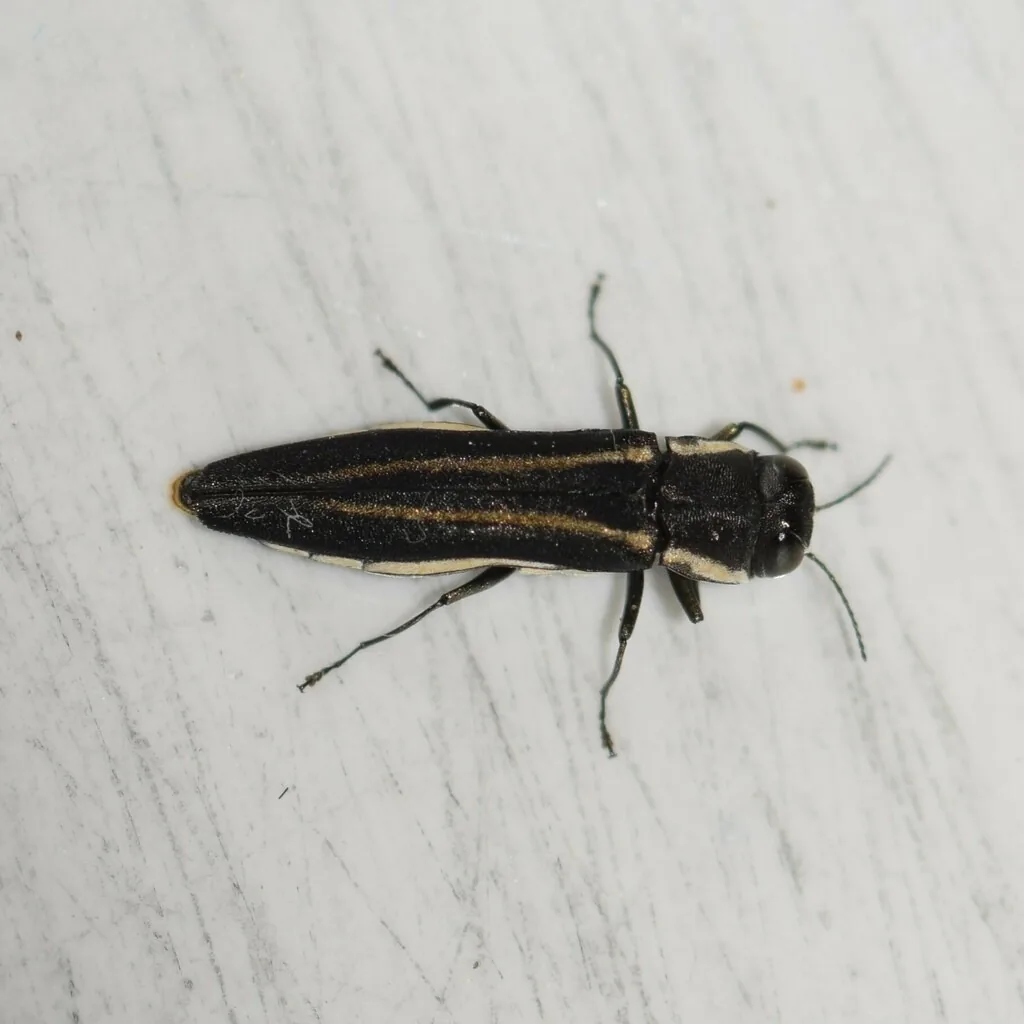
How to identify it
Look-alikes
| Look-alike | How to tell them apart |
|---|---|
| Bronze birch borer | A related metallic borer of birch, bronze rather than striped.[1] |
Where it lives
It attacks native and introduced oaks, white and red, that are stressed and declining.[1]
Biology and life cycle
Larvae overwinter under bark and pupate in spring; adults emerge in early June in Minnesota and live two to five weeks.[1]
Larvae feed in the phloem, packing galleries with frass; most finish in one year, some take two.[1]
Damage and signs
- Stress from drought, defoliation, poor sites, root injury or construction makes oaks vulnerable.[1]
Health risk
It attacks trees only; Minnesota Extension mentions no risk to people.[1]
Control
Prevention
Keep oaks healthy and avoid root and trunk injury; stressed trees attract these native borers.[1]
When to call a professional
Insecticides can help protect valued trees.[1]
Common questions
Sources
- University of Minnesota Extension, “Metallic wood-boring beetles (Yard and garden insects).” extension.umn.edu/garden-and-home/yard-and-garden/yard-and-garden-insects/metallic-wood-boring-beetles (accessed 2026-10-06)
- iNaturalist, “Agrilus bilineatus taxon page (order and family).” www.inaturalist.org/taxa/494812 (accessed 2026-10-06)