โš  Aggressive Stingers Multiple Stings Treat at Night Only

Wasps &
Yellow Jackets

Vespula, Dolichovespula & Polistes species

Unlike bees, wasps can sting repeatedly and release alarm pheromones that trigger mass attacks from the entire colony. Nest removal requires the right product, applied at night, from a safe distance. Done wrong, it ends badly.

Colony SizeUp to 5,000 workers (YJ)
StingRepeated โ€” no barb lost
Peak AggressionLate summer โ€” Aug/Sep
Best Treat TimeNight โ€” when all foragers home
๐Ÿ
Yellow Jacket โ€” Quick Reference
Most aggressive U.S. wasp
ColorBright yellow & black banding
Size1/2 inch โ€” smaller than hornets
Nest TypeUnderground or wall voids โ€” papery
Entry/ExitSingle hole โ€” heavy traffic
StingRepeated โ€” releases alarm pheromone
Peak SeasonAugustโ€“October (colony max size)
Anaphylaxis?Yes โ€” 3% population allergic
Treat WhenAfter dark โ€” never midday
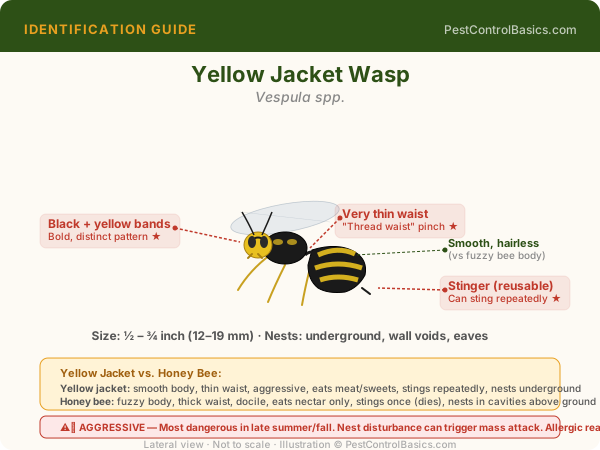
๐Ÿ“ FIELD GUIDE ILLUSTRATION
Yellow jacket wasp (Vespula spp.) identification illustration with labeled anatomical features โ€” PestControlBasics.com

Original illustration by PestControlBasics.com. Use anatomical labels above to confirm your identification.

Species Guide

Know what you're dealing with โ€” behavior differs dramatically

๐Ÿ
Yellow Jacket
Vespula squamosa / germanica
Most Aggressive
The most dangerous stinging insect in North America by number of incidents. Nests underground or in wall voids. Colony of up to 5,000 by late summer. Extremely defensive โ€” any vibration near the nest triggers mass attack. Scavenge food at picnics and garbage. Sting repeatedly, releasing a pheromone that recruits nestmates.
๐Ÿ—
Bald-Faced Hornet
Dolichovespula maculata
Extremely Aggressive
Not a true hornet โ€” a yellow jacket relative. Builds the large, gray paper football nests you see hanging from trees and eaves. Can sting and spray venom toward perceived threats. Colony size 400โ€“700 workers. Remove only at night with full PPE. Professional removal recommended for nests near living spaces.
๐Ÿœ
European Hornet
Vespa crabro
Large โ€” Very Painful Sting
The only true hornet in North America. Much larger than yellow jackets โ€” 1 to 1.5 inches. Brown/yellow coloring. Nests in hollow trees, wall voids, attics. Unlike yellow jackets, active at night โ€” attracted to lights. Painful sting, moderately defensive. Professional removal recommended for structural nests.
๐Ÿ
Paper Wasp
Polistes exclamans
Moderate โ€” Will Defend
Builds the open, umbrella-shaped papery nests you see under eaves, porch ceilings, and door frames. Relatively docile unless the nest is directly threatened. Colony of 20โ€“75 workers โ€” much smaller than yellow jackets. DIY treatment is straightforward. Valuable garden predators that eat caterpillars and other insects.
๐Ÿน
Cicada Killer
Sphecius speciosus
Looks Scary โ€” Very Docile
Large (up to 2 inches), solitary ground-nesting wasp. Paralyzes cicadas to provision nest holes for larvae. Despite imposing size, males cannot sting and females only sting if directly handled. Rarely requires treatment โ€” if holes are a concern, water the lawn area heavily to discourage nesting.
โฌ›
Mud Dauber
Sceliphron caementarium
Non-Aggressive
Solitary wasps that build small mud tubes on walls, eaves, and in garages. Not aggressive. Sting is rare and mild. Each mud tube houses one larva with paralyzed spiders for food. Beneficial โ€” kills spiders. Only treat if cosmetic appearance is a concern. Knock down mud tubes with a stick while wearing gloves.
Nest Identification

Find the nest type before you treat

The nest type determines the treatment approach. Treating an underground yellow jacket nest the same way as a hanging paper wasp nest will result in failure โ€” and likely multiple stings.

๐ŸŒ
Yellow Jacket
Underground Nest
Single hole in the ground with heavy insect traffic. Often found in lawns, flower beds, and at the base of walls. The underground cavity can be the size of a basketball by late summer.
โš  Treat at Night โ€” High Risk
๐Ÿ 
Yellow Jacket / European Hornet
Wall Void Nest
Entry through a gap in siding, eaves, or foundation. Buzzing heard inside walls. Can be 10,000+ insects in late summer. Never seal the entry hole before killing the colony โ€” wasps will chew through drywall.
๐Ÿ”’ Professional Recommended
๐Ÿˆ
Bald-Faced Hornet
Hanging Paper Nest
Gray, football-shaped papery nest hanging from tree branches, eaves, or utility lines. Distinctive โ€” papery layered construction. Colony of 400โ€“700 workers. Treat at night from maximum distance with a jet aerosol.
๐Ÿ”’ Professional for Large Nests
โ˜
Paper Wasp
Open Umbrella Nest
Visible open comb โ€” like an upside-down umbrella with visible cells. No outer paper envelope. Usually small (golf ball to softball size). Under eaves, porch ceilings, door frames. Easiest DIY treatment.
โœ“ DIY Straightforward
๐ŸŒณ
European Hornet
Hollow Tree / Attic Nest
Builds in hollow trees, attic spaces, or within wall cavities. Often not discovered until colony is very large. If inside the structure, professional treatment is strongly recommended.
๐Ÿ”’ Professional Recommended
๐Ÿ—
Mud Dauber
Mud Tubes
Small clay/mud tubes on walls, under eaves, inside garages. Each tube is a separate cell. Inactive during the day โ€” adults don't defend these aggressively. Knock down manually or ignore.
โœ“ Low Risk โ€” Manual Removal
Safe Removal Protocol

How to treat a wasp nest without getting stung

The most common mistake: treating in daylight when thousands of foragers are out and the colony is at full defensive alert. Follow this sequence exactly.

โš  Never Treat These Situations Yourself

Wall void nests larger than a baseball โ€” professionals use injection equipment to reach every part of the colony. Africanized honey bees in any quantity โ€” do not approach, call a licensed beekeeper or pest company immediately. Any nest if you have a venom allergy โ€” do not attempt DIY removal under any circumstances. Nests above 10 feet requiring a ladder โ€” the fall risk combined with stings is not worth it.

1
Wait until full dark โ€” at least 30 minutes after sunset
All foraging workers return to the nest at dark. Treating at dusk still leaves thousands of returning workers that will attack. Full dark means maximum colony is inside and minimum flight activity.
2
Dress for protection โ€” no exposed skin
Long sleeves, long pants, tucked in at ankles and wrists. Gloves. Eye protection. A bee veil if available. Light-colored clothing โ€” dark colors are more likely to trigger defensive response. No perfume or scented products.
3
Use a red-light flashlight, not white light
Wasps navigate by light. A red LED flashlight is nearly invisible to them โ€” use it to locate the nest entry point without triggering flight. Never shine a white flashlight directly at an active nest.
4
Apply a fast-acting jet aerosol from maximum distance
Stand at least 10โ€“15 feet back. Use a wasp freeze or pyrethroid jet spray that shoots 15โ€“20 feet. Direct the stream precisely into the nest entrance. Apply for 5โ€“10 seconds. Back away immediately. Do not linger โ€” some workers will emerge and fly erratically.
5
Do not seal the entrance โ€” leave it open overnight
Returning foragers that weren't in the nest will contact the treated entrance and carry pesticide inside. Sealing the hole traps surviving wasps, which may chew through walls. Leave open and treat again the following night if activity continues.
6
Remove the nest after 48 hours of zero activity
After 48 hours with no visible wasp movement, the colony is eliminated. Remove the nest during the day while wearing gloves โ€” abandoned nests attract other insects. For underground nests, fill the hole with soil once confirmed inactive.
๐Ÿ’ง
Jet Aerosol โ€” Best DIY Treatment
Raid Wasp & Hornet / Spectracide Wasp Freeze
How it works: Pyrethroid-based aerosol with a jet stream reaching 20+ feet. "Wasp Freeze" products contain tetramethrin which causes instant knockdown (paralysis) before kill โ€” critical for preventing counter-attack. Apply directly into the nest entrance. The jet allows treatment from a safe distance. Purchase the largest can available โ€” small nests need 8โ€“10 seconds of continuous spray.
โ˜…โ˜…โ˜…โ˜…โ˜…
Best for DIY
๐ŸŒฟ
Dust โ€” Underground & Wall Void Nests
Delta Dust (Deltamethrin) Applied with Bulb Duster
How it works: For underground nests or wall void nests where a spray stream won't penetrate, puff deltamethrin dust directly into the nest entrance with a bulb duster. Workers tracking through the treated entrance carry dust to the colony interior. Cover the hole loosely with a rock (don't seal) after application. Highly effective for hard-to-reach nests โ€” often eliminates the colony within 24โ€“48 hours.
โ˜…โ˜…โ˜…โ˜…โ˜…
Best for Underground
Sting Treatment

What to do immediately after being stung

1
Leave the area immediately
Walk โ€” don't run โ€” away from the nest. Wasps release alarm pheromones when they sting. Retreating fast reduces the number of additional stings. Move at least 100 feet away before stopping.
2
Wasp stingers โ€” no removal needed
Unlike honeybees, wasps do not leave stingers. You don't need to remove anything. Wash the sting site with soap and water to remove surface venom.
3
Ice and OTC pain relief
Apply ice (15 min on, 15 min off) to reduce swelling. Ibuprofen or acetaminophen for pain. Hydrocortisone cream or oral antihistamine for itching and local reaction. Normal reaction: pain, redness, swelling at sting site only.
4
Watch for anaphylaxis โ€” call 911
Anaphylaxis signs: difficulty breathing, throat tightening, dizziness, widespread hives, rapid pulse, loss of consciousness. This is life-threatening. Call 911 immediately. If EpiPen is available, use it. Do not wait to see if symptoms improve.
โšก If You Know You're Allergic

Carry an EpiPen at all times during wasp season. Never attempt nest removal yourself. Wear your medical alert bracelet. Tell anyone who is with you about your allergy so they can act if you cannot. Even a single sting can cause fatal anaphylaxis in sensitized individuals within minutes.
๐Ÿ“… See when this pest peaks in your region Use Free Tool โ†’
DG
Derek Giordano
Certified Pest Control Operator ยท Former Business Owner
Derek ran his own pest control company in Florida for several years, servicing thousands of regular customers. All content is based on hands-on field experience and current EPA & university extension guidelines.
🧪 Recommended Treatment Products
Pyrethrin Aerosol (Quick Kill) Lambda-Cyhalothrin Safety & PPE Guide
Full product guides with mixing rates, safety info, and brand comparisons. → Browse All 121 Pesticide Guides

Related Resources

๐Ÿ“š Full Pest Library๐Ÿงช DIY vs. Pro Quiz๐Ÿ’ฐ Cost Guide๐ŸŒฟ IPM Guide๐Ÿ” Find a Pro
๐Ÿ”— Related Pests
Bumble Bee Ground Nesting Velvet Ant Cicada Killer Thread Waisted Wasp Carpenter Bee
Compare similar pests to confirm your identification. โ†’ Use our ID Flowchart
๐Ÿ”ฎ
Reviewed by Derek GiordanoContent on PestControlBasics.com is developed with input from certified pest management professionals and cross-referenced against EPA, CDC, and university extension guidance. Last reviewed: April 2026.
๐Ÿ“š Sources: EPA Stinging Insects ยท CDC Venomous Insects
Published: Jan 1, 2025 ยท Updated: Apr 7, 2026

Yellow jackets vs. paper wasps vs. hornets: what you're dealing with

Three commonly-confused wasp groups have meaningfully different behavior and require different management approaches. Paper wasps build open umbrella-shaped nests with visible cells, typically under eaves, in soffit corners, in shrubs, or under deck railings; colonies are smaller (typically 20-50 wasps), workers are less aggressive, and stings are typically defensive rather than offensive. Yellow jackets build enclosed papery nests, often underground in old rodent burrows or in wall voids, soffit cavities, and similar concealed locations; colonies are larger (often several hundred to several thousand), workers are aggressive particularly in late summer when populations peak and food sources change, and ground-nest disturbance produces serious sting events. Hornets (including bald-faced hornets, technically a yellow jacket species in the Vespidae family, and European hornets) build large enclosed aerial nests on tree branches or building exteriors. The identification matters because paper wasp nests can often be treated and removed by homeowners with caution, while yellow jacket and hornet nests are more dangerous and often warrant professional removal, particularly when nests are concealed in wall voids.

The role of caulk, sealant, and exclusion in long-term pest control

Sealing entry points is the most underrated pest control activity in residential settings, partly because it produces no immediate visible result and partly because it feels like home repair rather than pest control. The yield is substantial: a thoroughly sealed structure with appropriate exterior caulking, intact weatherstripping, sealed utility penetrations, and screen integrity has dramatically lower pest pressure than the same structure without those interventions. Specific high-yield targets include gaps around dryer vents, electrical and plumbing penetrations through exterior walls, gaps where siding meets foundation, mortar joints in older brick, weep holes in newer brick (which should be screened, not sealed), garage door bottom seals (where rodents commonly enter), and the gap above door thresholds where many ants and small insects pass. Materials matter: silicone-based caulk for moisture areas, polyurethane sealant for foundation cracks, copper mesh for rodent exclusion at utility penetrations (steel wool degrades), and 1/4-inch hardware cloth for larger openings. A weekend of methodical sealing in spring or fall โ€” when activity is moderate and weather permits exterior work โ€” produces lasting reduction that no single treatment matches.

Wasp nest removal: timing and the case for waiting

When a wasp nest appears on a property, the instinct is immediate removal, but timing and species considerations often justify a different approach. Paper wasps and many other social wasp species in temperate climates have annual colonies that die naturally at first hard frost; the queen overwinters separately and starts a new nest the following spring. A nest in a location that isn't a direct human conflict point (eave of a shed, branches of a far tree, post in a fence corner) can often simply be left until natural die-off, with the nest removed cosmetically in late fall after the colony has died. Nests in or near high-traffic areas โ€” doorways, mailboxes, play structures, frequently-used outdoor seating โ€” warrant removal for safety. Treatment timing within the season matters: evening application (when most workers have returned to the nest) maximizes effect, while daytime treatment leaves foragers that return to the nest later and produces incomplete results. Aerosol products labeled for wasp nests that produce a long-distance stream (rather than a foaming application) allow treatment from a safer distance.

Paper wasp tolerance: when not to treat

Paper wasps are widely treated reflexively, but the cost-benefit assessment for treatment is often less favorable than homeowners assume. Paper wasps are valuable predators of caterpillars and other garden pests, they're typically non-aggressive unless the nest is disturbed within a few feet, and most nests in residential settings are in locations where they pose minimal risk to occupants. A nest under an eave on the unused side of the house is qualitatively different from a nest at the front door or near a children's play area. The right question to ask before treatment is whether anyone is actually going to be within the nest's defensive range during the rest of the season, and what the cost of accidental disturbance would be. For nests in low-traffic areas, leaving them alone often produces fewer wasp encounters across the season than treatment does, because the resident colony actively excludes other wasps and the natural cycle leads to nest abandonment by fall. For nests in genuinely high-conflict locations, prompt treatment is warranted, but the default of treating every visible nest underestimates the ecological role and overestimates the actual risk in most situations.

How regional pest pressure should shape what you buy

The retail pest control aisle is largely undifferentiated by region, but pest pressure is enormously regional, and the disconnect leads to predictable purchasing mistakes. A homeowner in the Gulf Coast facing year-round subterranean termite pressure and large peridomestic cockroach populations has dramatically different needs from a homeowner in the upper Midwest facing rodent invasion in October and bed bugs in apartments. The product mix that makes sense for each is different, the level of investment that's justified is different, and the cadence of application is different. Generic shopping advice and product reviews tend to wash out these regional patterns by averaging across users. The better approach is to identify the two or three pests that actually drive pressure in your specific area, then build a product and treatment plan around those rather than around the broad category. Local cooperative extension publications, state agricultural department pest fact sheets, and regional pest control company blog content tend to be more useful sources of guidance than national review sites, precisely because they're calibrated to the conditions you're actually treating.

Ground-nesting yellowjackets: a distinct problem requiring different handling

Yellowjacket species that nest in the ground present a substantially different management challenge from species that nest above ground. The nest entrance is often inconspicuous โ€” a single small hole in turf, in a soil bank, or at the base of a retaining wall โ€” and the nest itself can be quite large, with thousands of workers. The first sign of the nest is frequently a sting incident during mowing, landscape work, or recreational activity, because the nest is invisible until disturbed. Treatment of ground nests requires direct application of insecticide into the entrance, ideally at dusk or after dark when workers are inside, and follow-up to confirm activity has ceased. Pyrethroid dusts applied to the entrance are typically more effective than sprays, because the dust persists and is tracked into the nest by returning foragers. Sealing the entrance after dusting is sometimes recommended but should only be done after activity has confirmed ceased, because sealing a still-active nest can cause workers to emerge through alternate exits. For homeowners without experience, professional treatment of ground nests is often the right call given the population size and the consequences of incomplete treatment.

๐Ÿ—บ๏ธ US Distribution โ€” Wasps & Yellow Jackets

Common Occasional Not Present
States Present
49
Occasional
2
Primary Region
Continental US
๐Ÿ“Š Source: University extension services, USDA, CDC vector data, and published entomological surveys.