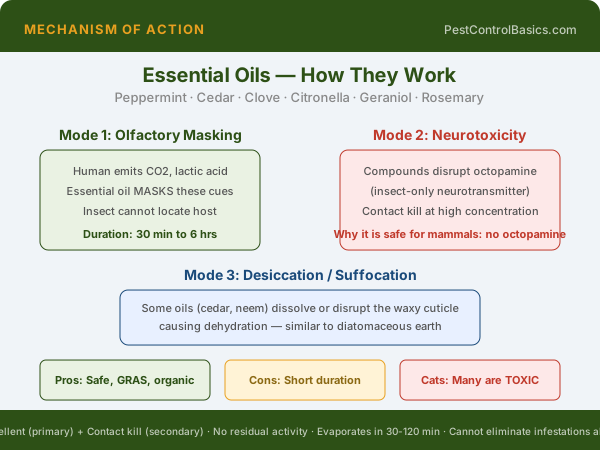
Essential oils like peppermint, cedar, clove, and citronella have real pest-repelling properties — but their effectiveness varies enormously by oil type, concentration, pest species, and application method. Here's what the science actually says, with no hype and no dismissal.
Generally recognized as safe (GRAS) when used properly. Many are EPA 25(b) exempt — meaning EPA considers them minimal risk. However, "natural" does not automatically mean "safe."
⚠️ Important cautions: Many essential oils are toxic to cats (especially tea tree, peppermint, citrus oils). Some can cause skin sensitization with repeated contact. Always dilute properly — undiluted essential oils can burn skin. Keep away from eyes.
⚠️ Cats: Cats lack a key liver enzyme (glucuronyl transferase) needed to metabolize many essential oils. Tea tree, peppermint, eucalyptus, and citrus oils can be toxic to cats even in diffused form.
Example
0.5 oz
per gallon
⚗️ Mixing Calculator
Enter your sprayer size and target rate — get the exact amount to pour. Backpack, hand sprayer, hose-end, or skid unit.
The honest truth: Essential oils work as repellents — the scientific evidence is clear on this. Where they fall short is as killers. They repel pests but rarely eliminate infestations. Think of them as a first line of defense, not a total solution.
Best use cases: Prevention and repelling in low-pressure situations. Keeping spiders out of a clean garage. Deterring ants from a countertop. Repelling mosquitoes during a short outdoor event. NOT for: active infestations, termites, bed bugs, or any situation where elimination is needed.
Duration problem: Most essential oils evaporate within 30-60 minutes. You need frequent reapplication, or use formulations with fixatives that slow evaporation. This is their biggest practical limitation compared to synthetic repellents.
🐛 Pests This Treats — Learn More
Click any pest to view its full identification guide, biology, and treatment options.
Follow the product label. Keep pets out of treated areas until completely dried (2–4 hours for sprays). Once dry, treated surfaces pose minimal risk to dogs and cats.
Q: Can I use essential oils pest control indoors?
Check the specific product label — formulations vary. Baits and dusts often have indoor labeling; concentrates and granulars are typically outdoor.
Q: How long does essential oils pest control last after application?
Residual varies by formulation, surface type, weather, and UV exposure. Indoor applications last longer than outdoor. Check the product label for re-application intervals.
Q: What should I do if exposed?
Remove contaminated clothing, wash skin with soap and water. For eye contact, rinse 15–20 minutes. For ingestion or severe symptoms, call Poison Control (1-800-222-1222). Have the product label available.
📋 Safety Data Sheet (SDS)
📋
Essential Oils for Pest Control — Safety Data Sheet
View the official SDS document for this product directly on the CDMS label database.
💡 Did you know? The EPA exempts certain essential oil pesticides from registration under FIFRA Section 25(b) because they're considered minimum risk. This means they can be sold without full EPA testing — which is good for access but means some products haven't been rigorously tested for efficacy.
🔮
Reviewed by Derek GiordanoContent reviewed by a licensed pest management professional. Last reviewed: April 2026.