Home Buying Guides Best Ant Baits
🛒 Buying Guide

Best Ant Baits of 2026

Ranked by species effectiveness. The wrong bait for the wrong ant does nothing — this guide matches the right product to the right species, plus the no-spray rule that pest professionals live by.

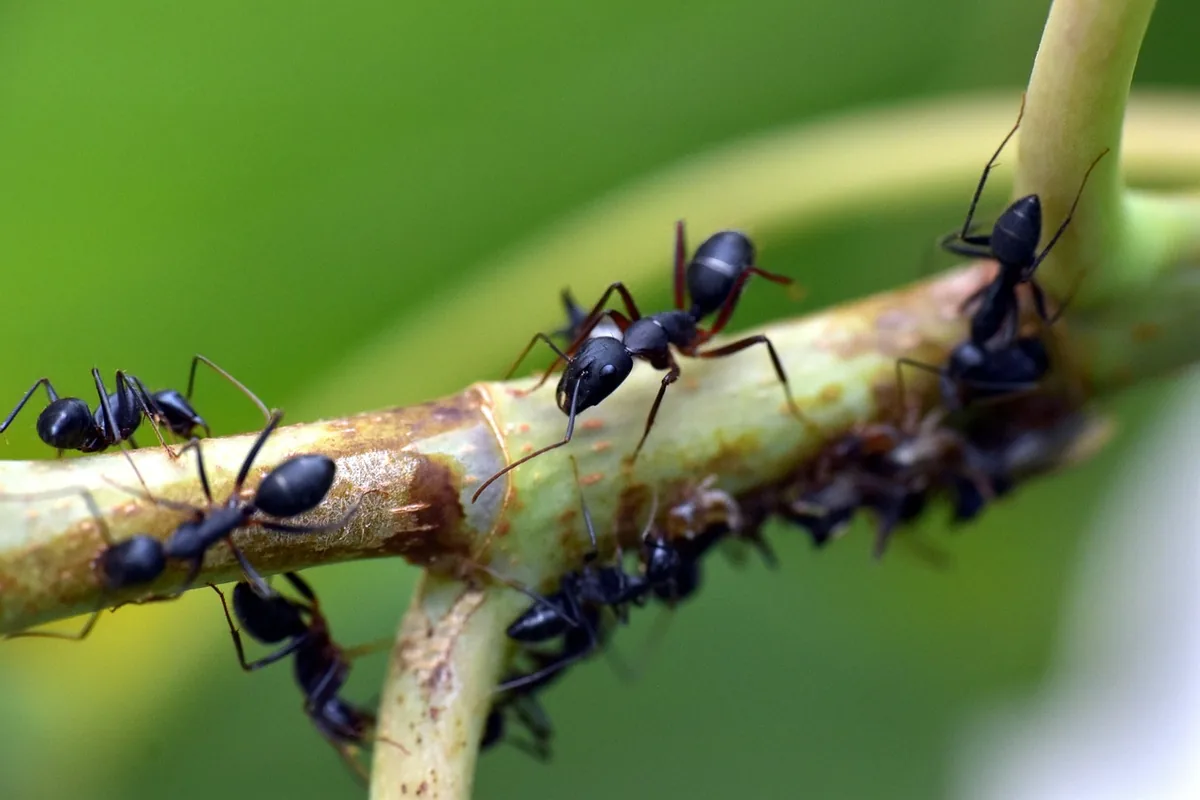
Close-up of black ants clustered on a twig
Photo by SandeepHanda on Pixabay
⚠ The Rule That Changes Everything

Do not spray ants. Aerosol insecticides kill foraging workers but do nothing to the queen — who produces up to 800 eggs per day. Killing workers causes the colony to ramp up worker production and may cause colony "budding" in species like Pharaoh ants, creating multiple new colonies from one. Slow-acting bait is the only approach that reaches the queen and eliminates the colony.

Top Picks

The Best Ant Baits by Ant Type

1
TERRO T300 Liquid Ant Bait Stations
Borax sugar bait — for odorous house ants, pavement ants, Argentine ants
★★★★★
Best for Common AntsWidely AvailablePet-Safer

TERRO Liquid Bait is the most effective consumer ant bait for the species that most commonly invade U.S. homes — odorous house ants, pavement ants, and Argentine ants. The active ingredient is borax (sodium tetraborate) at 5.4% in a sweet liquid matrix. Borax is slow-acting by design — foragers consume it, survive long enough to return to the nest and share it through trophallaxis (food-sharing), carrying the borax to larvae, the queen, and other workers who never leave the nest.

What to expect: Ant activity at the bait station dramatically increases for 24–72 hours as workers recruit more colony members to the food source — this is not failure, it is success. The population then drops rapidly from day 4 onward. Full colony elimination takes 1–2 weeks. Resist the urge to spray the trail — you will disrupt the baiting process.

Active: Borax 5.4%Cost: $8–12 / 6-packWorks in: 1–2 weeks
✓ Best for: Odorous house ant, pavement ant, Argentine ant — the three most common household ant species. Place stations directly on the active ant trail. Replace when liquid is consumed (every 3–5 days in active infestations).
2
Advion Ant Gel (Syngenta)
Indoxacarb gel bait — professional-grade, broad spectrum
★★★★★
Professional GradeMultiple SpeciesPrescription Price

Advion Ant Gel is the product pest control professionals reach for when TERRO is insufficient or when dealing with species that don't respond to simple borax. The active ingredient, indoxacarb, is a "pro-insecticide" — it is converted inside the insect's body into its toxic form, making it extremely slow-acting and ideal for secondary kill through trophallaxis. A single application of Advion gel can eliminate an entire ant colony in 3–5 days.

Application: Apply in pea-sized dots (not smeared lines) at 6-inch intervals at the entry point and along the active trail. Ants need to be able to pick up the gel and carry it — dots allow this; smears don't. Highly effective for odorous house ants, pavement ants, fire ants (in conjunction with Two-Step Method), carpenter ants, and most tramp ant species.

For Pharaoh ants: Advion is effective but should be rotated with protein-based bait (Advance 375A) since Pharaoh ant nutritional preference shifts between sugar and protein seasonally.

Active: Indoxacarb 0.05%Cost: $20–30 / 4 tubesWorks in: 3–7 days
✓ Best for: Multiple ant species including ones that don't respond to TERRO. Ideal for German cockroach + ant combo treatments since the same gel works for both.
3
Advance 375A Granular Ant Bait
Protein bait granule — for carpenter ants, Pharaoh ants, fire ants
★★★★☆
Protein FormulaOutdoor/Indoor

Many ant species — including carpenter ants, Pharaoh ants during protein-seeking phases, and fire ants — require protein-based bait, not sugar-based bait. An ant ignoring sugar bait is almost certainly in a protein-seeking phase. Advance 375A uses abamectin (0.011%) in a protein matrix that mimics insect prey. It is highly effective for carpenter ants, fire ants (broadcast in lawn), and Pharaoh ants in protein-seeking cycles.

Active: Abamectin 0.011%Cost: $18–25 / 8ozWorks in: 1–3 weeks
✓ Best for: Carpenter ants (apply near the colony entry point), Pharaoh ant protein cycle, fire ants as part of the Two-Step Method (broadcast around mounds).
4
Amdro Fire Ant Bait (Broadcast)
Hydramethylnon granule — broadcast fire ant treatment
★★★★☆
Fire Ant SpecificLawn Use

Amdro is the most widely available fire ant broadcast bait in the U.S. It uses hydramethylnon (0.73%) in a corn grit matrix that mimics fire ant food — workers carry granules to the queen. The Two-Step Fire Ant Method (recommended by Texas A&M and the University of Florida) calls for broadcast treatment of the entire yard with Amdro, followed by individual mound treatment of problem mounds 1–2 weeks later. This combination is 80–90% effective in reducing mound counts.

Critical timing: Apply when fire ants are actively foraging — soil temperature 65–95°F, morning or evening when not too hot. Do not apply before rain (washes away the bait) or immediately after mowing (disturbed ants won't forage).

Active: Hydramethylnon 0.73%Cost: $12–18 / 1lbWorks in: 1–2 weeks
✓ Best for: Fire ant lawn control as part of the Two-Step Method. Broadcast at 1–1.5 lbs per acre. Do not apply more than twice per year.
5
Maxforce Quantum Ant Bait
Imidacloprid liquid gel — the Pharaoh ant specialist
★★★★☆
Pharaoh AntLong-lasting

Maxforce Quantum uses imidacloprid (0.03%) in a specially formulated clear gel that stays effective for up to 3 months when applied in cracks and crevices — significantly longer than most sugar gels that dry out within days. This longevity makes it particularly effective for Pharaoh ant control in wall voids and behind fixtures where access for re-baiting is limited.

Active: Imidacloprid 0.03%Cost: $30–40/tubeLasts: 3 months
✓ Best for: Pharaoh ants (never spray — always bait), multi-ant species indoor treatments where longevity matters. Use in wall void injection with crack-and-crevice tip.
💡 Matching Bait to Ant Species

Odorous house ant, pavement ant: TERRO Liquid Bait (start here). Argentine ant: TERRO or Advion Gel — slow bait is essential, never spray. Pharaoh ant: Maxforce Quantum + Advance 375A in rotation — never spray. Carpenter ant: Advance 375A protein bait near nest entry + Termidor foam void injection. Fire ant: Amdro broadcast + bifenthrin or spinosad mound drench (Two-Step Method).

📚 More on This Topic

Related guides and profiles:

🔗 Hantavirus — Safe Rodent Cleanup🔗 Red ImportedFire Ant🔗 Pavement, Odorous House, Argentine & Little Black Ants🔗 🐜 Odorous House Ant (OHA)
📚 Sources: Texas A&M Fire Ant Project · EPA Safe Pest Control
DG
Derek Giordano
Certified Pest Control Operator · Former Business Owner
Derek ran his own pest control company in Florida for several years, servicing thousands of regular customers. All content is based on hands-on field experience and current EPA & university extension guidelines.

Outdoor ant management: when treatment matters and when it doesn't

Most ant species in the landscape are ecologically beneficial — aerating soil, controlling other insect populations, dispersing seeds — and don't require treatment unless they're causing specific problems. Treatment is justified for fire ant mounds in active-use areas (lawns, playgrounds, walking paths), aphid-tending ants on susceptible ornamentals where the aphid population is significant, and ant species actively entering structures. Treatment is not generally justified for ant mounds in unused areas, for incidental species observed during outdoor activity, or for native ant species that aren't causing identifiable damage. Broad-spectrum lawn treatment for ants causes collateral damage to beneficial soil invertebrates, pollinators visiting flowering plants, and ground-foraging bird populations that depend on insect food. Targeted treatment of specific problem mounds or trails preserves beneficial populations while addressing actual nuisances.

Documenting infestations: what helps and what doesn't

When a pest problem persists across multiple treatments, documentation becomes the single most useful tool for figuring out what's actually happening. The pattern that's worth tracking: date and location of every sighting, number of individuals, life stage if identifiable (adult, nymph, egg case), any treatment applied, and weather or seasonal context. Photos with a coin or ruler for scale matter more than people expect — species identification from memory is unreliable, while photos let an extension entomologist or professional confirm species accurately. A simple notebook or spreadsheet kept for one or two pest seasons reveals patterns that aren't visible in isolated observations: which rooms peak first, which months are reliable hot spots, which treatments seem to work and which don't. Professionals who inspect properties with this kind of homeowner-kept log diagnose faster and recommend more accurate interventions.

When DIY pest treatment turns into a legal or insurance issue

Most DIY pest control happens without any external review, but a few specific situations create legal and insurance exposure worth knowing about. Misapplication that affects neighboring property — drift from outdoor spraying, pesticide moving through a shared wall, treatment of a rental unit by a tenant — can create civil liability and, in some states, regulatory action. Treatment of common-area pests in condos, apartments, or HOAs is generally the property's responsibility, not the resident's, and self-treatment can void coverage or create disputes. Homeowner insurance generally does not cover damage caused by pests (termites, rodent chewing) but may cover sudden secondary damage (a rodent chewing a water line causing a flood). Documenting professional treatment with invoices preserves coverage options that DIY treatment doesn't. Renters specifically should request treatment from landlords in writing and keep records; in most jurisdictions, pest control is a landlord responsibility for habitability.

Why different ant species need different baits

The category 'ant bait' covers products with very different active ingredients and matrices, and matching the right bait to the species is critical. Sugar-loving species — common pavement ants, odorous house ants, Argentine ants — respond to liquid sugar baits like borax-based sugar bait. Protein-feeding species and species with seasonal preferences shift toward protein require oil- or protein-based bait matrices. Carpenter ants are technically protein/sugar-feeding but respond best to specific protein-rich baits like indoxacarb-based products. Pharaoh ants are notoriously difficult and respond only to specific bait formulations (typically methoprene-based growth regulator baits or hydramethylnon at low concentrations); standard ant sprays will cause Pharaoh ant colonies to bud and multiply, making the problem dramatically worse. Identifying the species — typically possible from a clear photograph — and selecting the right bait matrix multiplies effectiveness compared to using a single 'all ants' product. Many DIY ant treatments fail not because the homeowner used a bad product but because the right product was used against the wrong species.

Why most pest 'sightings' aren't what people think they are

Species misidentification is the single most common reason that DIY pest treatment fails or that homeowners describe products as not working. The patterns are consistent: bed bug bites are routinely attributed to mosquitoes, fleas, or unknown causes; carpet beetle larvae are mistaken for bed bug nymphs; small black ants are called 'sugar ants' regardless of actual species; carpenter ants and termites are confused despite very different treatments; bat bugs are treated as bed bugs (the treatment may work, but the actual problem is overhead). Even when identification is correct at the family level, species within a family often require different approaches — German vs. American cockroaches, subterranean vs. drywood termites, or pavement vs. carpenter ants are practical examples. The first hour of any pest problem should go to identification, not treatment: photograph specimens with a coin for scale, send images to a local cooperative extension office (most respond within a day or two), or post to one of the moderated identification forums where entomologists answer. Correct identification narrows treatment options to those that actually work and discards the larger pile that don't.

Outdoor ant management: protecting the indoor perimeter

Many indoor ant problems originate from outdoor colonies that find access points into the structure, which means the most effective long-term ant management often happens outdoors. Reducing landscape conditions that support colonies near the foundation is the first step: pulling mulch back six to twelve inches from the foundation, trimming shrubs and tree branches that touch the structure (eliminating direct access bridges), removing leaf litter and debris from the foundation area, and addressing any wood debris (firewood, scrap lumber) stored against the structure. Granular baits applied to the perimeter address foraging colonies, while perimeter sprays (where appropriate) create a brief barrier during peak pressure periods. The granular and liquid approaches work together: granular baits target the colony, liquid perimeter sprays kill foraging individuals that would otherwise cross. For chronic problems, identifying and treating actual colony locations (typically following workers back to their entry points, then tracing further) is more efficient than blind perimeter treatment.

Nuptial flights: what swarming ants tell you about pressure

Most ant species produce reproductive swarms — winged males and females leaving the colony to mate and establish new colonies elsewhere — and the timing of these flights is one of the most useful diagnostic signals in residential ant management. A nuptial flight near or inside a structure indicates that a mature colony exists nearby, often within a few hundred feet, and that new colonies are about to be established in surrounding areas. For species that infest structures, this is the moment at which exclusion work has the highest leverage: sealing gaps now prevents the new mated queens from finding harborage in walls and voids. Different species swarm at different times of year and under different conditions, with most species favoring warm, humid post-rain afternoons. Recognizing the swarm event, identifying the species from the alate morphology, and acting on exclusion within the same season is dramatically more effective than waiting until the new colonies announce themselves as visible trails six months later. Homeowners who learn the swarm patterns for their specific region can use the events as a calendar trigger for inspection and prevention rather than treating them as the curiosity they're often dismissed as.

Coordinating pest control with renovation and construction work

Renovation work is one of the highest-value moments for pest intervention, and it's also one of the most consistently missed. When walls are open, when slabs are exposed, when crawlspaces are accessible, when sill plates are visible — these are the windows during which exclusion work, soil treatment, perimeter sealing, and harborage elimination can be done at a fraction of their normal cost and with dramatically better completeness. The same caulk-and-foam exclusion job that takes hours of awkward work after the fact can be done in minutes when the wall cavity is open. A pre-construction termite soil treatment is dramatically more effective than any post-construction equivalent, but it has to happen before the slab is poured. Even non-structural renovations like flooring replacement, kitchen rework, or basement finishing create windows during which the home's pest-relevant geometry can be improved. The cost of pulling in a pest professional during the renovation envelope, even just for an inspection and recommendations, is almost always recovered in reduced future treatment costs and avoided structural damage. The conversation to have with general contractors is whether they're willing to coordinate with a pest specialist during the open-wall phase, and most reputable contractors are, particularly on larger jobs where the small additional scheduling complexity is offset by the value-add for the homeowner.

Odorous house ants: why they're harder than they look

Odorous house ants are one of the most commonly misidentified household ant species, and the misidentification often leads to treatment failure. These ants have multiple queens per colony, satellite nests in multiple locations, and the ability to relocate the colony rapidly if disturbed, which means that spray treatments often produce a brief reduction followed by relocation and re-emergence in a new location nearby. The right approach for odorous house ants is non-repellent bait, applied where foragers are active, with explicit avoidance of any contact spray that would disrupt the trail and trigger relocation. Bait acceptance can be slow with this species, often taking days to a week before colony-level effects appear, and treating impatience by switching to a faster-acting spray is precisely the mistake that creates a chronic problem. Homeowners frustrated with persistent small ant infestations are very often dealing with odorous house ants treated repeatedly with the wrong approach; switching to a bait-only protocol and tolerating the slower onset typically resolves problems that years of spraying could not.

Published: Jun 1, 2024 · Updated: Apr 5, 2026
🔮
Reviewed by Derek GiordanoContent on PestControlBasics.com is developed with input from certified pest management professionals and cross-referenced against EPA, CDC, and university extension guidance. Last reviewed: April 2026.