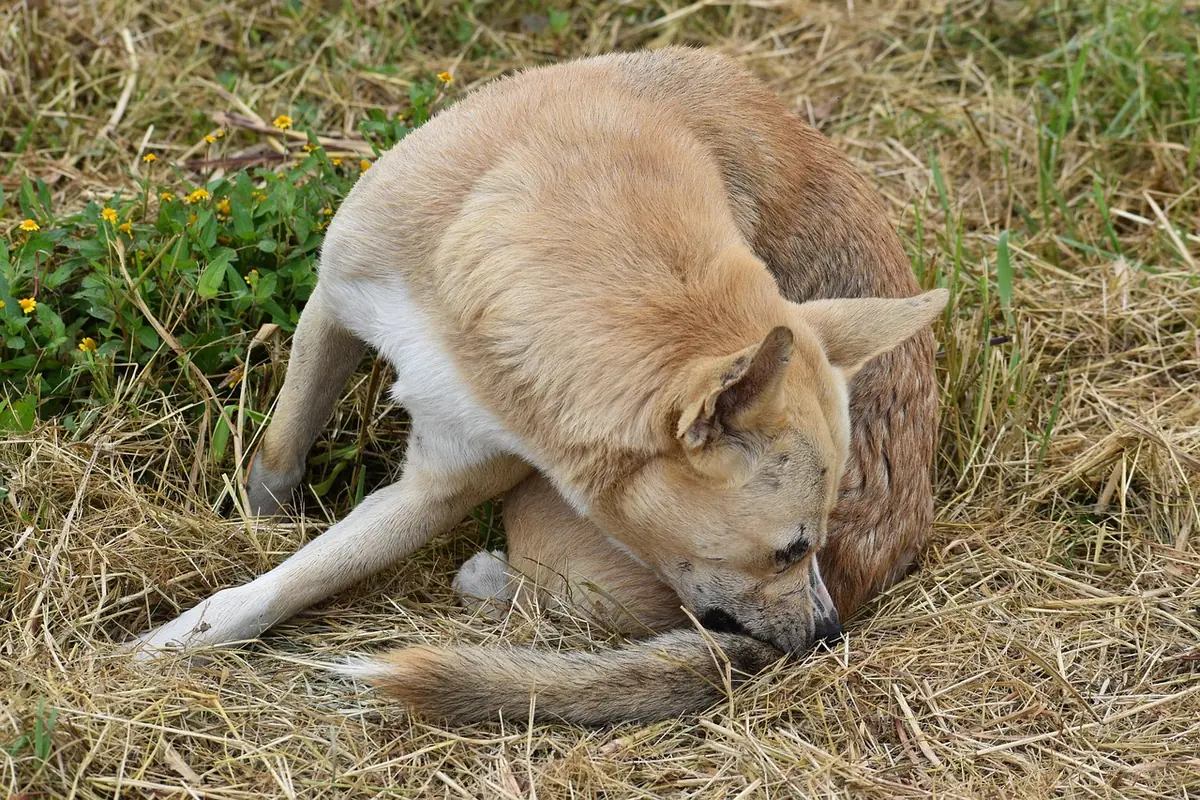
Flea populations grow exponentially. A single female produces up to 50 eggs per day — roughly 2,000 in her lifetime. Those eggs fall off the pet into carpet, bedding, and furniture where larvae develop invisibly in the base of carpet fibers. According to the University of Kentucky Entomology Department, by the time you see adult fleas on your pet, the invisible portion — eggs, larvae, and pupae — represents 95% of the total infestation. The adults you're seeing are just the visible 5%.
This is why reactive treatment is so difficult and why prevention is dramatically easier. Starting treatment before populations build means you're fighting dozens instead of thousands. A flea population left unchecked for just 30 days can grow from 10 adults to over 250,000 eggs, larvae, and pupae distributed throughout a home.
The American Veterinary Medical Association (AVMA) reports that flea infestations are the most common ectoparasite problem veterinarians treat, and that the majority of severe infestations stem from delayed or inconsistent prevention rather than treatment failure.
Effective flea prevention requires understanding why fleas are so difficult to eliminate once established. The flea life cycle has four distinct stages, and each stage requires a different control strategy:
Eggs (50% of infestation): White, oval, about 0.5mm — nearly invisible. They fall off the pet within hours of being laid and accumulate wherever the pet rests: bedding, carpet, furniture cushions, car seats. Eggs hatch in 2–14 days depending on temperature and humidity. Vacuuming removes a significant percentage, but eggs lodged deep in carpet pile survive.
Larvae (35% of infestation): Tiny, worm-like, translucent. They live in the base of carpet fibers, in cracks between floorboards, and under furniture — anywhere dark and humid. Larvae feed on organic debris and adult flea feces (dried blood). They actively avoid light, which is why you never see them. The larval stage lasts 5–11 days.
Pupae (10% of infestation): The cocoon stage — and the reason flea infestations persist after treatment. Pupae spin sticky silk cocoons that bond to carpet fibers. These cocoons are impervious to every registered insecticide. Pupae can remain dormant for up to 5 months, emerging only when they detect vibration, warmth, pressure, or CO₂ from a potential host. This is why vacuuming is critical — the vibration triggers emergence.
Adults (5% of infestation): The only stage you actually see. Adults must feed within hours of emerging from the pupal cocoon. Once they begin feeding on a host, they rarely leave voluntarily. A female begins laying eggs within 24–48 hours of her first blood meal.
March–April (Early Spring): Start veterinary flea prevention on all pets — oral (NexGard, Simparica) or topical (Frontline, Advantage). This is the critical window. Flea pupae that overwintered in carpet begin emerging as temperatures warm above 65°F indoors. Vacuum thoroughly 2–3 times per week to stimulate pupal emergence and remove eggs from carpet fibers.
May–June (Late Spring): Apply IGR (insect growth regulator) — Precor or NyGuard spray — to all carpeted areas, pet bedding zones, and upholstered furniture. IGR prevents flea eggs and larvae from developing into adults for 7 months. This single application is the most cost-effective flea prevention product available. Treat the yard with granular insecticide or beneficial nematodes in shaded areas where pets rest.
July–August (Peak Season): Flea populations peak in hot, humid weather. If you started prevention in spring, you should see minimal activity. If you're seeing fleas now, you need the full 3-stage elimination protocol: treat the pet, treat the home (IGR + adulticide), and treat the yard — simultaneously. All three environments must be treated at the same time or the infestation bounces between them.
September–October (Fall): Maintain pet prevention through fall. Outdoor flea populations decline with cooler temperatures, but indoor populations (in heated homes) can persist year-round. Continue vacuuming weekly. The IGR applied in spring should still be active.
November–February (Winter): In heated homes, flea pupae can survive in carpet indefinitely, emerging when stimulated by vibration, warmth, or CO₂ (a person walking by). Keep pet prevention active year-round in warm climates. In cold climates, monthly prevention can be paused if pets have no outdoor flea exposure — but consult your vet first.
Not all flea prevention products are equal. The Companion Animal Parasite Council (CAPC) recommends year-round prevention with veterinary-grade products. Here's how the major categories compare:
Oral preventives (NexGard, Simparica, Bravecto, Credelio): These are isoxazoline-class drugs that circulate in the pet's bloodstream. Fleas must bite the pet to be exposed, but they die within 4–8 hours of feeding. Oral products cannot be washed off by swimming or bathing, which makes them the most reliable option for active dogs. They require a prescription.
Topical preventives (Frontline Plus, Advantage II, Revolution): Applied to the skin between the shoulder blades. The active ingredient distributes through the skin's oil layer. Topicals kill fleas on contact — they don't need to bite. However, efficacy decreases with frequent bathing or swimming. Some products have seen reduced effectiveness in certain flea populations due to resistance to older active ingredients like fipronil.
Flea collars (Seresto): The Seresto collar releases imidacloprid and flumethrin over 8 months. It provides genuine long-term prevention when worn consistently. The collar must fit snugly — loose collars lose contact with the skin and reduce efficacy. Collar effectiveness decreases during the final 1–2 months of the rated lifespan.
The flea pupal cocoon is completely impervious to every registered insecticide — sprays, foggers, powders, nothing penetrates it. The cocoon is coated in a sticky silk that bonds carpet debris to its surface, creating a physical and chemical barrier that no product can breach. Research from North Carolina State University confirmed that even direct contact with concentrated insecticide solutions failed to penetrate intact pupal cocoons.
Pupae can remain dormant for up to 5 months, emerging as adults long after you thought the infestation was eliminated. They detect hosts through vibration (footsteps), warmth (body heat), and CO₂ (exhaled breath). This is why people returning from vacation to an empty home often experience a mass flea attack — hundreds of pupae emerge simultaneously in response to the sudden presence of a host.
This is why flea treatment takes 3–4 weeks minimum and why you'll see new adult fleas emerging 2–3 weeks after treating. They're not treatment failures — they're pre-existing pupae hatching on schedule. The IGR prevents these new adults' offspring from developing, breaking the cycle within one generation.
The single most effective home flea treatment product is an insect growth regulator (IGR) — specifically methoprene (Precor) or pyriproxyfen (NyGuard). IGRs mimic juvenile hormones, preventing flea eggs from hatching and larvae from pupating into adults. One application provides 7 months of residual protection on carpet and upholstery.
How to apply IGR effectively: Vacuum thoroughly first to remove eggs and stimulate pupal emergence, then apply IGR spray to all carpeted areas, pet bedding zones, beneath furniture cushions, and along baseboards. Focus on areas where pets sleep — this is where 80%+ of eggs, larvae, and pupae concentrate. For hardwood floors, concentrate on cracks between boards and area rugs.
An IGR application costs $15–20 for a can that covers a typical home and provides the longest-lasting protection of any flea control product available. Combined with pet prevention and vacuuming, IGR alone prevents the vast majority of flea infestations.
For active infestations that need immediate adult knockdown, combine IGR with an adulticide spray containing bifenthrin or deltamethrin. The adulticide kills current adults; the IGR prevents the next generation from developing. This combination is what professional flea treatments use.
Outdoor flea populations concentrate in shaded, humid areas where pets rest — under decks, along fence lines, beneath shrubs, and in dog runs. Open, sunny lawn areas are too hot and dry for flea larvae to survive. Target your yard treatment to the specific zones where pets spend time in shade.
Chemical option: Granular insecticides containing bifenthrin (Talstar, Bifen) applied to shaded rest areas and watered in lightly. These provide 30–60 days of residual control. Reapply monthly during peak season (June–September).
Biological option: Beneficial nematodes (Steinernema carpocapsae) are microscopic worms that actively hunt and kill flea larvae in soil. They're applied with a hose-end sprayer to moist, shaded areas. Nematodes are pet-safe, child-safe, and effective — but they require moist soil and shade to survive. Apply in evening or on overcast days, and water the area before and after application.
Environmental management: Keep grass mowed short (flea larvae need humidity that tall grass provides), remove leaf litter and debris from pet areas, and discourage wildlife (raccoons, opossums, feral cats) that carry fleas into the yard. A perimeter treatment around the home's foundation helps prevent outdoor fleas from entering.
Prevention: Monthly flea prevention for one pet ($15–25/month) + one IGR application ($15–20) + regular vacuuming (free) = $200–300/year total.
Treatment of active infestation: Professional whole-home flea treatment ($150–400) + pet treatment ($30–60) + yard treatment ($75–150) + 3–4 weeks of disrupted life = $250–600+ plus misery. Severe infestations requiring repeat professional treatments can exceed $1,000.
The math is unambiguous: prevention costs roughly half of what treatment costs, with zero disruption and zero flea bites. The AVMA emphasizes that consistent year-round prevention is the single most cost-effective approach to flea management for pet owners.
| Approach | Annual Cost (1 pet) | Effectiveness | Disruption |
|---|---|---|---|
| Year-round prevention | $200–320 | 95%+ | None |
| Reactive DIY treatment | $150–350 | 60–80% | 3–6 weeks |
| Professional treatment | $350–800 | 90%+ | 1–4 weeks |
| Foggers/bug bombs | $30–60 | 10–30% | High (chemical residue) |
Treating the pet but not the home: The pet carries only 5% of the flea population. If you treat the pet without addressing the 95% in carpet and bedding, new adults continue emerging from pupae and reinfesting the pet for weeks.
Using foggers instead of targeted treatment: Flea bombs are the most commonly purchased and least effective flea product. The pesticide mist settles on top of surfaces but fails to reach the carpet base where larvae live. Studies consistently show foggers provide little to no flea reduction while contaminating food-prep surfaces.
Stopping treatment too early: Seeing new fleas 2 weeks after treatment is normal — they're emerging from pre-existing pupae. Many homeowners assume the treatment failed and switch products unnecessarily. The correct response is patience: continue vacuuming daily and wait for the IGR to break the life cycle over 3–4 weeks.
Treating only one pet in a multi-pet household: All pets must be on prevention simultaneously. An untreated cat or dog serves as a flea breeding reservoir that continuously reinfests treated pets and the home. This is one of the most common reasons flea control "doesn't work."
Skipping the yard: In warm climates, outdoor flea populations continuously reinvade the home through pets. Treating indoors without addressing the yard source creates an endless cycle of reinfestation, especially during peak season.
Flea season runs roughly April through November in most of the U.S., peaking in July and August. In heated homes, fleas can remain active year-round. In warm climates like Florida and the Gulf Coast, flea season is essentially continuous. The critical prevention window is March through April — starting before populations build.
Expect 3–4 weeks minimum, and 6–8 weeks for severe infestations. The timeline is dictated by the pupal stage — cocoons are impervious to insecticides, so you must wait for adults to emerge and contact treated surfaces. IGR prevents any new eggs from developing, ensuring the cycle breaks within one generation.
No. Foggers are among the least effective flea treatments available. The mist doesn't penetrate carpet fibers where larvae live, and it leaves chemical residue on surfaces. Targeted IGR spray combined with pet prevention is dramatically more effective.
Yes. Flea pupae survive in carpet for months without a host, emerging when they detect vibration, warmth, or CO₂. This is why vacant homes and post-vacation returns often trigger mass flea emergence. Fleas can bite humans temporarily but cannot complete their reproductive cycle on human blood alone.
In warm climates (USDA zones 8+), yes — year-round prevention is strongly recommended. In cold climates with hard freezes, a winter break may be acceptable if pets have zero outdoor flea exposure. The safest approach is year-round prevention at $15–25/month per pet.
New adults are constantly emerging from pupae in the carpet and jumping onto the pet. Modern preventives kill them within hours, but new ones keep appearing for 3–4 weeks until the pupal reservoir is exhausted. The pet acts as a treated "trap" — fleas land, die, and the population collapses over time.