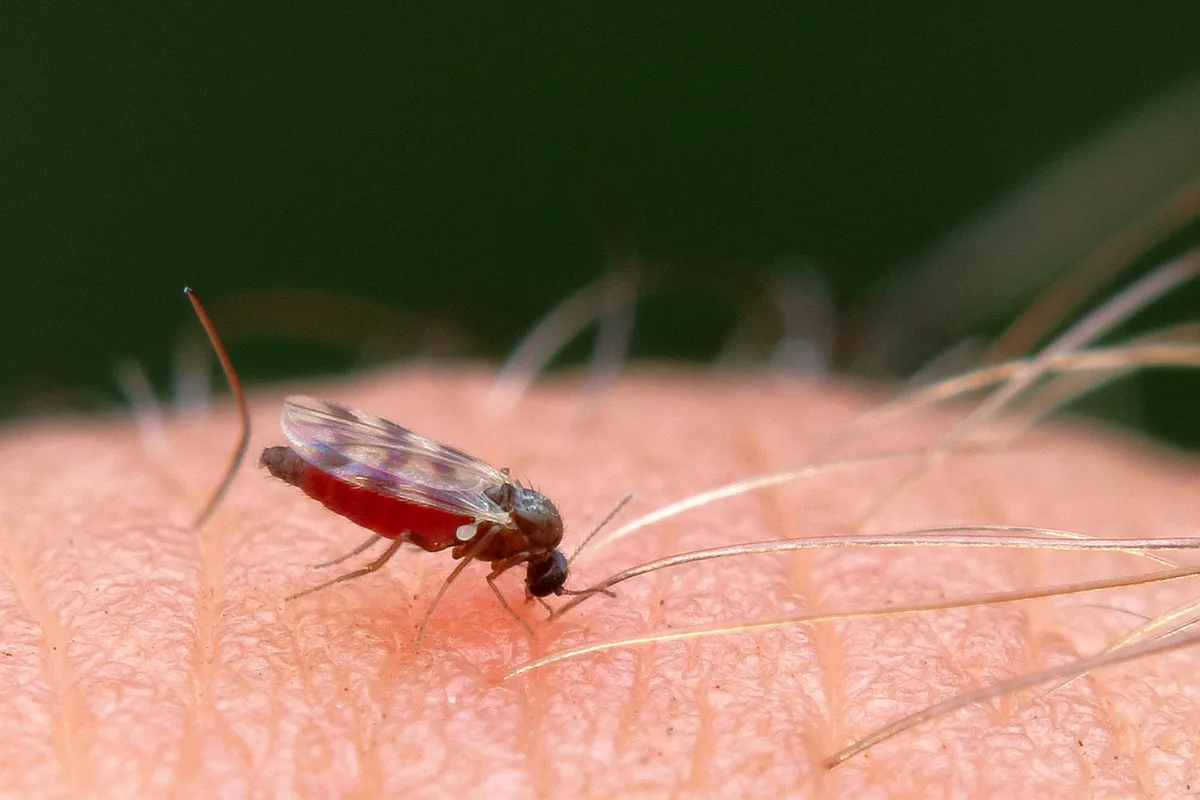
Mosquito season does not start on a single date — it builds gradually as temperatures rise above 50°F and standing water accumulates from spring rains. The most effective mosquito control strategies are implemented 4–6 weeks before peak season, not after mosquitoes are already biting. This guide provides a week-by-week preparation plan.
Eliminating standing water removes 80% of your mosquito problem without any chemicals. Mosquitoes need as little as one tablespoon of stagnant water to complete their 7–10 day larval development cycle.
Walk your entire property and dump, drain, or cover: flower pot saucers, bird baths (refresh weekly), clogged gutters, old tires, buckets, wheelbarrows, tarps that collect water, children's toys, pet water bowls (refresh daily), and any container that holds water for more than 5 days.
The Asian tiger mosquito — the most aggressive daytime-biting species — breeds preferentially in small, dark containers near homes. It does not need ponds or ditches. A forgotten bottle cap in your yard is enough.
For water features you cannot drain — ornamental ponds, rain barrels, drainage ditches, tree holes — apply Bti (Bacillus thuringiensis israelensis) larvicide. Bti is a biological larvicide that kills mosquito larvae specifically without harming fish, birds, pets, or beneficial insects. It is certified organic and considered the safest mosquito control product available.
Bti dunks last approximately 30 days. Bti bits provide faster knockdown (24 hours vs 48) but need reapplication every 7–14 days. Use both: dunks for season-long control and bits for immediate treatment of active breeding sites.
See our complete guide: How to Treat Standing Water for Mosquitoes.
Repair or replace all window and door screens. Even small tears allow mosquitoes entry. Standard fiberglass screening (18×16 mesh) blocks most mosquitoes, but if you deal with no-see-ums or very small species, upgrade to 20×20 mesh.
Consider adding screen to porches, patios, and outdoor dining areas if mosquito pressure is severe in your area. Outdoor fans also provide meaningful protection — mosquitoes are weak fliers and cannot navigate winds above 5 mph.
If your property borders woods, wetlands, or has persistent mosquito pressure despite eliminating breeding sites, a perimeter barrier spray is the next step. Bifenthrin or lambda-cyhalothrin applied to vegetation, under decks, and along fence lines kills resting adult mosquitoes and provides 30–60 days of residual protection.
Timing matters: Apply in early morning or late evening when pollinators are inactive. Never spray flowering plants directly. See our complete yard mosquito treatment guide.
For personal repellents, DEET (20–30% concentration) remains the gold standard with 6–8 hours of protection. Picaridin (20%) is equally effective, less greasy, and does not damage plastics. Permethrin-treated clothing provides excellent protection — treat pants, socks, and shoes for tick and mosquito prevention during outdoor activities.
For a detailed comparison, see our mosquito repellent comparison guide.
4–6 weeks before peak season (mid-May to mid-June in most of the US, earlier in southern states). Start with standing water elimination, then larvicide, barriers, and sprays in sequence.
Eliminating standing water removes ~80% of breeding habitat. Combined with Bti larvicide in permanent water, these source-reduction methods prevent mosquitoes from completing their life cycle.
Bti is a soil bacterium that kills mosquito larvae specifically when ingested, harmless to fish, pets, and beneficial insects. Each dunk treats 100 sq ft of water for ~30 days.
Yes — they kill resting adults and provide 30–60 days of residual protection. Best as a supplement to source reduction. Apply early morning or late evening to protect pollinators.
DEET (20–30%) for 6–8 hours protection. Picaridin (20%) is equally effective, less greasy. Permethrin on clothing protects against both mosquitoes and ticks.
Weakly — about 42% reduction in landing rates in the immediate smoke zone, eliminated by any breeze. DEET and picaridin are dramatically more effective.
Marketing claims for pest control products and services often outpace what the underlying evidence supports. Some patterns worth noting: 'all-natural' doesn't mean safe or effective — many natural products are essentially diatomaceous earth, peppermint oil, or similar; some work, some don't, and 'natural' alone says nothing about either. Single-application claims ('one treatment kills all pests') ignore reinfestation and resistance; legitimate treatment is usually programmatic, not single-shot. Patented proprietary formulations rarely outperform generic equivalents with the same active ingredient. 'Guaranteed elimination' claims often exclude reinfestation, hidden infestations, or specific species when read carefully. The EPA product database and university extension reviews are reasonable cross-checks before purchasing premium-priced products; many premium products are repackaging of standard active ingredients with marketing markup.
Pesticide efficacy is highly sensitive to the conditions at application and immediately after. Temperature affects both vapor pressure (volatility) and residual binding — products applied above ~90°F often volatilize before binding to surfaces, while applications below ~50°F can fail to spread properly. Surface porosity changes residual duration: a residual that lasts eight weeks on a sealed concrete slab might last three weeks on bare wood. Rainfall within four hours of an outdoor application typically washes off most surface deposits, though microencapsulated products are more rain-fast. UV exposure degrades many pyrethroids within days to weeks on sunny surfaces, which is why fence-line applications often fail mid-summer. Indoor humidity affects bait acceptance — dry baits perform worse in high humidity as they absorb moisture and lose palatability. Reading conditions correctly explains many otherwise mysterious treatment failures.
DIY pest control is appropriate for most common household pests when caught early and treated correctly. Escalation to a licensed professional makes sense in specific situations, not just when frustration builds. Wall-void and structural infestations — termites, carpenter ants, rodents nesting inside walls — usually require equipment and access homeowners don't have. Bedbugs at moderate-to-heavy infestation levels almost always require professional treatment; DIY rarely succeeds past the first few isolated bugs. Multi-unit dwellings (apartments, condos) need building-wide coordination that individual unit treatments can't replicate. Health-sensitive households — anaphylaxis risk to stings, immunocompromised individuals, pregnancy, infants — should default to professional because professionals can use the lowest-toxicity option that solves the problem rather than what's available at retail. The financial break-point is roughly when DIY material costs approach one professional visit; below that, DIY is usually fine.
Active ingredient gets most of the attention, but formulation often determines outcome. The same active ingredient in different formulations performs very differently: microencapsulated formulations last longer on porous surfaces and reduce human re-entry exposure, wettable powders give the longest residual on porous substrates but leave visible residue, suspended concentrates give a balance of residual and appearance, dusts are uniquely effective in wall voids and dry harborage but should never be broadcast indoors, baits are appropriate when pests must transport active to the colony or nest, and aerosols are appropriate for direct contact and quick knockdown but rarely give meaningful residual. Choosing formulation by the substrate (porous vs. nonporous), the access (open spray vs. crack-and-crevice vs. void), and the goal (knockdown vs. residual vs. transferable) routinely improves outcomes more than upgrading active ingredient.
Pest control writing online ranges from rigorous to clickbait, and the practical question for most homeowners is which information is reliable enough to act on. The criteria we use editorially: claims backed by university extension or peer-reviewed sources, treatment recommendations that match current EPA-registered product labels, awareness of regional variation rather than one-size-fits-all advice, and a clear distinction between what's well established and what's emerging or contested. The topics we cover at depth are those where homeowner action makes a measurable difference — identification, exclusion, integrated treatment approaches, and prevention — and we try to be honest about the cases where DIY won't reasonably handle the problem. Reader feedback drives ongoing updates: when the same question shows up repeatedly in emails or comments, that's a signal that existing content didn't fully address it.
Lifestyle and home-improvement publications routinely cover pest control topics, but the quality of advice varies dramatically and the most popular tips often perform worse than less-publicized alternatives. Specific examples of commonly-published advice that doesn't hold up: cinnamon, peppermint oil, and other natural deterrents for ants (work briefly in laboratory conditions but don't produce meaningful field control); bleach in drains for fly elimination (doesn't address the biofilm where flies actually breed); ultrasonic pest repellers (extensive peer-reviewed testing shows minimal to no efficacy); diatomaceous earth applied broadly to carpets and floors (works in dry voids but loses efficacy when wet or vacuumed, and creates inhalation concerns when applied broadly); and dryer sheets stuffed in vents as rodent deterrents (no peer-reviewed evidence of efficacy). The pattern: most universal-home-tip pest advice prioritizes appeal and shareability over efficacy. Better sources for residential pest decisions include cooperative extension publications, peer-reviewed entomology literature (often accessible through extension publications that summarize it), and pest management association educational materials, which represent professional consensus on actual evidence.
Generic seasonal pest calendars list typical activity windows by region, but every property has its own micro-calendar shaped by orientation, vegetation, drainage, neighbor properties, and structural features. After one or two years of observation, most homeowners can map their property's specific patterns: when wasps start scouting (typically early to mid spring as queens emerge), when ants first appear indoors (often after a specific rain pattern), when stored-product pests show up in pantries (often late spring through fall), when rodent activity increases (typically late fall as outdoor food declines and indoor warmth attracts them), when mosquito pressure peaks (varies enormously by local conditions), and when seasonal nuisances like cluster flies or boxelder bugs arrive (usually first hard cooling in fall). A personal calendar drives preventive timing — exterior perimeter treatment shortly before ant pressure builds is dramatically more effective than treatment after they're inside, exclusion work for rodents in early fall beats trapping in late fall, and wasp prevention in early spring beats removal in summer. Two years of observation produces a calendar more useful than any published guide for the specific property.
Sealing entry points is the most underrated pest control activity in residential settings, partly because it produces no immediate visible result and partly because it feels like home repair rather than pest control. The yield is substantial: a thoroughly sealed structure with appropriate exterior caulking, intact weatherstripping, sealed utility penetrations, and screen integrity has dramatically lower pest pressure than the same structure without those interventions. Specific high-yield targets include gaps around dryer vents, electrical and plumbing penetrations through exterior walls, gaps where siding meets foundation, mortar joints in older brick, weep holes in newer brick (which should be screened, not sealed), garage door bottom seals (where rodents commonly enter), and the gap above door thresholds where many ants and small insects pass. Materials matter: silicone-based caulk for moisture areas, polyurethane sealant for foundation cracks, copper mesh for rodent exclusion at utility penetrations (steel wool degrades), and 1/4-inch hardware cloth for larger openings. A weekend of methodical sealing in spring or fall — when activity is moderate and weather permits exterior work — produces lasting reduction that no single treatment matches.
Pest control content on the internet has grown dramatically in volume but not in average quality, and the signals that distinguish reliable sources from unreliable ones are worth knowing. Reliable content typically cites specific products by active ingredient rather than only by brand, references regional variation in pest pressure and treatment efficacy, acknowledges treatment failures and the conditions under which they occur, and avoids absolute claims about results. Unreliable content tends to make universal claims, recommend specific brand products without identifying alternatives, omit the conditions under which advice applies or fails, and write in a tone optimized for affiliate conversion rather than reader understanding. The other useful signal is whether the source discusses cost-benefit and threshold thinking — at what point does treatment become worth doing — versus only providing how-to instructions with the assumption that treatment is the right answer. Sources that engage with the decision dimension are usually more reliable than sources that skip past it. None of these signals are perfect, but applied consistently they filter out a meaningful portion of the lower-quality content that dominates search results for many pest topics.
An inspection is the cheapest tool in pest management, and homeowners systematically underspend on it. The economics are unambiguous: an annual or semiannual inspection costs a small fraction of what any moderate treatment costs, and it catches problems while they're still cheap to address. Termite damage detected in its first season requires perimeter treatment; the same damage discovered three years later may require structural repairs running into five figures. Rodent activity detected through droppings before nesting establishes requires sealing and a few traps; the same activity discovered after a multi-generation infestation has set up in wall voids requires removal, exclusion, sanitation, and sometimes drywall work. The pattern repeats across nearly every pest category. Even households that don't engage a regular pest service should treat the annual inspection as a baseline expense — equivalent to the way they probably treat HVAC tune-ups, gutter cleaning, or smoke detector battery changes. The marginal cost of one trained set of eyes on the property each year is one of the most defensible expenses in home maintenance.
Pesticide labels are legal documents written to satisfy regulatory requirements, not field guides written to maximize success in a specific home. The instructions cover the broadest reasonable use case, which means they're rarely tuned for the specific construction type, climate, or pest pressure you're dealing with. A label might call for application every six weeks because that's what the registration data supports across a wide range of conditions, but the actual reapplication interval that matches the residual life of the active ingredient in your specific application context could be shorter or longer. This is not an invitation to ignore label directions — doing so is illegal and frequently dangerous — but it does mean that following the label is the floor, not the ceiling, of good practice. Knowledgeable users overlay the label with conditions-aware judgment: shorter re-treatment intervals during heavy rain or high humidity, denser application in known harborage, and supplementary monitoring after treatment to verify that the work actually performed as expected. The label tells you what's permitted; experience tells you what's optimal within that envelope.