Extreme DIY Difficulty Hitchhiker Pest Heat Is the Answer

Bed Bugs

Cimex lectularius

The pest that has defeated more homeowners than any other. They don't care about cleanliness. They hitchhike through five-star hotels. And they laugh at most DIY treatments. Here's the truth โ€” and what actually works.

SizeApple seed โ€” 5โ€“7mm
ColorReddish-brown, flat
FeedHuman blood โ€” nighttime
Eggs1โ€“5 per day, 250 lifetime
Kill Temp122ยฐF sustained
๐Ÿ›๏ธ
Quick Reference Card
Bed Bug โ€” Cimex lectularius
ShapeFlat, oval, apple-seed shaped
ColorReddish-brown; dark red after feeding
EggsTiny white, 1mm, in clusters
Where FoundMattress seams, headboards, furniture joints
Active2โ€“5 AM โ€” when CO2 from breath peaks
Feed CycleEvery 5โ€“10 days (can survive 1 year without feeding)
DIY Success RateUnder 30% for moderate infestations
Best TreatmentProfessional heat treatment
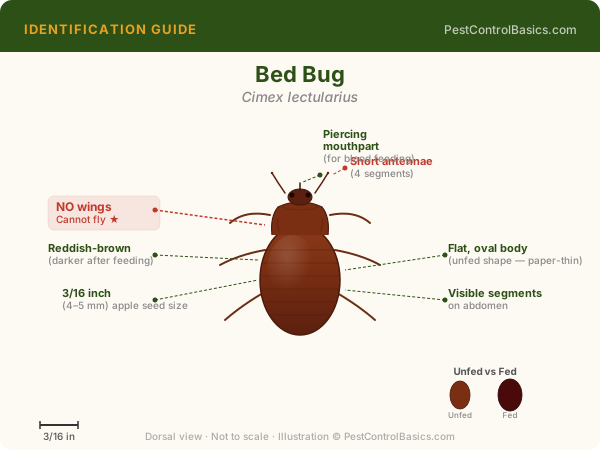
๐Ÿ“ FIELD GUIDE ILLUSTRATION
Bed bug (Cimex lectularius) identification illustration with labeled anatomical features โ€” PestControlBasics.com

Original illustration by PestControlBasics.com. Use anatomical labels above to confirm your identification. For photo references, see the identification section below.

Biology & Behavior

Why bed bugs are uniquely difficult

Cimex lectularius has been feeding on humans for over 3,500 years โ€” it evolved alongside us. It is exquisitely adapted to avoiding detection and surviving chemical assault. Understanding its biology is essential to understanding why most treatments fail.

They Find You by CO2

Bed bugs locate sleeping hosts by following the carbon dioxide plume from breathing, body heat, and chemical kairomones. They feed for 5โ€“10 minutes, inject an anesthetic so you don't wake, and return to harborage before morning. The anesthetic explains why most people don't feel bites in real time โ€” they wake to discover them hours later.

Eggs Are Chemically Immune

This is the primary reason DIY fails. Every insecticide approved for bed bug use kills adult and nymph bed bugs on contact. None of them kill eggs. Eggs are chemically protected by their shell. A single treatment โ€” no matter how thorough โ€” leaves all eggs alive. They hatch in 6โ€“10 days, and the population rebounds. This is why chemical treatment requires a minimum of 3 treatments over 6 weeks to catch all hatch cycles.

๐Ÿ”ฅ Heat Is the Only One-Treatment Solution

Heat treatment raises the entire room to 122ยฐF+ for several hours. This kills all life stages โ€” adults, nymphs, AND eggs โ€” in a single treatment. No chemical resistance is possible. It's the only method that can achieve complete elimination in one visit, which is why it's the gold standard despite the higher cost.

Survival Without Feeding

An adult bed bug can survive over one year without feeding at room temperature. This means vacating a home, sealing a mattress, or thinking you've "starved them out" simply does not work. When you return after weeks or months, they will be waiting.

Warning Signs

Confirm you actually have bed bugs

Many things cause nighttime bites โ€” mosquitoes, fleas, mites, skin conditions. Bed bugs leave specific physical evidence. Find this evidence before spending money on treatment.

๐Ÿฉน
Bite Pattern
Clusters or lines of 3+ bites ("breakfast, lunch, dinner" pattern) on exposed skin โ€” arms, neck, shoulders. Bites are itchy, red welts. However: 30% of people show no bite reaction at all. Never rely on bites alone to confirm.
โš  Inspect for physical evidence
๐Ÿ’Ž
Blood Spots on Bedding
Tiny reddish-brown spots on sheets, pillowcase, or mattress. Caused by a fed bed bug being crushed during sleep or by the bug defecating after feeding. Check sheet corners and edges first โ€” this is the most common physical sign.
๐Ÿ›‘ Strong indicator โ€” inspect mattress
โšก
Dark Fecal Spots
Tiny dark spots (digested blood) in clusters along mattress seams, behind headboards, in furniture joints, and along baseboards. Smear with a wet cloth โ€” if they smear reddish-brown, it's bed bug feces. Distinct from regular dirt which doesn't smear red.
๐Ÿ›‘ Definitive sign โ€” treat immediately
๐ŸงŸ
Shed Skins
Bed bugs shed their skin (molt) 5 times as they grow. These translucent, hollow shells accumulate in harborage areas โ€” mattress seams, box spring corners, furniture crevices. Finding multiple shed skins indicates an established infestation.
๐Ÿ›‘ Established infestation โ€” call pro
๐Ÿพ
Live Bugs or Eggs
Adult bed bugs are visible to the naked eye โ€” about the size and shape of an apple seed. Eggs are 1mm white specks, usually in clusters in protected seams. Use a flashlight and credit card to check mattress seams, box spring, headboard, and nightstand joints.
๐Ÿ›‘ Confirmed โ€” begin treatment immediately
๐Ÿ–ผ
Sweet Musty Odor
A heavy bed bug infestation has a distinctive sweet, musty odor โ€” sometimes described as coriander or almonds. Caused by pheromones released by the bugs. Only detectable in significant infestations. If you smell this in a hotel room, request a room change immediately.
โš  Indicates heavy infestation
How They Spread

They don't come from dirt โ€” they come from people

Bed bugs are not a sign of poor hygiene or dirty conditions. Five-star hotels, hospitals, movie theaters, and private jets have all had bed bug infestations. They travel exclusively by hitchhiking on luggage, clothing, furniture, and bags.

Top Sources of Infestation

Hotels and travel: The most common source. Always inspect hotel mattresses, headboards, and luggage racks before unpacking. Keep luggage on the luggage rack, never on the floor or bed. When returning home, inspect luggage before bringing it inside and wash all clothing immediately on hot.

Used furniture: Secondhand mattresses, couches, and bed frames are a major vector. Never bring a found mattress or upholstered furniture off the street. Inspect carefully before bringing any used upholstered item into your home.

Visiting friends or family: If someone you know has bed bugs, they may inadvertently carry them to your home in bags or clothing. Inspect your luggage and clothing after any overnight stay.

โœˆ The Hotel Inspection Protocol

Before unpacking in any hotel: pull back sheets and inspect the mattress seam near the headboard. Check behind the headboard if it's removable. Look for dark spots, shed skins, or live bugs. Store luggage in the bathroom (hard tile โ€” not carpet) while inspecting. On return home: launder everything immediately on the highest heat safe for the fabric.

Treatment Guide

What works โ€” and what doesn't

The bed bug treatment landscape is full of products that kill adult bugs but fail to eliminate infestations because they don't address eggs. Here is every method, honestly assessed.

Heat Treatment โ€” The Gold Standard
All life stages killed. One treatment. No chemical resistance possible.
113ยฐF
Adults die after 90 min exposure
118ยฐF
All nymphs killed within 20 min
122ยฐF
Eggs killed within minutes
135ยฐF+
Professional target temp โ€” held for hours
๐Ÿ”ฅ
Method #1 โ€” Best Results
Professional Whole-Room Heat Treatment
How it works: Professional-grade heaters raise the entire room or home to 135ยฐF+ for 4โ€“8 hours. Every harborage, void, mattress, and piece of furniture reaches lethal temperature. 100% of all life stages โ€” including eggs โ€” are killed in a single treatment. No chemical residue. No need to bag belongings or leave the home for days. Cost: $1,500โ€“$4,000 for a full home, $300โ€“$600 for a single room. The only reliable one-and-done solution.
โ˜…โ˜…โ˜…โ˜…โ˜…
Gold Standard
๐Ÿงช
DIY Aid โ€” Essential Addition
CimeXa Dust + Mattress Encasements + Interceptors
How it works (3-part DIY protocol): (1) Apply CimeXa dust in cracks, outlets, and baseboards โ€” kills bugs crossing it. (2) Install bed bug-rated mattress and box spring encasements โ€” traps any remaining bugs inside, starves them over months, and protects new mattresses. (3) Place climb-up interceptors under all bed legs โ€” bugs trying to reach you get trapped, giving you population data. Use all three together. Without heat or professional chemical treatment, this protocol alone rarely achieves elimination but significantly reduces populations.
โ˜…โ˜…โ˜…โ’ธโ’ธ
Supplement Only
๐Ÿ’ง
Chemical Treatment โ€” Requires 3+ Applications
Chlorfenapyr (Phantom) + Pyrethroids + IGR Protocol
How it works: Professional chemical protocol: (1) Chlorfenapyr as a non-repellent residual in harborage areas โ€” kills through energy disruption. (2) Pyrethroid (e.g. deltamethrin) as a contact kill on exposed surfaces. (3) IGR (hydroprene) to prevent nymphs from maturing. Requires minimum 3 treatments, 2 weeks apart, to catch all hatch cycles. Must treat every harborage location โ€” missed areas guarantee re-infestation. Far more labor-intensive than heat but lower cost.
โ˜…โ˜…โ˜…โ˜…โ’ธ
Effective with 3 Treatments
โœ• What Does NOT Work

Bug bombs / foggers: Drive bugs into walls and deeper harborage. Repellent effect makes the infestation harder to treat afterward. Essential oils: No peer-reviewed evidence of effectiveness. "Natural" sprays: May kill some adults on contact, cannot reach eggs or deep harborage. Throwing away the mattress: Bugs live in the bed frame, walls, furniture, and electrical outlets โ€” not just the mattress. Removing the mattress alone almost never resolves an infestation.

Prevention

How to never get them in the first place

Travel protocol: Inspect hotel rooms before unpacking. Store luggage on hard surfaces, not carpet. When home, launder all travel clothing immediately on hot cycle and dry on high heat for 30+ minutes. Bed bugs cannot survive 30 minutes at 120ยฐF.

Used furniture: Never accept or purchase used mattresses. Inspect all used upholstered furniture very carefully โ€” check every seam, joint, and hidden surface with a flashlight โ€” before bringing inside. When in doubt, decline.

Protective encasements: Installing bed bug-rated mattress and box spring encasements proactively eliminates the primary harborage site. Even if bugs enter your home, they have nowhere to hide in the bed itself, making detection and elimination far easier.

Clutter reduction: Bed bugs thrive in clutter because it multiplies harborage locations exponentially. Reducing clutter in bedrooms makes inspection easier, limits harborage, and makes any necessary treatment more effective.

DG
Derek Giordano
Certified Pest Control Operator ยท Former Business Owner
Derek ran his own pest control company in Florida for several years, servicing thousands of regular customers. All content is based on hands-on field experience and current EPA & university extension guidelines.
🧪 Recommended Treatment Products
Diatomaceous Earth CimeXa Silica Gel CrossFire Temprid SC Aprehend (Biological)
Full product guides with mixing rates, safety info, and brand comparisons. → Browse All 121 Pesticide Guides

Related Resources

๐Ÿ“š Full Pest Library๐Ÿงช DIY vs. Pro Quiz๐Ÿ’ฐ Cost Guide๐ŸŒฟ IPM Guide๐Ÿ” Find a Pro
๐Ÿ”— Related Pests
Silverfish Paper Silverfish Carpet Beetle
Compare similar pests to confirm your identification. โ†’ Use our ID Flowchart
๐Ÿ”ฎ
Reviewed by Derek GiordanoContent on PestControlBasics.com is developed with input from certified pest management professionals and cross-referenced against EPA, CDC, and university extension guidance. Last reviewed: April 2026.
๐Ÿ“š Sources: EPA Bed Bug Guide ยท CDC Bed Bug FAQ
Published: Jan 1, 2025 ยท Updated: Apr 7, 2026
๐Ÿ”— Deep-dive: Kissing Bug & Chagas Disease
Often confused with bed bugs but with serious medical implications โ€” Trypanosoma cruzi transmission and protection.
๐Ÿ”— Deep-dive: Bed Bug Temperature Requirements
Exactly how hot (or cold) bed bugs need to get to die โ€” critical for DIY heat treatment success.

Canine bed bug inspection: what it does and doesn't tell you

Trained dogs can detect bed bug pheromones and have become a common tool in commercial inspection, particularly for hotels, multi-family housing, and large residential properties. Used correctly, a canine inspection is fast, relatively comprehensive, and capable of detecting low-level infestations that visual inspection would miss. The limits matter, though. Canine accuracy depends heavily on handler training and on the specific protocols used during inspection โ€” false positives and false negatives both occur, and the quality of the team varies. A positive canine alert is a strong indication that bed bugs are present somewhere in the inspected area but doesn't pinpoint the exact location with the precision that a visual confirmation would. A negative canine inspection of a single visit is not the same thing as a guarantee that no bed bugs are present, particularly if the inspection happens shortly after a chemical treatment that may have suppressed the pheromone signal. Canine inspection is useful as one input into a decision, not as a sole basis for declaring a property bed bug free, particularly in real estate transactions where the consequences of being wrong are significant.

Pet-safe pest control: what the label actually communicates

Pet-safe is a marketing phrase that does specific work, and the work it does is narrower than most pet owners assume. A product labeled pet-safe is generally one that, when used according to label directions and after the specified re-entry interval, presents a low risk of acute toxicity to pets at expected exposure levels. That is not the same thing as zero risk, and it doesn't say anything about chronic exposure, behavioral effects, or exposure to pets with unusual physiology, age, or pre-existing conditions. The other thing it doesn't account for is real-world misuse: pets that lick treated surfaces immediately after application, products applied in higher concentrations than directed, or applications in locations the label didn't anticipate. The practical interpretation is that pet-safe products are a reasonable choice when used carefully, but the safer overall practice with any pet in the home is to keep animals out of treatment areas until products are fully dry or absorbed, choose lower-toxicity formulations like bait stations over surface sprays when feasible, and ask explicitly about ingredients and re-entry intervals rather than relying on the label phrase alone.

Reading fecal staining: what bed bug evidence actually tells you

Bed bug fecal staining is one of the most reliable indicators of an active or recent infestation, and the location and density of staining gives more information than people typically extract from it. The staining itself is digested blood, which appears as small dark spots on porous surfaces and can smear if rubbed with a damp cloth. Concentrated staining in one specific location โ€” typically along mattress seams, in box spring corners, on bed frames, or behind headboards โ€” indicates established harborage and a population that has been resident long enough to deposit significant waste in one place. Scattered staining across multiple locations suggests either a more mature infestation that has dispersed or recent disruption that drove the population to relocate. Staining in unexpected locations โ€” couches, recliners, baseboards far from sleeping areas โ€” often indicates either secondary harborage sites or recent introduction in those specific locations. Reading the staining pattern at inspection time is more informative than the simple yes/no of detecting bed bugs at all, because it shapes the treatment plan and the prioritization of harborage locations.

๐Ÿ—บ๏ธ US Distribution โ€” Bed Bugs

Common Occasional Not Present
States Present
30
Occasional
14
Primary Region
Nationwide (urban centers)
๐Ÿ“Š Source: University extension services, USDA, CDC vector data, and published entomological surveys.