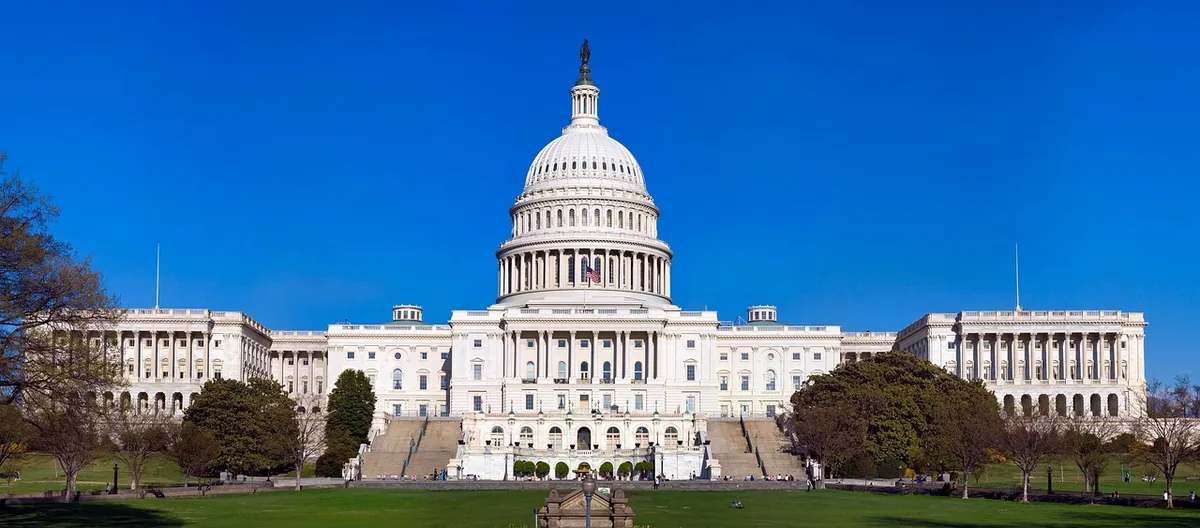
The Farm, Food, and National Security Act of 2026 — H.R. 7567 — passed the U.S. House of Representatives on April 30 by a vote of 224 to 200. The headline is a Farm Bill clearing one chamber. The more interesting story is what got removed from the bill before it passed, and the unusually lopsided bipartisan vote that removed it.
The Luna amendment, sponsored by Representative Anna Paulina Luna (R-FL), passed 280 to 142 — pulling roughly 80 Republicans and the great majority of Democrats — and stripped three sections of the bill that had drawn heavy criticism from public health, environmental, and state regulatory groups. The vote pattern matters because it tells you something about which way the political wind is blowing on FIFRA preemption.
What was in 10205, 10206, and 10207
The three stripped sections, taken together, would have done three things. Section 10205 would have required nationwide uniformity in pesticide labeling and barred any state from requiring labeling or packaging different from what EPA had approved — a provision pesticide manufacturers had been pursuing for years as a way to limit failure-to-warn liability in state court. Section 10206 would have prohibited political subdivisions of states (counties, cities, municipal authorities) from adopting any pesticide regulations beyond what EPA or the state had established. Section 10207 would have clarified that EPA-registered pesticides used "consistent with the labeling" would not require additional permitting under the Clean Water Act, ESA consultation, or CERCLA cleanup obligations.
The timing was the part that made these sections politically radioactive. The Supreme Court heard oral arguments in Monsanto Co. v. Durnell — a glyphosate (Roundup) cancer liability case — the same week the House began floor debate. The provisions, if enacted, would have substantially curtailed the kind of failure-to-warn suit at the heart of Durnell. The optics of the House Agriculture Committee inserting industry-friendly preemption language into the Farm Bill at exactly the moment the Supreme Court was considering whether the existing version of that preemption already applied were, charitably, bad.
Why the bipartisan vote signals something
FIFRA preemption is usually treated as a wonky regulatory question that splits more or less along industry-vs-environment lines. The 280-142 vote did not look like that. It looked like House members from both parties calculating that voting to expand industry liability protection right now, in an election year, with a major glyphosate case pending, was a worse political move than upsetting the agricultural chemical lobby. Roughly one in three House Republicans voted with the Luna amendment, which is the number to watch.
The Senate hasn't released its version of the bill yet. Senate Agriculture Chair John Boozman (R-AR) has publicly indicated a preference for a bipartisan bill without controversial pesticide provisions, which strongly suggests the Senate version will not reinstate 10205/10206/10207. But the provisions are not dead. They have been pursued in some form in every Farm Bill cycle going back at least a decade, and the underlying industry interest in them has not changed. The next opportunity to attach them will be the conference committee process, or — more likely — a future Farm Bill cycle in 2031.
Why this matters to homeowners
For most homeowners, the practical immediate effect of the Farm Bill on your kitchen ant problem or your termite contract is approximately zero. The structural pest control industry is regulated primarily at the state level (state pest control boards, state pesticide applicator licensing), and the federal Farm Bill rarely changes the day-to-day reality of either licensed pros or DIY consumers.
The longer-term effect, if FIFRA preemption is eventually enacted in some form, is on two specific things. First, your state's ability to ban or restrict a specific pesticide more aggressively than EPA — something California, New York, Maryland, and a number of other states have done with neonicotinoids, chlorpyrifos, and certain rodenticides over the past decade — would be sharply curtailed. Second, the ability to bring a state-court product liability suit when a pesticide causes harm and the label didn't warn about the risk would be substantially narrower.
Whether you support or oppose those changes is a political judgment, not a pest-management one. The reason it shows up on this site is that the structural pest control industry — both the pros who do this work and the homeowners who buy these products — has a direct interest in how federal-state regulatory balance gets resolved. The April 30 vote suggests the resolution is going to take longer than the industry hoped.
What's actually in the Farm Bill that did pass
The bill that cleared the House extends FIFRA registration review deadlines (giving EPA until October 2031 to complete initial reviews of pesticides registered before 2016), establishes additional interagency coordination on ESA consultation, and creates an Office of Biotechnology Policy within USDA. The crop insurance, conservation, and SNAP titles are where most of the bill's actual money is. The pesticide-relevant provisions are confined to Title X (Horticulture, Marketing, and Regulatory Reform), and after the Luna amendment they are mostly procedural rather than substantive.
The bill now goes to the Senate, where the timeline remains uncertain. If you want to follow the regulatory side specifically, EPA's pesticide reevaluation pages update throughout the year (our pesticide database covers individual actives), and any active ingredient currently in registration review will see decisions issued under whatever the final framework looks like.
Source: U.S. House Clerk Roll Call 154 (final passage) and Roll Call 148 (Luna amendment), via House Democratic Whip Amendment Tracker ↗. Analysis via farmdoc daily, University of Illinois ↗, April 30, 2026.