On this page
How to identify it
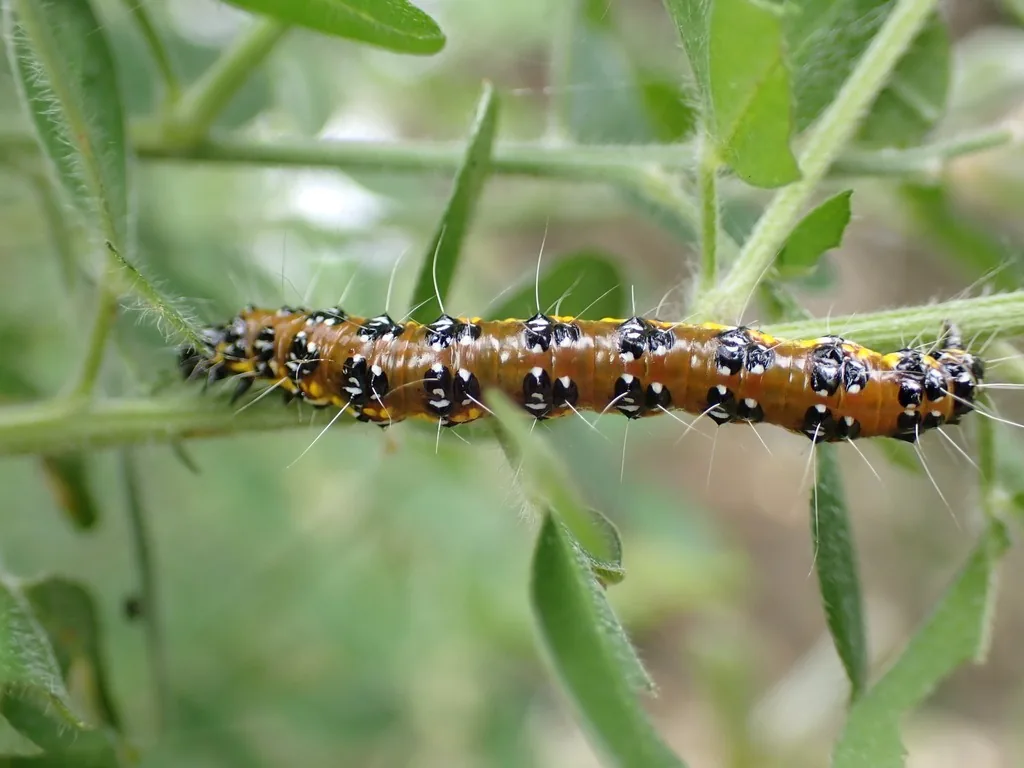
- Mature caterpillars are about 1 inch long, tan to greenish-brown with raised black spots, bright yellow patches and sparse long white hairs; the head is black with white dots.[1][2]
- Moths are light to medium brown with a dark spot on each forewing and yellow or orange hindwings.[1]
- Young caterpillars are green and feed together, often in silk webbing.[1][2]
Where it lives
A native species found in southern states and as far north as Iowa, where its shorter season likely limits it to one or two generations.[1][2]
Biology and life cycle
Females lay eggs in batches of up to about 70 on host plants.[1][2]
It overwinters as a pupa in a loose cocoon on or near the host; southern states can see four or more generations a year.[1][2]
Damage and signs
- Hosts include baptisia (false indigo), brooms, Scotch broom, Texas mountain laurel, lupine and acacia, and it has been reported on crapemyrtle and honeysuckle.[1][2]
- Feeding in groups, caterpillars can quickly strip a plant, but established plants usually recover; repeated defoliation can stress young plants.[1][2]
Health risk
The caterpillars store bitter alkaloids from their host plants that make them distasteful or even toxic to birds and mammals, so never eat them.[1]
Control
Prevention
Because damage is mainly cosmetic and sporadic, many gardeners simply let established plants recover.[2]
Traps and physical control
Hand-pick caterpillars into soapy water or shake branches to knock them off, especially once they are nearly grown.[2]
Pesticides
Act while caterpillars are small: Bt, spinosad, insecticidal soap, horticultural oil and neem work best on young caterpillars; fully grown ones have done most of their feeding.[1][2]
Common questions
Sources
- NC State Extension, “Genista Broom Moth (Genista Caterpillar) (PDIC Factsheet).” content.ces.ncsu.edu/genista-broom-moth-genista-caterpillar (accessed 2026-10-16)
- Iowa State University Extension and Outreach (Yard and Garden), “Genista Broom Moth (Yard and Garden encyclopedia, July 2026).” yardandgarden.extension.iastate.edu/encyclopedia/genista-broom-moth (accessed 2026-10-16)
- iNaturalist, “Uresiphita reversalis taxon page (order and family).” www.inaturalist.org/taxa/121716 (accessed 2026-10-06)