The short answer
- Get emergency care for chest pain, nausea, dizziness or signs of shock after stings, or trouble breathing after a scorpion sting.[15][19]
- See a doctor if a rash or fever develops in the weeks after a tick bite.[6]
- Remove attached ticks promptly; Lyme bacteria usually pass only after about 36 hours of feeding.[5][6]
- A suspected black widow or brown recluse bite should be seen by a doctor; bring the spider if you can.[8][10]
Profiles of biting and stinging pests
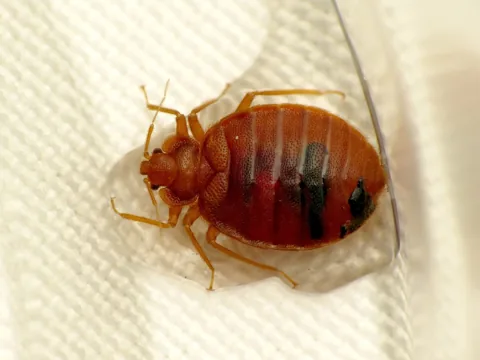 Bed Bug
Cimex lectularius
Bed bugs are wingless, blood-feeding insects that feed on sleeping or resting people, mostly at night; they have resurged worldwide and now turn up even in the finest hotels.
Sourced profile →
Bed Bug
Cimex lectularius
Bed bugs are wingless, blood-feeding insects that feed on sleeping or resting people, mostly at night; they have resurged worldwide and now turn up even in the finest hotels.
Sourced profile →
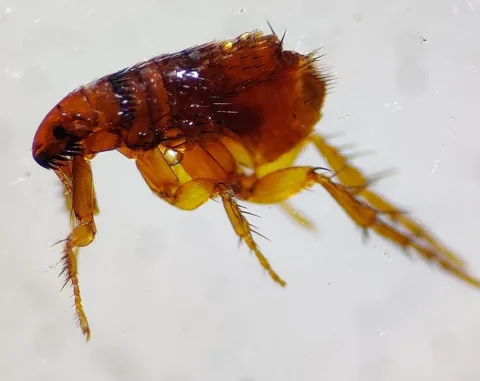 Cat Flea
Ctenocephalides felis
The cat flea is the most common external parasite of domestic cats and dogs, and fleas found on pets are most likely cat fleas.
Sourced profile →
Cat Flea
Ctenocephalides felis
The cat flea is the most common external parasite of domestic cats and dogs, and fleas found on pets are most likely cat fleas.
Sourced profile →
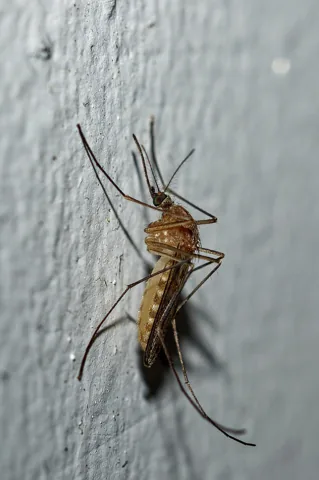 Mosquito
Culicidae (shown: Culex pipiens complex)
Mosquitoes are small, delicate flies whose females feed on blood and can transmit viruses such as West Nile; the most effective control targets the larvae in standing water.
Sourced profile →
Mosquito
Culicidae (shown: Culex pipiens complex)
Mosquitoes are small, delicate flies whose females feed on blood and can transmit viruses such as West Nile; the most effective control targets the larvae in standing water.
Sourced profile →
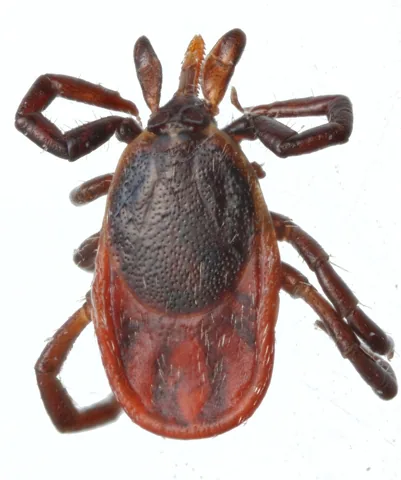 Blacklegged Tick
Ixodes scapularis
The blacklegged tick, often called the deer tick, is widely distributed across the eastern United States and transmits the bacteria that cause Lyme disease along with several other diseases.
Sourced profile →
Blacklegged Tick
Ixodes scapularis
The blacklegged tick, often called the deer tick, is widely distributed across the eastern United States and transmits the bacteria that cause Lyme disease along with several other diseases.
Sourced profile →
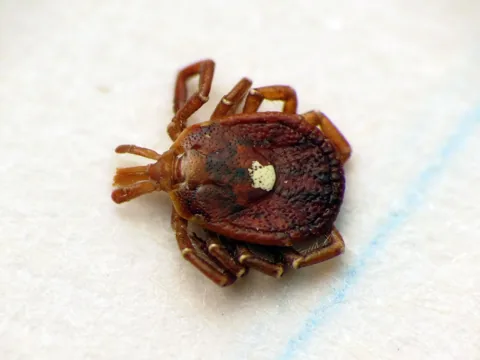 Lone Star Tick
Amblyomma americanum
The lone star tick is a very aggressive tick that readily bites people and pets across the Northeast, South and Midwest; its bite is linked to alpha-gal syndrome, a red meat allergy.
Sourced profile →
Lone Star Tick
Amblyomma americanum
The lone star tick is a very aggressive tick that readily bites people and pets across the Northeast, South and Midwest; its bite is linked to alpha-gal syndrome, a red meat allergy.
Sourced profile →
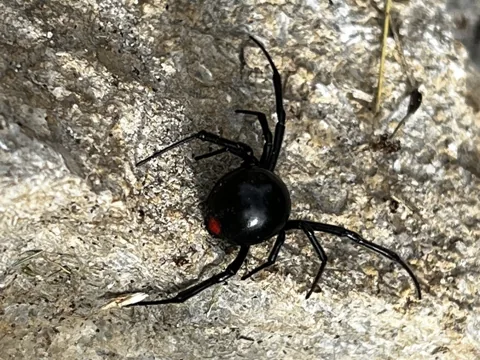 Southern Black Widow
Latrodectus mactans
Black widows are shy, web-building spiders with a neurotoxic venom; they live throughout North America and are most common in the southern and western United States.
Sourced profile →
Southern Black Widow
Latrodectus mactans
Black widows are shy, web-building spiders with a neurotoxic venom; they live throughout North America and are most common in the southern and western United States.
Sourced profile →
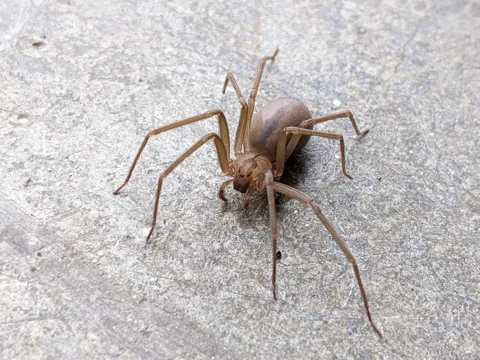 Brown Recluse
Loxosceles reclusa
The brown recluse is a secretive spider of the south-central and Midwestern United States whose bite can occasionally cause serious wounds; it is widely over-reported outside its range.
Sourced profile →
Brown Recluse
Loxosceles reclusa
The brown recluse is a secretive spider of the south-central and Midwestern United States whose bite can occasionally cause serious wounds; it is widely over-reported outside its range.
Sourced profile →
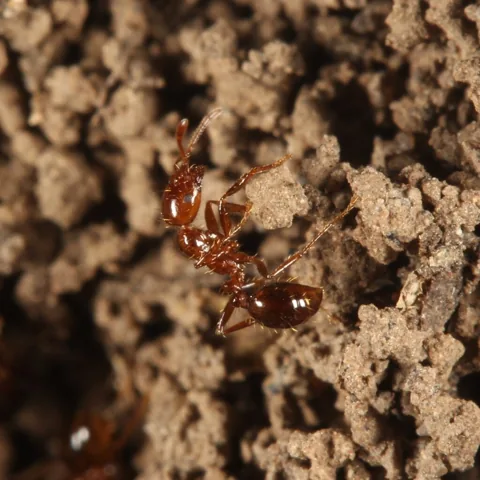 Red Imported Fire Ant
Solenopsis invicta
The red imported fire ant is an aggressive stinging ant that infests most of the southern United States and parts of California, building mounds in open, sunny areas such as lawns, parks and roadsides.
Sourced profile →
Red Imported Fire Ant
Solenopsis invicta
The red imported fire ant is an aggressive stinging ant that infests most of the southern United States and parts of California, building mounds in open, sunny areas such as lawns, parks and roadsides.
Sourced profile →
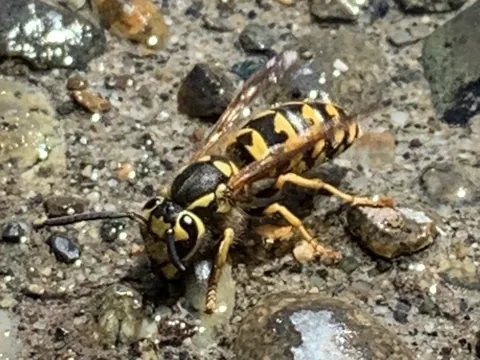 Western Yellowjacket
Vespula pensylvanica
Yellowjackets are social wasps that nest mostly in the ground and in wall voids, defend their nests vigorously, and become persistent scavengers at picnics and garbage cans in late summer and fall.
Sourced profile →
Western Yellowjacket
Vespula pensylvanica
Yellowjackets are social wasps that nest mostly in the ground and in wall voids, defend their nests vigorously, and become persistent scavengers at picnics and garbage cans in late summer and fall.
Sourced profile →
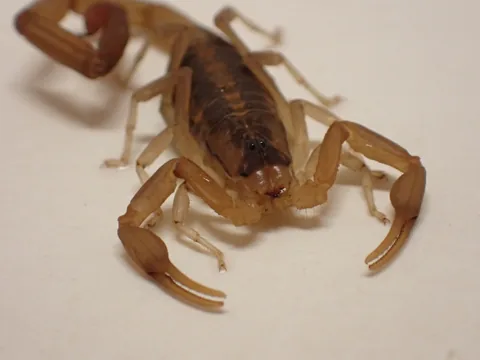 Scorpions
Order Scorpiones (shown: striped bark scorpion, Centruroides vittatus)
Scorpions are arachnids, relatives of spiders, ticks and mites, that hide by day and hunt insects at night. Most species in the United States give a painful sting that is not dangerous; the bark scorpion of the desert Southwest is the exception.
Sourced profile →
Scorpions
Order Scorpiones (shown: striped bark scorpion, Centruroides vittatus)
Scorpions are arachnids, relatives of spiders, ticks and mites, that hide by day and hunt insects at night. Most species in the United States give a painful sting that is not dangerous; the bark scorpion of the desert Southwest is the exception.
Sourced profile →
Biting insects
- Bed bugs: bites can cause itchy, allergic swellings that may become infected if scratched; bed bugs have never been shown to transmit human disease. Bites alone can't confirm bed bugs.[1]
- Fleas: bites usually cause minor itching, but some people and pets develop flea allergy dermatitis; cat fleas can transmit cat flea rickettsiosis and carry tapeworm.[2]
- Mosquitoes: Culex mosquitoes carry West Nile virus, which causes no symptoms in about 80% of infected people and serious neurological illness in about 1 in 150. Aedes aegypti and Aedes albopictus can transmit Zika, dengue and chikungunya.[3]
Ticks
- Blacklegged (deer) ticks transmit Lyme disease, anaplasmosis, babesiosis, ehrlichiosis and Powassan virus.[4][5]
- Lone star ticks can transmit ehrlichiosis, tularemia and Heartland and Bourbon viruses, and are the tick most often linked to alpha-gal syndrome, a potentially life-threatening allergy to red meat.[4][7]
- American dog ticks can transmit Rocky Mountain spotted fever and tularemia.[4]
Spiders
- Black widow: bites are rare; symptoms can include spreading pain, muscle cramps, rigid abdominal muscles, sweating and nausea, with little swelling at the bite. Seek care right away; an antivenom exists.[8][9]
- Brown recluse: most bites heal within three weeks, but some form a necrotic wound that takes months; many skin conditions, including staph infections, are misdiagnosed as recluse bites, especially outside the spider's range.[10][11]
- Yellow sac spider: initial pain like a bee sting, redness and sometimes swelling.[12][13]
- Wolf spider: bites only if handled or trapped; pain, redness and some swelling that usually fade within a day.[14][13]
Stinging insects and scorpions
- Fire ants: one ant can sting repeatedly, causing burning pain and a white pustule that lasts weeks and can scar if infected.[15][16]
- Yellowjackets and wasps: stings range from short-term pain to life-threatening allergic reactions, and multiple stings can damage the kidneys. Yellowjackets can sting repeatedly.[17][18]
- Scorpions: most stings cause intense local burning that fades in about 30 minutes; bark scorpion stings can cause numbness, trouble breathing, muscle twitching and convulsions, especially in children and older adults, and need immediate care.[19]
Finding what's biting
Because reactions vary and other pests bite too, look for the source: bed bugs and their signs along mattress seams, fleas on pets, ticks after time outdoors.[1][2][5]
Common questions
- Can a doctor tell what bit me from the bite?
- Usually not reliably; reactions vary, and conditions such as staph infections are often mistaken for spider bites.[1][10]
- How soon should I remove a tick?
- As soon as you find it; Lyme bacteria usually pass only after the tick has fed for about 36 hours.[5][6]
Photo credits
- Bed Bug: (c) Katja Schulz, some rights reserved (CC BY) — via iNaturalist, CC BY 4.0
- Cat Flea: (c) Thomas Gyselinck, some rights reserved (CC BY) — via iNaturalist, CC BY 4.0
- Mosquito: (c) Donald Davesne, some rights reserved (CC BY) — via iNaturalist, CC BY 4.0
- Blacklegged Tick: (c) Christian Back, some rights reserved (CC BY) — via iNaturalist, CC BY 4.0
- Lone Star Tick: (c) Katja Schulz, some rights reserved (CC BY) — via iNaturalist, CC BY 4.0
- Southern Black Widow: Carol Spence, public domain (CC0), via iNaturalist
- Brown Recluse: iamfindingplants, public domain (CC0), via iNaturalist
- Red Imported Fire Ant: (c) Natasha Taylor, some rights reserved (CC BY) — via iNaturalist, CC BY 4.0
- Western Yellowjacket: (c) eebee, some rights reserved (CC BY) — via iNaturalist, CC BY 4.0
- Scorpions: (c) dhasdf, some rights reserved (CC BY) — via iNaturalist, CC BY 4.0
Sources
- University of California Statewide IPM Program, “Pest Notes: Bed Bugs, Publication 7454 (May 2013).” ipm.ucanr.edu/legacy_assets/PDF/PESTNOTES/pnbedbugs.pdf (accessed 2026-10-06)
- University of California Statewide IPM Program, “Pest Notes: Fleas, Publication 7419 (September 2010).” ipm.ucanr.edu/legacy_assets/PDF/PESTNOTES/pnfleas.pdf (accessed 2026-10-06)
- University of California Statewide IPM Program, “Pest Notes: Mosquitoes, Publication 7451 (revised April 2020).” ipm.ucanr.edu/legacy_assets/PDF/PESTNOTES/pnmosquitoes.pdf (accessed 2026-10-06)
- Centers for Disease Control and Prevention, “Where Ticks Live.” www.cdc.gov/ticks/about/where-ticks-live.html (accessed 2026-10-06)
- University of Kentucky Entomology, “ENTFACT-618: Ticks and Disease in Kentucky.” entomology.mgcafe.uky.edu/ef618 (accessed 2026-10-06)
- Centers for Disease Control and Prevention, “What to Do After a Tick Bite.” www.cdc.gov/ticks/after-a-tick-bite/index.html (accessed 2026-10-06)
- Centers for Disease Control and Prevention, “About Alpha-gal Syndrome.” www.cdc.gov/alpha-gal-syndrome/about/index.html (accessed 2026-10-06)
- University of California Statewide IPM Program, “Pest Notes: Widow Spiders and Their Relatives, Publication 74149 (revised March 2017).” ipm.ucanr.edu/legacy_assets/PDF/PESTNOTES/pnblackwidow.pdf (accessed 2026-10-06)
- CDC / NIOSH, “Venomous Spiders at Work.” www.cdc.gov/niosh/outdoor-workers/about/venomous-spiders.html (accessed 2026-10-06)
- University of Kentucky Entomology, “ENTFACT-631: Brown Recluse Spider.” entomology.mgcafe.uky.edu/ef631 (accessed 2026-10-06)
- University of California Statewide IPM Program, “Pest Notes: Brown Recluse and Other Recluse Spiders, Publication 7468 (revised November 2018).” ipm.ucanr.edu/legacy_assets/PDF/PESTNOTES/pnbrownrecluse.pdf (accessed 2026-10-06)
- University of California Statewide IPM Program, “Pest Notes: Spiders, Publication 7442.” ipm.ucanr.edu/legacy_assets/PDF/PESTNOTES/pnspiders.pdf (accessed 2026-10-06)
- University of Kentucky Entomology, “ENTFACT-622: Common Spiders Found Around Homes and Buildings.” entomology.mgcafe.uky.edu/ef622 (accessed 2026-10-06)
- Penn State Extension, “Wolf Spiders.” extension.psu.edu/wolf-spiders (accessed 2026-10-06)
- University of California Statewide IPM Program, “Pest Notes: Red Imported Fire Ant, Publication 7487 (December 2013).” ipm.ucanr.edu/legacy_assets/PDF/PESTNOTES/pnredimportedfireant.pdf (accessed 2026-10-06)
- University of Kentucky Entomology, “ENTFACT-469: Imported Fire Ants in Kentucky.” entomology.mgcafe.uky.edu/ef469 (accessed 2026-10-06)
- University of California Statewide IPM Program, “Pest Notes: Yellowjackets and Other Social Wasps, Publication 7450 (March 2012).” ipm.ucanr.edu/legacy_assets/PDF/PESTNOTES/pnyellowjackets.pdf (accessed 2026-10-06)
- University of Kentucky Entomology, “ENTFACT-620: Controlling Wasps, Hornets, and Yellowjackets.” entomology.mgcafe.uky.edu/ef620 (accessed 2026-10-06)
- University of California Statewide IPM Program, “Pest Notes: Scorpions, Publication 74110 (December 2011).” ipm.ucanr.edu/legacy_assets/PDF/PESTNOTES/pnscorpions.pdf (accessed 2026-10-06)