On this page
How to identify it
Where it lives
Biology and life cycle
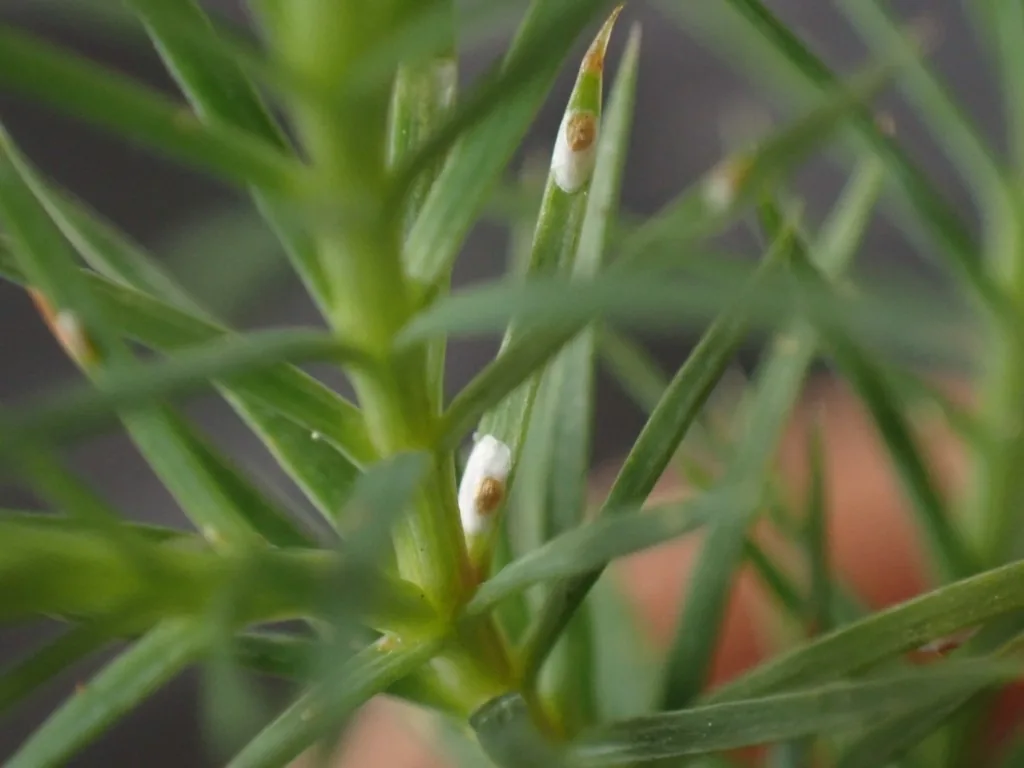
Mature females overwinter on the foliage and in the Northeast lay up to 40 reddish-yellow eggs by May; crawlers appear in mid to late May.[1]
Damage and signs
Health risk
Control
Traps and physical control
Prune out and destroy heavily infested branches where it won't disfigure the plant.[1]
Biological control
Many natural enemies attack it, including parasitic wasps and lady beetles.[1]
Pesticides
Horticultural oil applied twice about 14 days apart should give adequate control.[2]
Common questions
Sources
- UMass Extension Landscape, Nursery and Urban Forestry Program (Landscape Insect & Mite Guide), “Carulaspis minima (Minute Cypress Scale).” www.umass.edu/agriculture-food-environment/landscape/publications-resources/insect-mite-guide/carulaspis-minima (accessed 2026-10-16)
- NC State Extension, “Minute Cypress Scale Insect (PDIC Factsheet).” content.ces.ncsu.edu/minute-cypress-scale-insect (accessed 2026-10-16)
- iNaturalist, “Carulaspis minima taxon page (order and family).” www.inaturalist.org/taxa/387187 (accessed 2026-10-06)