On this page
How to identify it
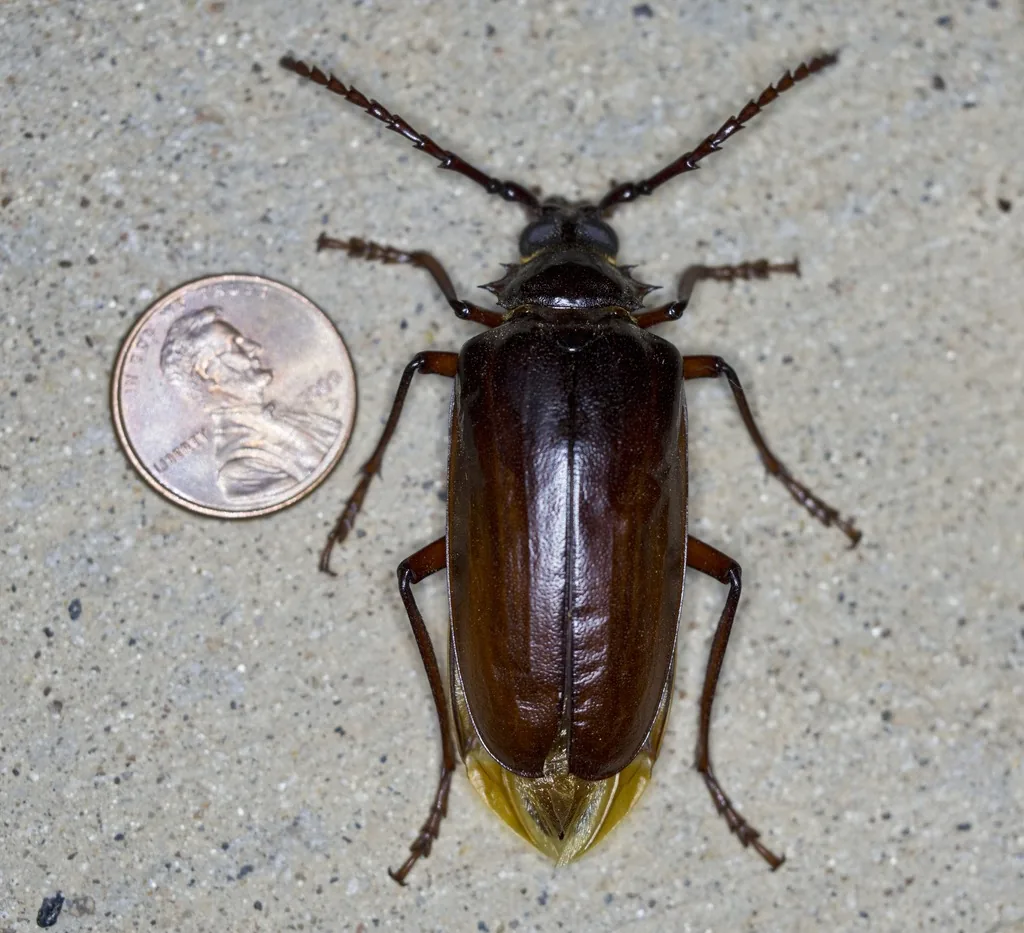
- Adults are large, reddish-brown to nearly black beetles; CSU gives 35-50 mm for the California prionus and USU 1 3/4 to 2 1/4 inches, with long, deeply notched or toothed antennae that are larger in males.[1][2][3]
- Larvae are legless, whitish roundheaded borers with powerful dark jaws, up to about 4 1/4 inches long.[1][2]
Where it lives
The genus occurs widely; CSU lists eight species in Colorado, some developing on grass or rangeland shrub roots, while USU covers the California prionus in Utah orchards and landscapes.[1][2]
Biology and life cycle
Females push eggs into the soil near host plants; larvae move to roots and feed for about 3 to 5 years, working upward toward the root crown.[1][2][3]
Mature larvae pupate in a soil cell near the roots; in Utah, adults fly from July to September.[1][2]
Damage and signs
- Larvae carve deep, sometimes spiraling furrows in roots and the root crown, cutting water and nutrient uptake, girdling plants and opening them to root rot.[2][3]
- Symptoms include branch dieback and loss of vigor; damage is worse in sandy soils.[2]
- Hosts of the California prionus include sweet cherry, peach, apricot and other stone fruits, cottonwood and poplar, willow, oak, pines and other woody plants.[1][2]
Health risk
None; adults are not harmful to people or pets.[1]
Control
Prevention
Keep trees healthy and unstressed and watch for canopy dieback or sudden decline.[2][3]
Watch for adult beetles from early July; pheromone and light traps are used for monitoring.[2][3]
Pesticides
USU's ornamental guide lists trunk-base and soil sprays against egg-laying adults and systemic root-zone treatments for young larvae; its fruit sheet notes no insecticides are registered specifically for prionus in stone fruit.[2][3]
Common questions
- What is the giant brown beetle with long antennae I found in July?
- Possibly a prionus beetle, one of the largest longhorned beetles; adults fly in summer.[1][2]
- Can prionus kill a tree?
- Heavy root feeding can girdle trees, cause dieback and invite root rot, especially on sandy soils.[2][3]
- How long do the grubs live?
- About 3 to 5 years in the roots before pupating.[1][2]
Sources
- Colorado State University Extension (Colorado Insects of Interest, W. Cranshaw), “Prionus Longhorned Beetles (Colorado Insects of Interest).” wci.extension.colostate.edu/wp-content/uploads/sites/14/2017/03/PrionusLonghorns.pdf (accessed 2026-10-15)
- Utah State University Extension (Integrated Pest Management), “Prionus Borers (Ornamental Pest Guide).” extension.usu.edu/planthealth/ipm/ornamental-pest-guide/arthopods/wood-borers/prionus-borers.php (accessed 2026-10-15)
- Utah State University Extension (Integrated Pest Management), “Prionus Root Borer.” extension.usu.edu/planthealth/ipm/notes_ag/fruit-prionus-root-borer.php (accessed 2026-10-15)
- iNaturalist, “Prionus taxon page (order and family).” www.inaturalist.org/taxa/59893 (accessed 2026-10-06)