On this page
How to identify it
Look-alikes
| Look-alike | How to tell them apart |
|---|---|
| Other milkweed longhorns | Several other Tetraopes species occur in the West; patterns vary a lot, and one small species is only 7-9 mm.[1] |
Where it lives
It is the most common milkweed longhorn in the eastern United States and reaches into eastern Colorado.[1]
Biology and life cycle
Females lay eggs near the base of milkweed plants, often at the root crown; larvae tunnel into soil or shallowly into stems.[1][2]
Adults spend nearly all their time on milkweed, feeding, resting and mating, and typically live about a month.[1]
Damage and signs
Health risk
None to people or pets.[1]
Control
Prevention
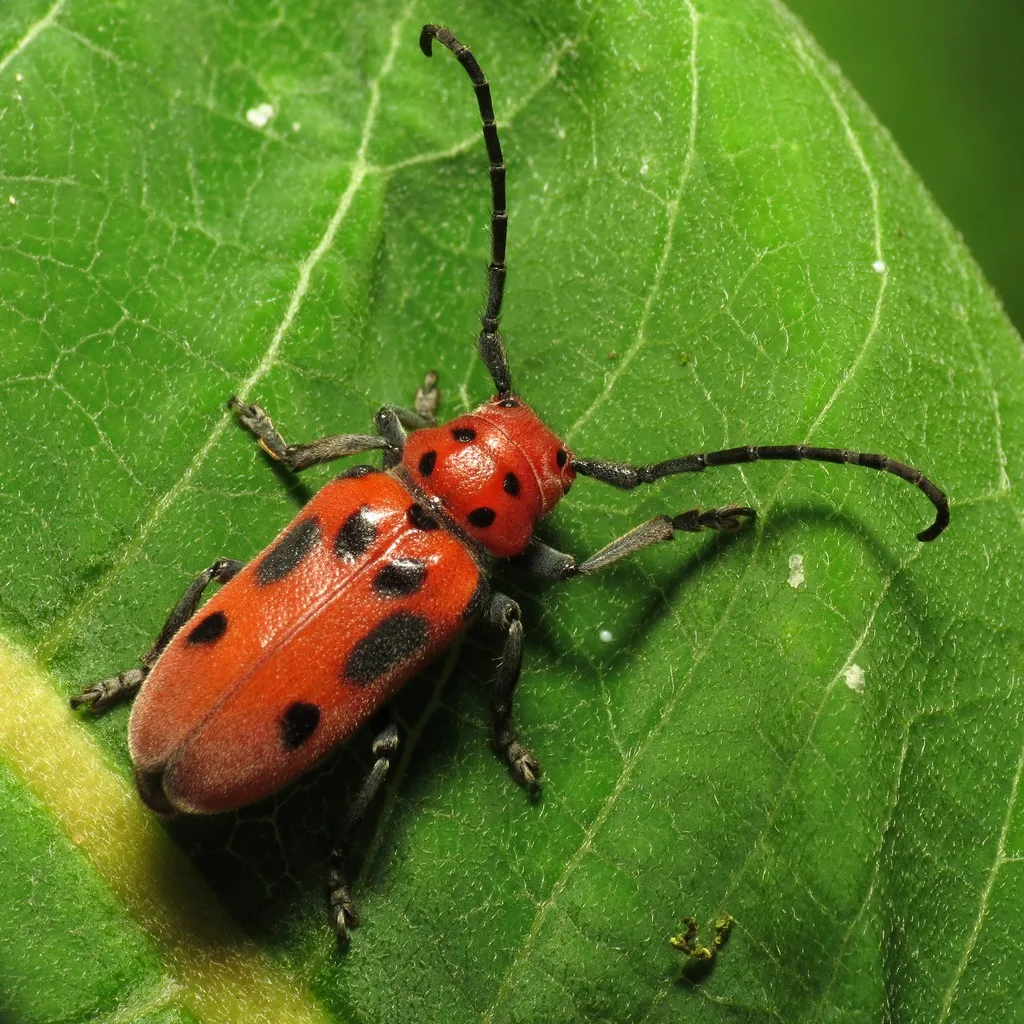
Usually tolerated: it is a native milkweed specialist, and populations rise and fall from year to year.[1][2]
Common questions
- What are the red beetles with black spots on my milkweed?
- Likely red milkweed beetles, longhorned beetles that feed only on milkweed.[1][2]
- Should I spray them?
- Usually not; they are native milkweed specialists whose numbers rise and fall from year to year.[1][2]
- Why are they so brightly colored?
- The colors warn predators that they taste bitter from milkweed toxins.[2]
Sources
- Colorado State University Extension (Colorado Insects of Interest, W. Cranshaw), “Milkweed Longhorns (Colorado Insects of Interest).” wci.extension.colostate.edu/wp-content/uploads/sites/14/2017/03/Milkweed.longhorns.pdf (accessed 2026-10-15)
- University of Kentucky Cooperative Extension, Franklin County, “Milkweed Beetles.” franklin.ca.uky.edu/milkweed-beetles (accessed 2026-10-15)
- iNaturalist, “Tetraopes tetrophthalmus taxon page (order and family).” www.inaturalist.org/taxa/118559 (accessed 2026-10-06)