On this page
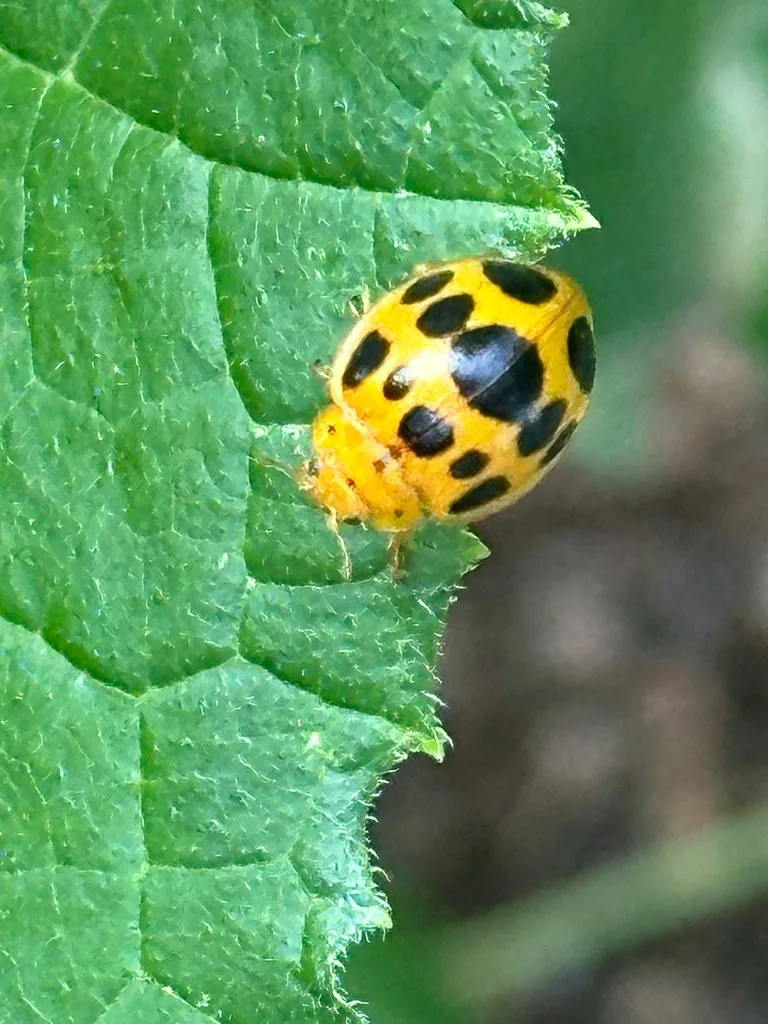
How to identify it
Look-alikes
| Look-alike | How to tell them apart |
|---|---|
| Mexican bean beetle | The other vegetable-feeding lady beetle; the squash beetle is larger, with 14 spots instead of 16.[1][2] |
| Beneficial lady beetles | Squash beetle adults look like the familiar beneficial lady beetles; the larvae and leaf damage on squash family plants give them away.[1][2] |
Where it lives
Found in eastern gardens, including Maryland and South Carolina.[1][2]
Biology and life cycle
Adults and larvae feed on the tissue between leaf veins.[1]
Damage and signs
- Feeding scrapes leaves into a windowpane or lace-like pattern on squash, cucumber and pumpkin.[1]
Health risk
Control
Keep them out
Where it shows up every year, cover transplants or new seedlings with floating row cover and remove it when plants bloom.[1]
Pesticides
Botanical insecticides such as neem or pyrethrum can help control large populations.[1]
Common questions
Sources
- University of Maryland Extension (Home and Garden Information Center), “Squash Beetle on Vegetables.” extension.umd.edu/resource/squash-beetle-vegetables (accessed 2026-10-16)
- Clemson Cooperative Extension Home & Garden Information Center, “What Is It? Wednesday: Squash Beetles.” hgic.clemson.edu/what-is-it-wednesday-squash-beetles/ (accessed 2026-10-16)
- iNaturalist, “Epilachna borealis taxon page (order and family).” www.inaturalist.org/taxa/154559 (accessed 2026-10-06)