On this page
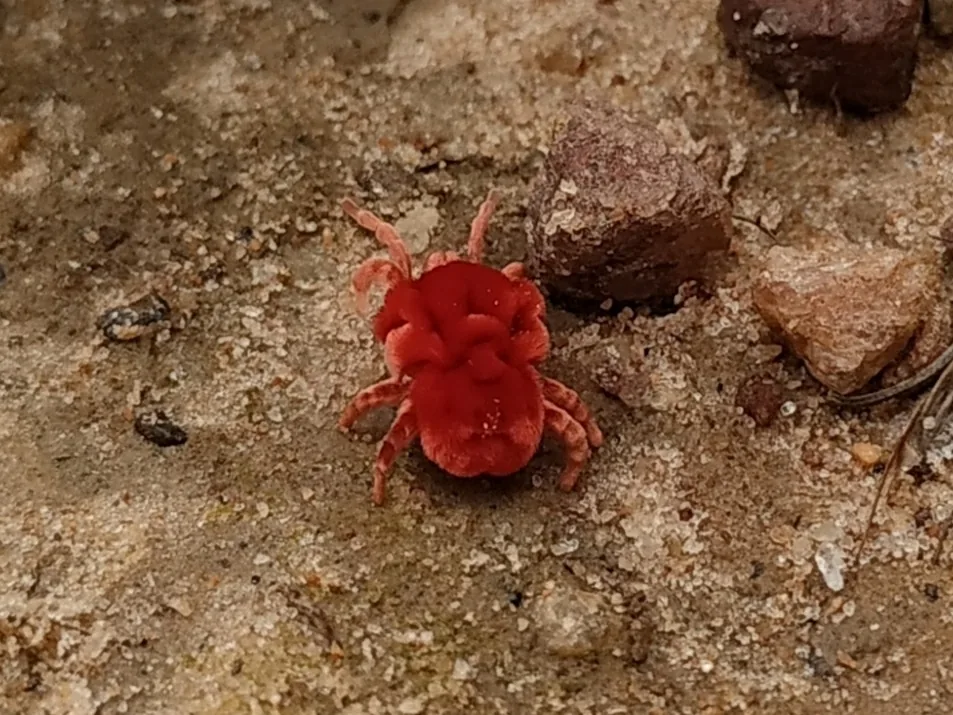
How to identify it
Look-alikes
| Look-alike | How to tell them apart |
|---|---|
| Clover mites | Much smaller red-brown mites that invade homes in masses and feed on plants; velvet mites are larger, bright red predators.[1] |
| Chiggers | Chiggers are the larvae of related mites that feed on people; velvet mite larvae parasitize insects instead.[1] |
Where it lives
Common in soil and leaf litter; seen in spring in North Carolina and Minnesota.[1][2]
Biology and life cycle
Most of the year they live in soil and litter; in spring the adults come out onto patios, bricks and other surfaces hunting insects and insect eggs.[1][2]
Eggs are laid in soil from March through July and hatch in one to two months; they need very humid conditions and die below about 80 percent relative humidity.[1]
Larvae feed on insects as external parasites for a week or two, then drop into the soil to develop through nymph stages.[1][2]
Damage and signs
Health risk
Harmless to people and pets.[2]
Control
Prevention
No control is needed; no pesticide is labeled for velvet mites.[1][2]
Common questions
Sources
- NC State Extension, “Velvet Mites, Brick Mites or Patio Mites (PDIC Factsheet).” content.ces.ncsu.edu/velvet-mites-brick-mites-or-patio-mites (accessed 2026-10-16)
- University of Minnesota Extension (What insect is this? diagnostic pages), “Velvet mites.” apps.extension.umn.edu/garden/diagnose/insect/garden/relatives/small/velvetmite.html (accessed 2026-10-16)
- iNaturalist, “Trombidiidae taxon page (order and family).” www.inaturalist.org/taxa/57652 (accessed 2026-10-06)