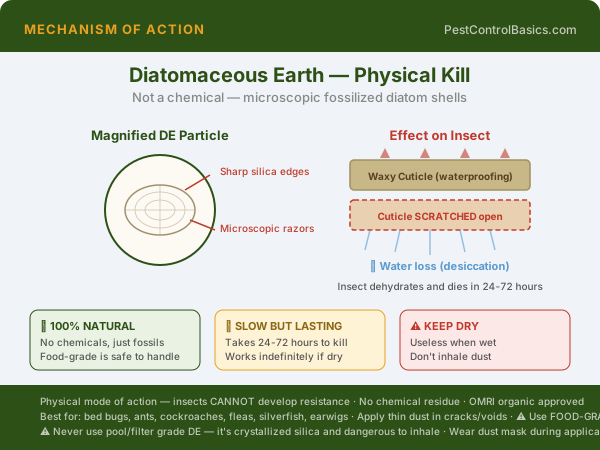
Diatomaceous Earth mechanism of action diagram

How diatomaceous earth works β€” illustrated mechanism of action Β· PestControlBasics.com

🏠 OTC/DIY Active: amorphous silica gel (92.1%)

CimeXa β€” Amorphous Silica Gel Dust

CimeXa is 92.1% amorphous silica gel β€” the most effective desiccant dust for bed bugs, cockroaches, and crawling insects. How it differs from diatomaceous earth and why it works in low humidity.

βš–οΈ Educational use only. PestControlBasics.com is not a licensed PCO. The label is the law under FIFRA. Always read your complete product label before mixing or applying. Full disclaimer β†’ | βš—οΈ Mixing Calculator β†’

🏷️ Brand Names β€” Same Active Ingredient

⚠️ Don't buy duplicates. All products below contain amorphous silica gel (92.1%) as the active ingredient. Buying two different brands is buying the same pesticide twice β€” they differ only in price, concentration, and formulation type.
CimeXa Insecticide Dust
Rockwell Labs Β· Amorphous silica gel dust Β· 92.1% amorphous silica gel
Professional & Consumer
Drione Pest Insecticide Dust
Bayer Β· Pyrethrin + silica gel + PBO dust Β· 1% pyrethrins + 40% silica aerogel + 10% PBO
Professional
Tri-Die Dust
BASF Β· Pyrethrin + silica dust Β· Similar to Drione
Professional
Diatomaceous Earth (regular food-grade)
Various Β· Fossilized diatoms Β· 85–90% silicon dioxide (different structure)
Consumer

🎯 Target Pests

βœ“Bed Bugs (highly effective)βœ“German Cockroachesβœ“American Cockroachesβœ“Antsβœ“Silverfishβœ“Firebratsβœ“Stored Product Insectsβœ“Darkling Beetlesβœ“Carpet Beetles

πŸ”¬ How It Works

CimeXa is amorphous silica gel β€” structurally different from diatomaceous earth (DE) despite both being silicon dioxide-based. Key advantage over DE:

  • Works at low relative humidity (down to 20% RH) β€” DE requires 50%+ humidity to work effectively
  • Ultra-fine particle size adheres to insect cuticle more effectively than DE
  • 10x more effective against bed bugs than DE in controlled studies (Penn State data)
  • Remains effective for 10+ years in undisturbed areas

Like all desiccants, CimeXa works mechanically β€” not chemically. It absorbs the waxy protective layer from the insect cuticle, causing death through desiccation. Insects cannot develop resistance to physical desiccation.

βš—οΈ Mixing & Application Rates

CimeXa is a dry dust β€” applied with a bellows duster or puffer bottle. Very fine β€” use sparingly.

Bed bug void/crack treatment
Very light dusting β€” barely visible layer
Apply with bellows hand duster to wall voids accessible via outlet covers, behind baseboards, inside bed frame voids, and box spring interiors. Less is more β€” a thick pile of dust will repel bed bugs rather than attract them. CimeXa works when bed bugs walk through the treated surface.
Cockroach void treatment
Light dusting in enclosed voids
Apply behind refrigerators, under dishwashers, inside electrical outlet voids, and inside wall voids via bellows duster. Excellent long-term residual in undisturbed void areas.
Perimeter dust (crawl space, wall voids)
Light coverage on horizontal surfaces
Apply in attics, crawl spaces, and basement wall voids as long-term preventive treatment. Remains effective indefinitely in dry, undisturbed conditions.
Example
0.5 oz
per gallon
βš—οΈ Mixing Calculator
Enter your sprayer size and target rate β€” get the exact amount to pour. Backpack, hand sprayer, hose-end, or skid unit.
Open Calculator β†’

⚠️ Safety & Precautions

  • Very low toxicity β€” silica gel has a wide safety margin for mammals
  • Wear N95 mask during application to avoid inhaling fine silica particles β€” chronic inhalation is a potential lung irritant
  • Do not apply to wet or damp surfaces β€” moisture deactivates desiccant action
  • Avoid applying to food contact surfaces
  • Keep dry β€” moisture permanently deactivates CimeXa

πŸ“„ SDS / Label Resources

CimeXa SDS available from Rockwell Labs. Note: CimeXa is distinct from crystalline silica (which has significant health concerns) β€” amorphous silica gel has a much safer toxicological profile.

πŸ“„ CDMS Label Database πŸ›οΈ EPA Label Search

❓ Frequently Asked Questions

Q: Is cimexa silica gel safe for pets?
Follow the product label. Keep pets out of treated areas until completely dried (2–4 hours for sprays). Once dry, treated surfaces pose minimal risk to dogs and cats.
Q: Can I use cimexa silica gel indoors?
Check the specific product label β€” formulations vary. Baits and dusts often have indoor labeling; concentrates and granulars are typically outdoor.
Q: How long does cimexa silica gel last after application?
Residual varies by formulation, surface type, weather, and UV exposure. Indoor applications last longer than outdoor. Check the product label for re-application intervals.
Q: What should I do if exposed?
Remove contaminated clothing, wash skin with soap and water. For eye contact, rinse 15–20 minutes. For ingestion or severe symptoms, call Poison Control (1-800-222-1222). Have the product label available.

πŸ“‹ Safety Data Sheet (SDS)

πŸ“‹

CimeXa Insecticide Dust β€” Safety Data Sheet

View the official SDS document for this product directly on the CDMS label database.

CimeXa Insecticide Dust Safety Data Sheet page 1
πŸ“„ CimeXa Insecticide Dust β€” Safety Data Sheet Β· View the complete SDS document above or download below
βš–οΈ Educational use only. PestControlBasics.com is not a licensed PCO. The label is the law under FIFRA. Always read your complete product label before mixing or applying. Full disclaimer β†’ | βš—οΈ Mixing Calculator β†’
πŸ“š Sources: EPA Pesticide Labels Β· NPIC Pesticide Info
Published: Jan 1, 2025 Β· Updated: Apr 7, 2026
🔮
Reviewed by Derek GiordanoContent reviewed by a licensed pest management professional and cross-referenced against EPA, university extension, and manufacturer technical data. Last reviewed: April 2026.