The short answer
- Fruit flies: remove overripe fruit and rotting vegetables and take out the trash; traps and sprays give only temporary relief.[1]
- Drain flies: tape clear packing tape across part of a drain overnight; flies stuck to it mean the drain is a source. Scrub the pipe and trap with a stiff brush, since bleach and drain cleaner don't remove the film the larvae live in.[1]
- Phorid flies: look for moist, decaying material, from garbage and drains to wet potting soil, and for leaks in sewer lines under the building.[1]
- Moisture is the common thread: fly larvae can't develop without it.[1]
Fly profiles
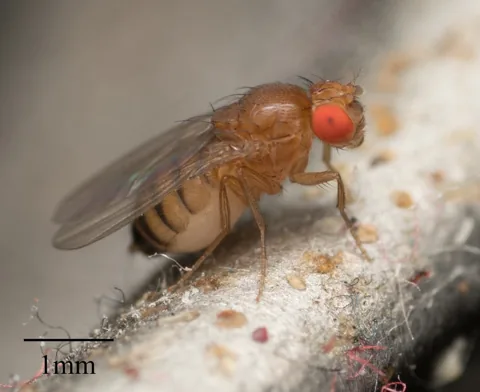 Fruit Fly
Drosophila melanogaster
Fruit flies, also called vinegar flies, are tiny flies drawn to ripe and fermenting fruits and vegetables; they are a problem year round but especially in late summer and fall.
Sourced profile →
Fruit Fly
Drosophila melanogaster
Fruit flies, also called vinegar flies, are tiny flies drawn to ripe and fermenting fruits and vegetables; they are a problem year round but especially in late summer and fall.
Sourced profile →
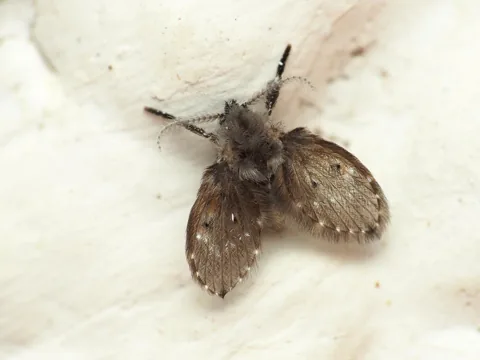 Drain Fly (Moth Fly)
Psychodidae (shown: Clogmia albipunctata)
Drain flies, also called moth flies or filter flies, are small, fuzzy, non-biting flies whose larvae live in the slimy film inside drains, toilets and other places where water stands.
Sourced profile →
Drain Fly (Moth Fly)
Psychodidae (shown: Clogmia albipunctata)
Drain flies, also called moth flies or filter flies, are small, fuzzy, non-biting flies whose larvae live in the slimy film inside drains, toilets and other places where water stands.
Sourced profile →
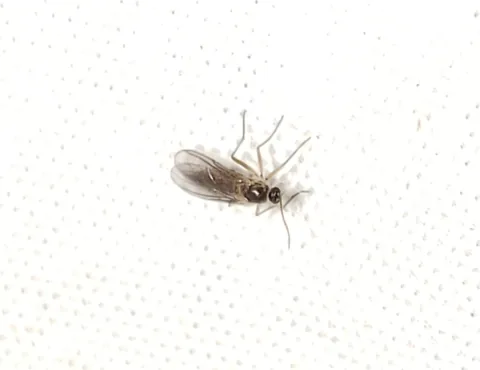 Fungus Gnat
Bradysia and related species
Fungus gnats are small flies whose larvae live in moist potting mix and organic matter; indoors the adults emerge from houseplants and become a nuisance.
Sourced profile →
Fungus Gnat
Bradysia and related species
Fungus gnats are small flies whose larvae live in moist potting mix and organic matter; indoors the adults emerge from houseplants and become a nuisance.
Sourced profile →
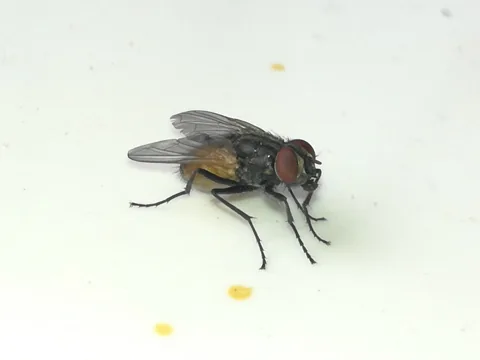 House Fly
Musca domestica
The house fly is a worldwide companion of people and domestic animals; it breeds in garbage, manure and other moist organic matter and is most numerous in hot summer months.
Sourced profile →
House Fly
Musca domestica
The house fly is a worldwide companion of people and domestic animals; it breeds in garbage, manure and other moist organic matter and is most numerous in hot summer months.
Sourced profile →
Phorid (humpbacked) flies
Phorid flies are about the size of fruit flies, 1/8 inch, tan to dark brown or black, with a humped back when seen from the side. They often run erratically rather than fly.[1][2]
- Larvae develop in almost any moist, decaying material: garbage, drains, vase water, wet potting soil, broken garbage disposals, dead animals and feces. Egg to adult takes 14 to 37 days.[1]
- Large numbers can mean a sewer leak under the building; contaminated soil sometimes has to be dug out.[1]
- They're mainly a nuisance and not generally considered a health problem, though they can mechanically carry bacteria.[2]
Finding the breeding site
- Clean up spilled or spoiled food on floors and in pantries, and clean sink and tub drains.[1]
- Check under garbage can liners, under floor drain covers and floor mats, and under refrigerators and other appliances where debris collects; clean refrigerator and icemaker condensate pans.[1]
- Hang mops to dry, and look for cracked or loose floor or bath tiles hiding wet films.[1]
- Signs of rodents or wildlife can point to a dead animal, which breeds blow flies and phorid flies; seal entry points.[1]
Eye gnats outdoors
Eye gnats are tiny, 1/16 to 1/8 inch, dark flies that hover around eyes and any moist spots on people and animals. They don't bite but are a true nuisance and can spread diseases such as pinkeye. Larvae develop in freshly disturbed, well-drained sandy soils.[3]
Common questions
- How do I know if flies are coming from my drain?
- Lay clear packing tape across part of the drain opening, leaving some airflow, and check it over a day or two; flies stuck to the tape confirm the drain is a breeding site.[1]
- Why doesn't pouring bleach down the drain stop drain flies?
- Bleach and drain cleaners don't remove the bacterial film inside the pipes where the larvae live; scrub pipes and traps with a stiff brush.[1]
- What are the tiny humpbacked flies running on my counter?
- Likely phorid flies, which breed in moist decaying matter such as trash, drains and plumbing or sewer leaks.[2][1]
Photo credits
- Fruit Fly: Jesse Rorabaugh, public domain (CC0), via iNaturalist
- Drain Fly (Moth Fly): (c) Katja Schulz, some rights reserved (CC BY) — via iNaturalist, CC BY 4.0
- Fungus Gnat: (c) aispinsects, some rights reserved (CC BY) — via iNaturalist, CC BY 4.0
- House Fly: ivan_humljani, public domain (CC0), via iNaturalist
Sources
- Texas A&M AgriLife Extension, “ENTO-050: Indoor Flies and Their Control.” agrilifeextension.tamu.edu/library/insects/indoor-flies-and-their-control/ (accessed 2026-10-06)
- University of Minnesota Extension, “Humpbacked Flies (Phorid Flies).” apps.extension.umn.edu/garden/diagnose/insect/indoor/flies/small/humpbacked-flies.html (accessed 2026-10-06)
- Texas A&M AgriLife Extension, “Eye Gnat (Field Guide to Common Texas Insects).” texasinsects.tamu.edu/eye-gnat/ (accessed 2026-10-06)