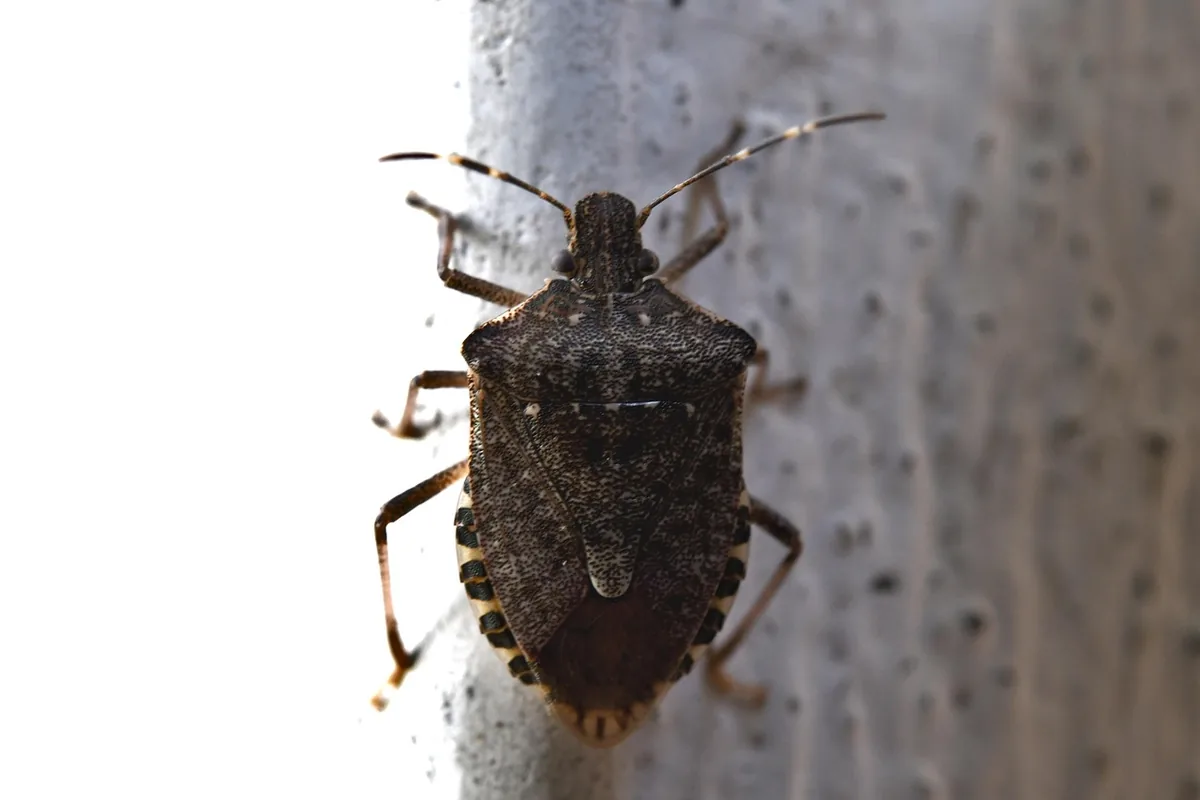
Bed bugs are the most panic-inducing household pest — and panic leads to bad decisions. Homeowners throw out thousands of dollars in furniture, douse their bedrooms in rubbing alcohol (a fire hazard), and buy products that sound effective but aren't. Every wrong move wastes money, delays effective treatment, and allows the infestation to grow.
Reality: Your mattress is almost never the main problem. Bed bugs hide in headboards, nightstands, baseboards, outlet covers, picture frames, and any crevice within 8 feet of the bed. Throwing out the mattress removes a small fraction of the infestation while costing $500–2,000 to replace. A mattress encasement ($25–60) traps any bed bugs inside, where they eventually die, while you sleep on the encased mattress normally.
Reality: Isopropyl alcohol does kill bed bugs on direct contact — but it evaporates in minutes, leaving zero residual protection. You have to hit every single bug to kill it, which is impossible when they hide in cracks thinner than a credit card. Far worse, rubbing alcohol is highly flammable. Multiple house fires have been caused by people dousing their beds and furniture in alcohol and then using a lighter or candle. This is genuinely dangerous.
Reality: Bed bugs are attracted to warmth, CO₂, and blood — not dirt. Five-star hotels, spotless suburban homes, and luxury apartments get bed bugs. Cleanliness has zero effect on whether bed bugs establish. They arrive via luggage, used furniture, visitors, and shared laundry facilities. Our hotel inspection guide covers travel prevention.
Reality: Early infestations involve just a few bugs hiding in mattress seams, headboard crevices, and nightstand joints. They're flat, apple-seed sized, and nocturnal. Many people are bitten for weeks before finding visual evidence. The most reliable early signs are dark fecal spots (tiny ink-like dots on sheets or mattress seams) and shed skins, not live bugs.
Reality: DE takes 7–14 days to kill bed bugs through desiccation. During that time, each female lays 35–70+ eggs. DE also clumps in humidity (bedrooms are humid), and bed bugs walk around visible piles. CimeXa is dramatically more effective — 24–48 hour kill time, doesn't clump, lasts years. Even CimeXa shouldn't be used alone; combine with mattress encasements and interceptor traps for the full protocol.
Reality: Foggers are completely useless against bed bugs. The pesticide doesn't reach the cracks where bed bugs hide, and the irritating chemicals scatter them deeper into walls and into adjacent rooms — spreading the infestation. Multiple studies have confirmed zero effectiveness of foggers against bed bugs.
Effective bed bug elimination in 2026 relies on a combination approach — no single product or method achieves reliable elimination alone:
Professional heat treatment: Raising room temperature above 120°F kills all bed bug life stages — adults, nymphs, and eggs — in a single session lasting 6–8 hours. Heat penetrates into mattresses, wall voids, furniture, and cracks that chemical treatments cannot reach. This is the most effective single-treatment option available, with success rates above 95% when performed correctly. Cost ranges from $1,000–3,000 per room.
CimeXa silica gel dust: Applied to cracks, crevices, mattress tufting, behind headboards, and inside bed frame joints. CimeXa kills bed bugs through physical desiccation — absorbing the waxy lipid layer on their exoskeleton. It lasts indefinitely in undisturbed areas, providing years of residual protection. Bed bugs cannot develop resistance to desiccation. This is the most important supplemental treatment for preventing reinfestation after heat or chemical treatment.
Mattress and box spring encasements: Bed bug-proof encasements (zippered, bite-proof fabric rated for bed bugs) trap any remaining bugs inside the mattress and prevent new bugs from establishing in the mattress. They cost $30–60 per bed and should remain on for at least 12 months. This is both treatment and prevention.
Interceptor traps: Placed under each bed leg, interceptor traps catch bed bugs climbing up or down the bed frame. They serve as both a monitoring tool (confirming the infestation is active and tracking progress) and a physical barrier reducing the bugs' access to sleeping hosts. Check traps weekly during treatment.
Residual spray treatment: Professional-grade liquid residual insecticides applied to baseboards, bed frame joints, and crack-and-crevice harborage sites provide 30–90 days of contact kill. Products containing Crossfire (metofluthrin + clothianidin) are specifically formulated for bed bugs and show strong efficacy against pyrethroid-resistant populations.
No. Mattress encasements ($30–60) trap bugs inside and prevent new ones from reaching you. Replacement costs $500–2,000 and doesn't eliminate bugs from the rest of the room.
On direct contact only — no residual protection, serious fire hazard, and impractical for infestations. Multiple house fires have resulted from this approach. Don't use it.
No. Bed bugs are attracted to CO₂, body heat, and blood — not dirt. They're found in luxury hotels, clean apartments, and well-maintained homes equally.
No. Studies from Ohio State and Rutgers found foggers failed to reduce bed bug populations. The mist can't reach the cracks and seams where bed bugs hide.
Adults are visible (apple-seed sized). But early nymphs are translucent and 1mm — nearly invisible. Most infestations are discovered through fecal spots, shed skins, or bite patterns, not live bugs.
Professional heat treatment (120°F+), CimeXa dust in cracks, mattress encasements, and interceptor traps under bed legs. A combination approach achieves the highest elimination rates.
Several pest control claims circulate widely despite minimal supporting evidence and sometimes despite direct contradiction by entomological research. Among the most persistent: cucumber peels do not repel ants in any meaningful way (this myth is robust online despite being repeatedly tested with negative results), peppermint oil does not repel mice in real-world residential conditions (limited effect in lab cages, no measurable effect when deployed against actual rodent populations), ultrasonic pest repellers have been tested repeatedly and show no significant pest reduction across species, dryer sheets do not deter mice or other pests despite folk reputation, copper bracelets and various other historical remedies have no basis. The pattern: anecdotal claims spread faster than the data testing them. The reliable sources for evidence-based pest information are extension services and peer-reviewed entomology publications; consumer media and viral content frequently amplifies myths without checking the underlying data. When in doubt, the question worth asking is whether the claim has actually been tested under realistic conditions — if not, treat the claim as folk belief rather than information.
Pesticide safety guidance is often written for licensed applicators and translates awkwardly to households with children and pets. The practical residential framework: keep treated surfaces dry before re-entry (typically two to four hours for most water-based residuals, longer for solvent-based), keep pets away from treated zones until dry plus a buffer, store products in original containers in locked storage out of reach of children, never decant products into food or beverage containers (a documented cause of accidental poisonings), and rinse outdoor toys, dog beds, and similar items before re-introducing them to a treated yard area. The exposure routes that matter most are ingestion (children mouthing treated surfaces or contaminated items) and prolonged dermal contact (pets sleeping on freshly-treated carpet). Targeted application — crack-and-crevice, bait stations, perimeter exterior — produces far lower exposure than broadcast spraying, which is one of several reasons IPM-style targeted treatment has displaced broadcast approaches in residential settings.
Lifestyle and home-improvement publications routinely cover pest control topics, but the quality of advice varies dramatically and the most popular tips often perform worse than less-publicized alternatives. Specific examples of commonly-published advice that doesn't hold up: cinnamon, peppermint oil, and other natural deterrents for ants (work briefly in laboratory conditions but don't produce meaningful field control); bleach in drains for fly elimination (doesn't address the biofilm where flies actually breed); ultrasonic pest repellers (extensive peer-reviewed testing shows minimal to no efficacy); diatomaceous earth applied broadly to carpets and floors (works in dry voids but loses efficacy when wet or vacuumed, and creates inhalation concerns when applied broadly); and dryer sheets stuffed in vents as rodent deterrents (no peer-reviewed evidence of efficacy). The pattern: most universal-home-tip pest advice prioritizes appeal and shareability over efficacy. Better sources for residential pest decisions include cooperative extension publications, peer-reviewed entomology literature (often accessible through extension publications that summarize it), and pest management association educational materials, which represent professional consensus on actual evidence.
Across pest categories, placement is more important than the specific brand or formulation chosen, and the diagnostic data backs this up. A mediocre bait placed in the correct location outperforms a premium bait placed wrong; a basic snap trap on a runway outperforms a designer electronic trap in the middle of a room. The underlying reason is pest behavior: most pests follow predictable physical patterns — walls, edges, vertical surfaces, harborage-to-food routes — and traps or baits intersecting those patterns get encountered, while traps placed for human convenience often don't. Practical placement principles that apply across pest types: along walls rather than in open spaces, between harborage and food/water sources, near observed activity rather than in 'symmetric' patterns, and in higher density (more units, closer together) than feels intuitively right. Cockroach gels go in corners and crevices, not on open surfaces; rodent traps go perpendicular to walls with trigger toward the wall; pheromone traps for moths go where moth flight has been observed, not centrally; ant baits go on observed trails, not where ants are 'expected.' Spending time observing pest behavior before deploying traps almost always pays back.
Pesticide product labels are legal documents with specific use directions, but the parts that matter most for residential decisions aren't always the parts that get attention. The active ingredient and its concentration are essential — they determine what category of pest the product targets and how it compares to alternatives. The 'Directions for Use' section is binding (using a product against label instructions is technically a federal violation and may void product liability), but most homeowners skim it. The 'Precautionary Statements' section tells you exposure risks and required PPE. The 'First Aid' section matters in an emergency. What matters less in practice: marketing copy on the front of the package, brand-specific claims about superiority (federal regulations sharply limit what these can say), and 'natural' or 'organic' labeling (which can be technically accurate while still describing a product with meaningful exposure considerations — pyrethrin from chrysanthemums is 'natural' but still a neurotoxin in concentration). Reading labels critically — focusing on active ingredient, concentration, target pest list, application method, and precautions — gives a clearer picture than retail-shelf comparison ever does.
Pest control content on the internet has grown dramatically in volume but not in average quality, and the signals that distinguish reliable sources from unreliable ones are worth knowing. Reliable content typically cites specific products by active ingredient rather than only by brand, references regional variation in pest pressure and treatment efficacy, acknowledges treatment failures and the conditions under which they occur, and avoids absolute claims about results. Unreliable content tends to make universal claims, recommend specific brand products without identifying alternatives, omit the conditions under which advice applies or fails, and write in a tone optimized for affiliate conversion rather than reader understanding. The other useful signal is whether the source discusses cost-benefit and threshold thinking — at what point does treatment become worth doing — versus only providing how-to instructions with the assumption that treatment is the right answer. Sources that engage with the decision dimension are usually more reliable than sources that skip past it. None of these signals are perfect, but applied consistently they filter out a meaningful portion of the lower-quality content that dominates search results for many pest topics.
Renovation work is one of the highest-value moments for pest intervention, and it's also one of the most consistently missed. When walls are open, when slabs are exposed, when crawlspaces are accessible, when sill plates are visible — these are the windows during which exclusion work, soil treatment, perimeter sealing, and harborage elimination can be done at a fraction of their normal cost and with dramatically better completeness. The same caulk-and-foam exclusion job that takes hours of awkward work after the fact can be done in minutes when the wall cavity is open. A pre-construction termite soil treatment is dramatically more effective than any post-construction equivalent, but it has to happen before the slab is poured. Even non-structural renovations like flooring replacement, kitchen rework, or basement finishing create windows during which the home's pest-relevant geometry can be improved. The cost of pulling in a pest professional during the renovation envelope, even just for an inspection and recommendations, is almost always recovered in reduced future treatment costs and avoided structural damage. The conversation to have with general contractors is whether they're willing to coordinate with a pest specialist during the open-wall phase, and most reputable contractors are, particularly on larger jobs where the small additional scheduling complexity is offset by the value-add for the homeowner.
Pest control warranties are not standardized, and the differences between contracts that look superficially similar can be enormous. Termite warranties in particular vary across at least three significant dimensions: whether they cover retreatment only or also include damage repair, whether the damage coverage is capped or unlimited, and whether the warranty is transferable to subsequent owners. A retreatment-only warranty on a property with significant termite pressure is much weaker than a damage-inclusive warranty, and the difference matters most precisely in the situations where the warranty is most likely to be needed. General pest control service agreements often have similar gradations — some include unlimited callbacks during the service period, some include a fixed number, and some charge for any visit outside the regular schedule. Before signing, the question to ask is not whether the contract has a warranty, but exactly what the warranty covers, what triggers a callback at no charge, and what the renewal terms are. Companies rarely volunteer this clearly; reading the document carefully and asking specific questions is on the homeowner.