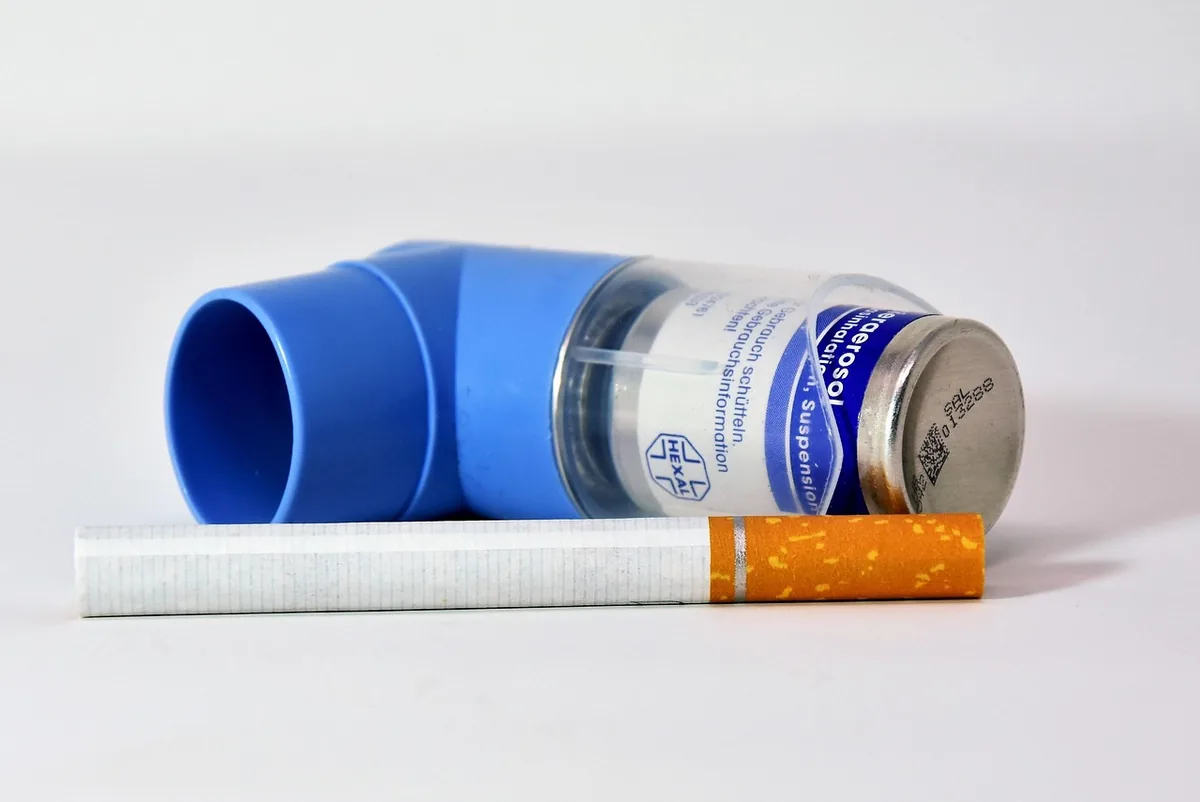
Cockroach allergens are one of the most significant — and most overlooked — indoor asthma triggers in the United States. The National Institute of Environmental Health Sciences (NIEHS) identified cockroach allergens as a more potent asthma trigger than dust mites or pet dander in inner-city homes, and the National Institutes of Health has linked childhood cockroach allergen exposure to significantly increased rates of asthma development and hospitalization.
German cockroaches aren't just disgusting — they're a documented public health hazard. Cockroach allergens (proteins found in their droppings, saliva, shed skins, and body fragments) are one of the most potent indoor asthma triggers, particularly for children in urban housing. The National Institute of Environmental Health Sciences has identified cockroach allergen exposure as a significant contributor to the childhood asthma epidemic in U.S. cities.
Even after cockroaches are eliminated, their allergens persist in dust, carpet fibers, and soft furnishings for months unless specifically cleaned. Killing the roaches is only half the solution — allergen removal is the other half.
Cockroach allergens become airborne as microscopic particles when disturbed by foot traffic, vacuuming, or air movement. When inhaled, these proteins trigger an immune response in sensitized individuals — inflammation of the airways, mucus production, and bronchospasm (the "asthma attack").
A landmark study (the National Cooperative Inner-City Asthma Study) found that children who were both allergic to cockroach allergens and exposed to high levels in their bedrooms had significantly more hospitalizations, unscheduled medical visits, and days of wheezing than children with either factor alone. The combination of sensitization plus exposure drives the worst outcomes.
The critical allergens — Bla g 1 and Bla g 2 — are heat-stable proteins that don't break down at normal room temperature. They accumulate in household dust over time and can be detected in homes that haven't had visible cockroach activity in months.
Urban apartments — particularly older multi-unit buildings with shared walls, plumbing, and infrastructure — have the highest cockroach allergen levels. German cockroaches travel between units through pipe chases and wall voids, making individual-unit treatment a temporary solution at best.
Homes in warm, humid climates where cockroach populations are larger and year-round.
Homes where food and moisture management is challenging — not a judgment, but a reality. Cockroach populations correlate directly with food and water availability. Even excellent sanitation in a multi-unit building can be undermined by conditions in neighboring units.
Part 1: Cockroach elimination. Gel bait (Advion or Vendetta) is the most effective treatment and also the safest for homes with children — it's applied in tiny dots inside cracks and crevices, not sprayed on surfaces children contact. Combine with Gentrol IGR to prevent reproduction. Avoid foggers and broadcast sprays — they aerosolize the very allergens you're trying to reduce, and they don't work on cockroaches anyway.
Part 2: Allergen removal. After cockroach elimination, deep-clean to remove accumulated allergens: vacuum all surfaces with a HEPA-filter vacuum (standard vacuums recirculate allergen particles into the air), wash bedding and soft furnishings in hot water, and clean hard surfaces with soap and water. Pay special attention to the kitchen, bedroom, and living areas where children spend time.
Seal entry points between units — caulk around pipe penetrations under sinks and behind toilets, seal gaps around electrical outlets on shared walls, and install door sweeps on apartment entry doors.
Eliminate food access. Store all food in sealed containers. Clean dishes immediately. Sweep or vacuum crumbs daily. Empty trash nightly. Fix any dripping faucets — cockroaches need water even more than food.
Use HEPA air purifiers in the child's bedroom to reduce airborne allergen levels. Combined with regular HEPA vacuuming, this significantly reduces allergen exposure even while cockroach elimination is in progress.
Monitor with glue boards. Place cockroach sticky traps in the kitchen (under the sink, behind the refrigerator) and bathroom. Check weekly — rising catches indicate treatment isn't reaching the source, and you may need professional help or coordination with building management.
If a household member has asthma that worsens at home but improves away from home (at school, on vacation, at a relative's house), cockroach allergens should be investigated as a potential trigger — especially in multi-unit housing, older homes, or areas with known cockroach pressure.
Professional allergen testing: Environmental testing services can measure cockroach allergen levels (Bla g 1, the primary allergen protein) in settled dust samples from bedrooms, kitchens, and living areas. Results above 2 units per gram of dust are associated with sensitization; above 8 units per gram is associated with clinical asthma symptoms in sensitized individuals.
Medical allergy testing: An allergist can perform skin prick tests or blood tests (specific IgE) to determine whether a patient is sensitized to cockroach allergens. If sensitization is confirmed, aggressive cockroach elimination and allergen reduction become a medical priority — not just a comfort issue.
The National Institute of Environmental Health Sciences has funded major studies demonstrating that combined cockroach elimination + allergen reduction + environmental education significantly reduces asthma hospitalizations and emergency room visits in affected children. This intervention is one of the most cost-effective asthma management strategies available.
Proteins in cockroach saliva, feces, shed skins, and body parts become airborne and trigger immune responses in sensitized individuals, causing airway inflammation and asthma symptoms.
Cleaning reduces but doesn't eliminate allergens once established. HEPA vacuuming, hot water laundering, and hard flooring help — but you must also eliminate the cockroach population producing new allergens.
No. Measurable allergen levels have been detected in the majority of U.S. homes. Multi-unit housing is particularly affected regardless of individual unit cleanliness.
Combine cockroach elimination (gel bait + IGR) with allergen removal (HEPA vacuuming, hot water laundering, damp wiping) and reinfestation prevention (seal entry points, fix moisture).
Never. Foggers deposit chemical residue on bedding and toys while scattering cockroaches. Gel bait and CimeXa dust in wall voids are far safer and more effective.
Months to years. The proteins are stable and bind to carpet and fabric. Aggressive HEPA cleaning and hard floor installation accelerate reduction.
Several pest control claims circulate widely despite minimal supporting evidence and sometimes despite direct contradiction by entomological research. Among the most persistent: cucumber peels do not repel ants in any meaningful way (this myth is robust online despite being repeatedly tested with negative results), peppermint oil does not repel mice in real-world residential conditions (limited effect in lab cages, no measurable effect when deployed against actual rodent populations), ultrasonic pest repellers have been tested repeatedly and show no significant pest reduction across species, dryer sheets do not deter mice or other pests despite folk reputation, copper bracelets and various other historical remedies have no basis. The pattern: anecdotal claims spread faster than the data testing them. The reliable sources for evidence-based pest information are extension services and peer-reviewed entomology publications; consumer media and viral content frequently amplifies myths without checking the underlying data. When in doubt, the question worth asking is whether the claim has actually been tested under realistic conditions — if not, treat the claim as folk belief rather than information.
Most DIY pest control happens without any external review, but a few specific situations create legal and insurance exposure worth knowing about. Misapplication that affects neighboring property — drift from outdoor spraying, pesticide moving through a shared wall, treatment of a rental unit by a tenant — can create civil liability and, in some states, regulatory action. Treatment of common-area pests in condos, apartments, or HOAs is generally the property's responsibility, not the resident's, and self-treatment can void coverage or create disputes. Homeowner insurance generally does not cover damage caused by pests (termites, rodent chewing) but may cover sudden secondary damage (a rodent chewing a water line causing a flood). Documenting professional treatment with invoices preserves coverage options that DIY treatment doesn't. Renters specifically should request treatment from landlords in writing and keep records; in most jurisdictions, pest control is a landlord responsibility for habitability.
Lifestyle and home-improvement publications routinely cover pest control topics, but the quality of advice varies dramatically and the most popular tips often perform worse than less-publicized alternatives. Specific examples of commonly-published advice that doesn't hold up: cinnamon, peppermint oil, and other natural deterrents for ants (work briefly in laboratory conditions but don't produce meaningful field control); bleach in drains for fly elimination (doesn't address the biofilm where flies actually breed); ultrasonic pest repellers (extensive peer-reviewed testing shows minimal to no efficacy); diatomaceous earth applied broadly to carpets and floors (works in dry voids but loses efficacy when wet or vacuumed, and creates inhalation concerns when applied broadly); and dryer sheets stuffed in vents as rodent deterrents (no peer-reviewed evidence of efficacy). The pattern: most universal-home-tip pest advice prioritizes appeal and shareability over efficacy. Better sources for residential pest decisions include cooperative extension publications, peer-reviewed entomology literature (often accessible through extension publications that summarize it), and pest management association educational materials, which represent professional consensus on actual evidence.
Most homeowners frame pest control as elimination — zero individuals seen — but professional programs operate on threshold concepts that better match what's actually achievable and economically reasonable. A treatment threshold is the population level at which intervention is justified; below it, the cost and disruption of treatment outweigh the damage prevented. For aesthetic pests like the occasional ant or spider, the threshold is essentially zero only because tolerance is low, not because zero is biologically realistic. For pests with health implications (cockroaches, rodents) or property damage potential (termites, carpenter ants), thresholds are set well below visible damage to allow time for response. The implication for self-evaluation: a program that drops a cockroach population by 95% without reaching zero may be functioning correctly, and pushing for the last 5% may require disproportionate effort or treatment intensity that creates other problems. Reframing 'success' as durable reduction below threshold rather than absolute zero produces saner program design, more reasonable expectations of paid services, and less wasted DIY effort chasing the long tail of a population that's already controlled in any practical sense.
Pest control discussions usually frame the costs of treatment without quantifying the costs of non-treatment, but the latter are often larger and almost always less visible. Cockroach allergens add measurable healthcare costs in homes with asthma. Rodent activity in attics damages insulation (reducing R-value and adding seasonal heating and cooling costs) and creates fire risk through wire chewing that doesn't show up until something fails. Termite damage in unmonitored properties produces structural repair bills in the five-figure range, often discovered during unrelated renovation. Stored-product pests destroy food inventory at rates that aren't tracked because items are discarded individually rather than tallied. The cumulative cost of doing nothing isn't a single line item but a sum of small chronic losses across years. The framing that helps: pest control isn't a luxury expense layered onto a working baseline; it's a maintenance expense that competes with the slow accumulating cost of allowing a problem to continue. Households running the comparison honestly almost always find that modest preventive spending is the cheaper path.
Pest control content on the internet has grown dramatically in volume but not in average quality, and the signals that distinguish reliable sources from unreliable ones are worth knowing. Reliable content typically cites specific products by active ingredient rather than only by brand, references regional variation in pest pressure and treatment efficacy, acknowledges treatment failures and the conditions under which they occur, and avoids absolute claims about results. Unreliable content tends to make universal claims, recommend specific brand products without identifying alternatives, omit the conditions under which advice applies or fails, and write in a tone optimized for affiliate conversion rather than reader understanding. The other useful signal is whether the source discusses cost-benefit and threshold thinking — at what point does treatment become worth doing — versus only providing how-to instructions with the assumption that treatment is the right answer. Sources that engage with the decision dimension are usually more reliable than sources that skip past it. None of these signals are perfect, but applied consistently they filter out a meaningful portion of the lower-quality content that dominates search results for many pest topics.
Preventive treatment costs money in a year when nothing is happening, which is precisely why most households avoid it. The decision to spend on prevention requires a willingness to compare what you actually spend against a counterfactual you never directly observe — the infestations you would have had without it. This is a hard mental move, and it's why preventive pest control consistently underconsumed relative to its economic value. The way to think about it more clearly is to compute the expected annual cost of treatment for a property like yours given local pest pressure, then compare that against the cost of a preventive program. In most regions and for most property types, a preventive program comes in lower in expected value, sometimes substantially. The variance is also lower: instead of a year with zero pest spending followed by a year with a large unexpected expense, you have a small consistent line item that smooths out the cash flow. For households where unexpected expenses are particularly painful, that variance reduction is itself worth something even before counting the expected-value benefit.
Pest control warranties are not standardized, and the differences between contracts that look superficially similar can be enormous. Termite warranties in particular vary across at least three significant dimensions: whether they cover retreatment only or also include damage repair, whether the damage coverage is capped or unlimited, and whether the warranty is transferable to subsequent owners. A retreatment-only warranty on a property with significant termite pressure is much weaker than a damage-inclusive warranty, and the difference matters most precisely in the situations where the warranty is most likely to be needed. General pest control service agreements often have similar gradations — some include unlimited callbacks during the service period, some include a fixed number, and some charge for any visit outside the regular schedule. Before signing, the question to ask is not whether the contract has a warranty, but exactly what the warranty covers, what triggers a callback at no charge, and what the renewal terms are. Companies rarely volunteer this clearly; reading the document carefully and asking specific questions is on the homeowner.