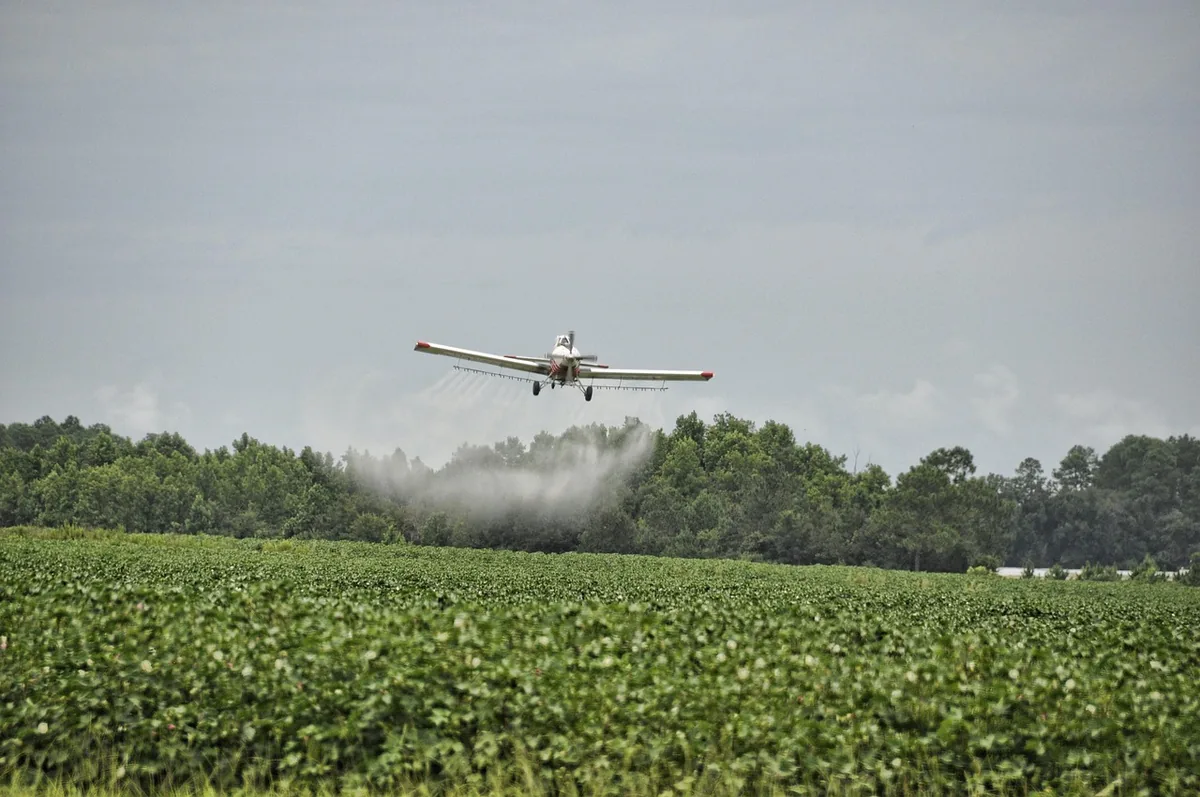
The U.S. Environmental Protection Agency announced on May 1, 2026 that it has released its draft Fungicide Strategy for public comment. The strategy is the third in a sequence of pesticide-class frameworks designed to bring agency pesticide registration into compliance with Endangered Species Act obligations, following earlier strategies for herbicides (2024) and insecticides (2025).
The comment period runs 60 days, closing June 29, 2026. EPA expects to finalize the strategy by November 2026, with a public webinar scheduled for May 20 to walk stakeholders through implementation details.
What the strategy actually does
The Fungicide Strategy provides the framework EPA will use to evaluate roughly 41 million acres of fungicide-treated agricultural land in the lower 48 states for impacts on more than 1,000 federally listed threatened and endangered species. It does not impose new requirements directly. Rather, it sets the methodology EPA will use during registration and registration review of individual fungicide active ingredients going forward.
The three-step framework, as described in EPA's announcement, works like this: identify potential population-level impacts to listed species; identify mitigation measures that would reduce those impacts; and determine where those mitigations apply geographically. The mitigations are applied through a "mitigation points" system, where products earn points for incorporating measures like drift-reducing nozzles, vegetative buffers, or runoff-reduction practices. Each product needs to accumulate enough points relative to its ecological risk profile to remain registered.
This is the same pattern EPA used in the Herbicide Strategy (finalized 2024) and the Insecticide Strategy (finalized 2025). The Fungicide Strategy is the last of the three major conventional pesticide classes to receive its own framework document.
What's new in this draft
The draft includes a few updates that differ from the herbicide and insecticide versions. EPA has expanded the list of approved spray drift adjuvants — substances added to spray tanks to reduce off-target movement — to include guar gum as an additional permitted adjuvant type. The strategy also updates options for reducing spray drift buffer distances, giving applicators more flexibility to meet the same protective threshold through different means.
The agency is taking public comment on docket EPA-HQ-OPP-2026-2973 at regulations.gov. EPA has specifically requested input from farmers, applicators, scientists, conservation groups, and state and tribal partners.
Does this affect homeowners?
Directly, not immediately. The Fungicide Strategy applies to conventional agricultural fungicides, not to the products homeowners buy at hardware stores for treating lawn diseases, rose black spot, or houseplant powdery mildew. Most homeowner fungicides — copper soap, sulfur, neem oil, propiconazole-based lawn treatments — are not the agency's primary target here, although several of those active ingredients are also registered for agricultural use and will be reviewed through this framework when their individual registration reviews come up.
The indirect effect, over the medium term, is that some agricultural fungicide labels will become more restrictive, which in turn shapes which products get reformulated for the consumer market. If you use a particular fungicide regularly, the most useful response to news like this is to keep an eye on label changes in the next 12 to 24 months and use up any older product stocks before the formulations shift.
For a deeper look at the specific active ingredients homeowners use, our pesticide library has individual profiles for the major fungicides, including myclobutanil, propiconazole, chlorothalonil, and the biofungicides like Bacillus subtilis.
The bigger pattern
The three-strategy sequence — Herbicide, Insecticide, Fungicide — represents EPA's response to litigation and consent decrees going back more than a decade, which had established that the agency was not adequately consulting under the Endangered Species Act before registering pesticides. Rather than handle that consultation product-by-product (which had effectively created a permanent backlog), EPA is now establishing class-wide methodologies that individual products can be evaluated against.
This is largely a regulatory plumbing story, but the practical effect over the next five to ten years will be visible at the product level. Labels will get longer. Buffer requirements will become more specific. Application restrictions will be more geographically targeted. Most of these changes are workable for both commercial applicators and homeowners; the registrants are the ones absorbing most of the cost of generating the data and re-engineering the products.
Source: U.S. Environmental Protection Agency, "EPA Seeks Public Comment on Draft Strategy to Better Protect Endangered Species" ↗, May 1, 2026. Public comment docket EPA-HQ-OPP-2026-2973 at regulations.gov.