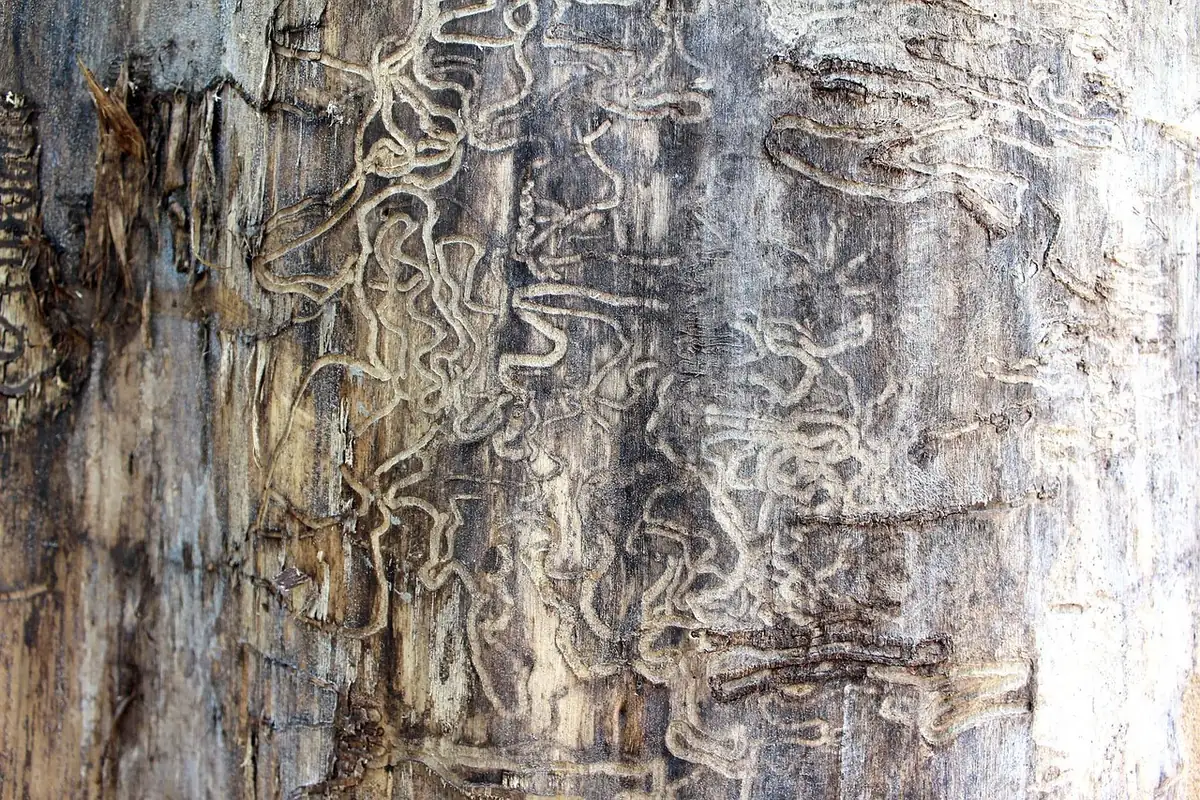
Termites cause $5 billion in US property damage annually — all uninsured. This guide covers the most effective professional and DIY termite treatments available.
Fipronil liquid termiticide applied around the foundation as a continuous treated zone. The Transfer Effect — termites pass the active ingredient to nestmates — collapses the entire colony. Provides 10+ years of protection. Most widely used termiticide in the US.
The newest major termiticide, approved 2010. Lower mammalian toxicity than any previous termiticide. Rapid termite paralysis while maintaining the Transfer Effect. Excellent for homes with young children, pets, or chemical sensitivities.
Same active ingredient as Termidor at the same concentration, labeled for consumer use. Requires trenching around the perimeter and filling with diluted product. Highly effective when applied correctly. Saves $300–$900 vs professional application.
Bait stations around the foundation deliver IGR bait that sterilizes and eventually collapses the colony. Slower than liquid treatment but no trenching required. Professional Sentricon is far superior to consumer Spectracide Terminate.
| Termite Type | Distribution | Best Treatment | DIY Feasible? |
|---|---|---|---|
| Eastern subterranean | Eastern US (most common) | Termidor/Taurus SC liquid | Yes (Taurus SC) |
| Formosan subterranean | Southeast, Hawaii | Termidor + Sentricon combo | No — Professional required |
| Drywood termites | South, West Coast | Fumigation or Bora-Care spot | Spot treatment only |
| Dampwood termites | Pacific Coast, SE | Remove moisture source + wood contact | Yes |
Related guides and profiles:
🔗 Termites destroyhomessilently.🔗 Termite Colony Biology: Castes, Queens & Swarm Science🔗 How to Inspect Your Home for Termites — The 12-Point Check🔗 How to Identify Termite Damage vs Other Wood DamageThe most useful starting point with Best Termite Treatments 2026 is to separate what is genuinely specific to the situation from what is generic pest-control knowledge that applies broadly. A great deal of online material treats every situation as unique, which obscures the fact that the underlying principles — identification, life cycle timing, targeted treatment, exclusion, and follow-up — are remarkably consistent across species and settings.
That said, certain factors do change the calculus enough to matter. Household composition (children, pets, immunocompromised residents), structure type (single family, multi-unit, mobile, historic), regional climate, and seasonal timing all shape which approaches are appropriate. The right plan accounts for these factors rather than applying a generic protocol regardless of context.
One useful habit is to think in terms of the cheapest reliable intervention first, then escalate only if the initial approach fails. Most situations resolve at the level of mechanical exclusion or targeted bait, and reaching for stronger products before exhausting these approaches typically produces worse results at higher cost.
Licensed applicators with several years of field experience develop a common inspection pattern that homeowners can adapt directly. The first 60 seconds of any inspection focus on three things: moisture sources, food sources, and entry points. These three categories account for the vast majority of pest pressure, and any treatment that does not address them tends to require ongoing reapplication indefinitely.
The second 60 seconds focus on harborage — the concealed spots where pests rest between activity periods. Harborage is usually invisible during normal household activity and only reveals itself with a flashlight and a willingness to look behind and underneath fixtures and appliances. Eliminating harborage is often more durable than spraying the activity area, because the activity area is just a symptom of where the pests actually live.
The third focus is the path between harborage and food or water. Pests follow predictable paths, and treating the path rather than just the endpoints reaches the population more efficiently than broadcast application to large surfaces.
The strongest free resources for pest control information are state Extension services and the National Pesticide Information Center. State Extension publications are written for the regional climate and pest population, which makes them more accurate for any given homeowner than national resources. The Extension entomology page for the relevant state is one of the highest-value bookmarks in this category, and most are updated annually with current treatment recommendations.
The National Pesticide Information Center (NPIC) provides product-specific safety information that is more practical than label text and is updated as new exposure data becomes available. NPIC also operates a phone consultation service for specific household questions, which is genuinely useful for unusual exposure scenarios.
For commercial pesticide labels and SDS documents, the manufacturer site is usually more current than retail listings. Bookmarking the SDS for any product kept in the household takes about 30 seconds and provides faster access during a spill or accidental exposure than a search would.
The three main termite categories familiar to homeowners — subterranean, drywood, and dampwood — require fundamentally different treatment approaches, and treatment that works for one frequently fails entirely for another. Subterranean termites (the most common type in the U.S., active in most states) live in soil and reach wood through mud tubes; standard treatment is liquid soil-applied termiticide or in-ground baiting around the foundation. Drywood termites (predominantly coastal and southern states) live entirely inside wood without ground contact; treatment requires fumigation, localized injection, or whole-structure heat treatment, depending on extent. Dampwood termites require very moist wood and are typically a moisture-correction problem first — eliminating the water source often eliminates the infestation. Pellet ('frass') findings near wood is characteristic of drywood termites; mud tubes are characteristic of subterranean. Correct identification determines whether you need soil treatment or wood treatment — a critical distinction.
Most DIY pest control happens without any external review, but a few specific situations create legal and insurance exposure worth knowing about. Misapplication that affects neighboring property — drift from outdoor spraying, pesticide moving through a shared wall, treatment of a rental unit by a tenant — can create civil liability and, in some states, regulatory action. Treatment of common-area pests in condos, apartments, or HOAs is generally the property's responsibility, not the resident's, and self-treatment can void coverage or create disputes. Homeowner insurance generally does not cover damage caused by pests (termites, rodent chewing) but may cover sudden secondary damage (a rodent chewing a water line causing a flood). Documenting professional treatment with invoices preserves coverage options that DIY treatment doesn't. Renters specifically should request treatment from landlords in writing and keep records; in most jurisdictions, pest control is a landlord responsibility for habitability.
Homeowners building new construction in active termite zones have specific options for pre-construction termite protection that are far cheaper than retrofitting after the fact. The standard options include: borate treatment of all structural framing during construction (Bora-Care or equivalent), termiticide-treated soil under the slab before pouring, physical barriers like stainless steel mesh or sand barriers at sill plates and around penetrations, treated wood specifications for any wood contacting concrete or coming within several inches of grade, and termite shields above piers and foundation walls. Each adds modest cost to construction (typically a few hundred to a few thousand dollars total for a single-family home) but eliminates most of the termite entry routes that retrofit treatment then has to address at much higher cost. Builders often default to the regional minimum (typically slab pretreatment alone), so homeowners who specifically want belt-and-suspenders termite protection need to raise it during specifications. The conversation is appropriately had with the builder during planning, not during framing when many options are already foreclosed.
Across pest categories, placement is more important than the specific brand or formulation chosen, and the diagnostic data backs this up. A mediocre bait placed in the correct location outperforms a premium bait placed wrong; a basic snap trap on a runway outperforms a designer electronic trap in the middle of a room. The underlying reason is pest behavior: most pests follow predictable physical patterns — walls, edges, vertical surfaces, harborage-to-food routes — and traps or baits intersecting those patterns get encountered, while traps placed for human convenience often don't. Practical placement principles that apply across pest types: along walls rather than in open spaces, between harborage and food/water sources, near observed activity rather than in 'symmetric' patterns, and in higher density (more units, closer together) than feels intuitively right. Cockroach gels go in corners and crevices, not on open surfaces; rodent traps go perpendicular to walls with trigger toward the wall; pheromone traps for moths go where moth flight has been observed, not centrally; ant baits go on observed trails, not where ants are 'expected.' Spending time observing pest behavior before deploying traps almost always pays back.
Certain construction features are specifically termite-prone and warrant either monitoring or remediation in active termite zones. Foam insulation board installed below grade against the foundation provides a protected route termites can travel inside without making the diagnostic mud tubes that would otherwise be visible — termites enter from soil contact at the foam edge and travel up to the sill plate concealed behind the foam. Earth-to-wood contact at any point creates a direct entry route; common offenders include deck supports without proper footings, wood retaining walls in contact with structural framing, and porch supports running through soil. Stucco that extends below grade lets termites enter from soil contact and travel up behind the stucco invisibly. Wood mulch piled against the foundation provides moisture and harborage at the entry zone. Newer construction often uses borate-treated framing and termite shields that reduce these risks, but older homes often need targeted remediation: installing inspection gaps in foam insulation, separating wood from soil contact at decks and porches, and pulling mulch back from foundation contact.
Subterranean termites need consistent access to soil moisture to survive, and the moisture conditions around a foundation determine the local pressure those termites apply against the structure. A foundation perimeter that stays wet through poor drainage, sprinkler overspray, downspout discharge, or grade that slopes toward rather than away from the building creates a high-pressure environment in which termite colonies actively expand toward the structure. The same property with grade corrected, downspouts extended, sprinklers redirected, and mulch pulled back from the foundation walls supports a much lower-pressure environment. This is not a substitute for chemical or bait treatment in active infestation situations, but as a long-term reduction in termite pressure it's effective, durable, and addresses the actual driver of the problem rather than just the symptom. Many of the most expensive termite problems in residential properties trace back to moisture issues that could have been corrected years before the infestation took hold for the cost of a few hundred dollars of grading and drainage work. Homeowners who address moisture issues proactively often find that other pest categories — carpenter ants, springtails, certain cockroach species, even some fungal problems — improve at the same time.
Preventive treatment costs money in a year when nothing is happening, which is precisely why most households avoid it. The decision to spend on prevention requires a willingness to compare what you actually spend against a counterfactual you never directly observe — the infestations you would have had without it. This is a hard mental move, and it's why preventive pest control consistently underconsumed relative to its economic value. The way to think about it more clearly is to compute the expected annual cost of treatment for a property like yours given local pest pressure, then compare that against the cost of a preventive program. In most regions and for most property types, a preventive program comes in lower in expected value, sometimes substantially. The variance is also lower: instead of a year with zero pest spending followed by a year with a large unexpected expense, you have a small consistent line item that smooths out the cash flow. For households where unexpected expenses are particularly painful, that variance reduction is itself worth something even before counting the expected-value benefit.
A termite treatment is not the end of the project; it's the beginning of a monitoring phase that should run for years. Soil-applied termiticides have known residual lives that vary by product, soil conditions, and exposure to moisture and disturbance, but none last forever. Bait systems require regular station inspection to detect activity and confirm that the bait matrix remains attractive. Even after a comprehensive treatment, conditions on the property can change — landscaping is added, irrigation patterns shift, mulch is replaced with conducive materials, additions are built that breach treated zones — and any of these can create new entry points. The right cadence for post-treatment monitoring is at least annual inspection by a competent professional, with attention to known vulnerable points like utility penetrations, foam insulation contact with siding, expansion joints, and any place where soil grade has changed since original treatment. Without monitoring, the assumption that the home is protected because it was treated is exactly the assumption that allows subsequent activity to go undetected until significant damage has occurred.