On this page
How to identify it
Look-alikes
| Look-alike | How to tell them apart |
|---|---|
| Dusky birch sawfly | A related birch sawfly whose larvae feed in groups along leaf edges with similar damage.[1][2] |
Where it lives
Found through Canada and parts of the northeastern United States.[1]
Biology and life cycle
Pupae overwinter in the leaf litter at the base of host trees, and adults emerge in June and July and lay eggs in rows along leaf edges.[1][2]
Larvae are active from about mid-June into September.[1]
Damage and signs
Health risk
Control
Traps and physical control
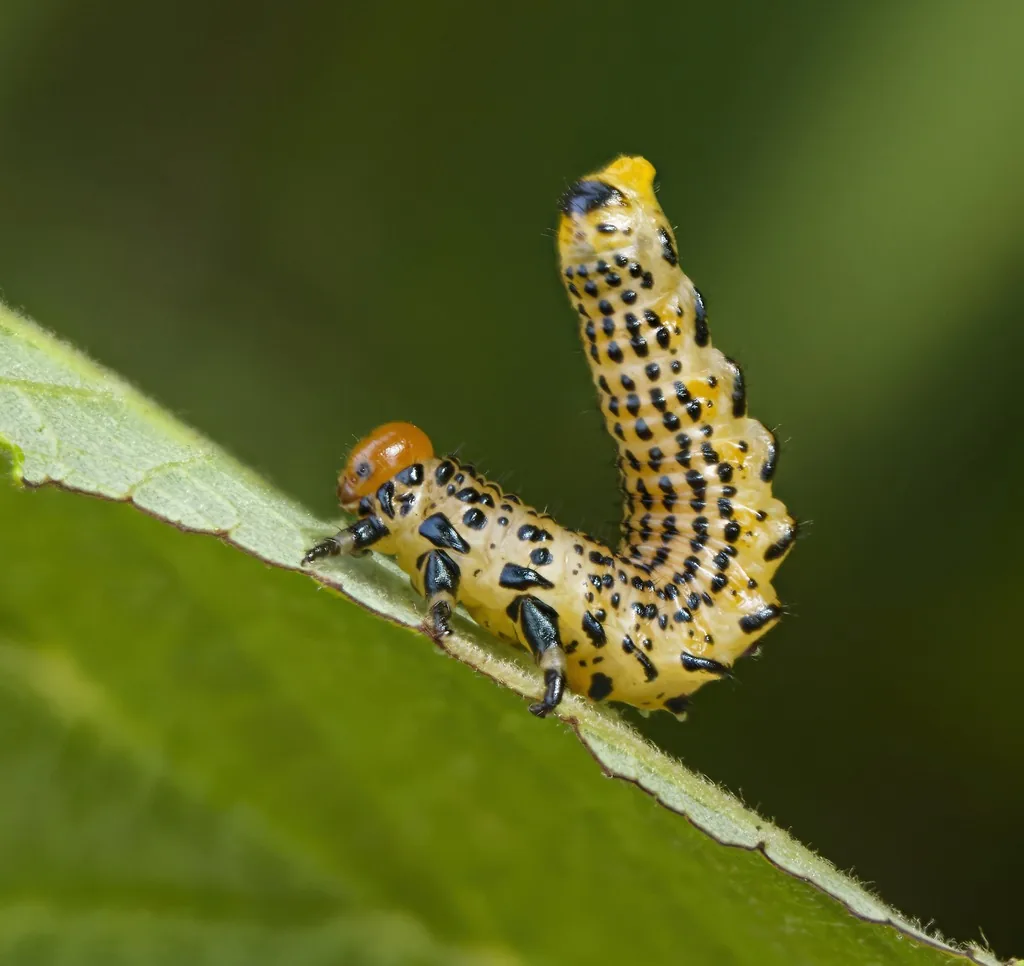
Watch for small larvae along leaf edges and prune out or crush them with a gloved hand.[1][2]
Biological control
Native natural enemies, including predatory stink bugs, usually keep numbers down, so it can usually be tolerated.[1][2]
Pesticides
Bacillus thuringiensis kurstaki will not work, because sawfly larvae are not caterpillars.[1]
Common questions
Sources
- UMass Extension Landscape, Nursery and Urban Forestry Program (Landscape Insect & Mite Guide), “Arge pectoralis (Birch Sawfly).” www.umass.edu/agriculture-food-environment/landscape/publications-resources/insect-mite-guide/arge-pectoralis (accessed 2026-10-16)
- Pacific Northwest Insect Management Handbook (Oregon State, Washington State, University of Idaho), “Birch (Betula)-Sawfly (Hosts and Pests of Landscape Plants).” pnwhandbooks.org/insect/hort/landscape/hosts-pests-landscape-plants/birch-betula-sawfly (accessed 2026-10-16)
- iNaturalist, “Arge pectoralis taxon page (order and family).” www.inaturalist.org/taxa/202672 (accessed 2026-10-06)