On this page
How to identify it
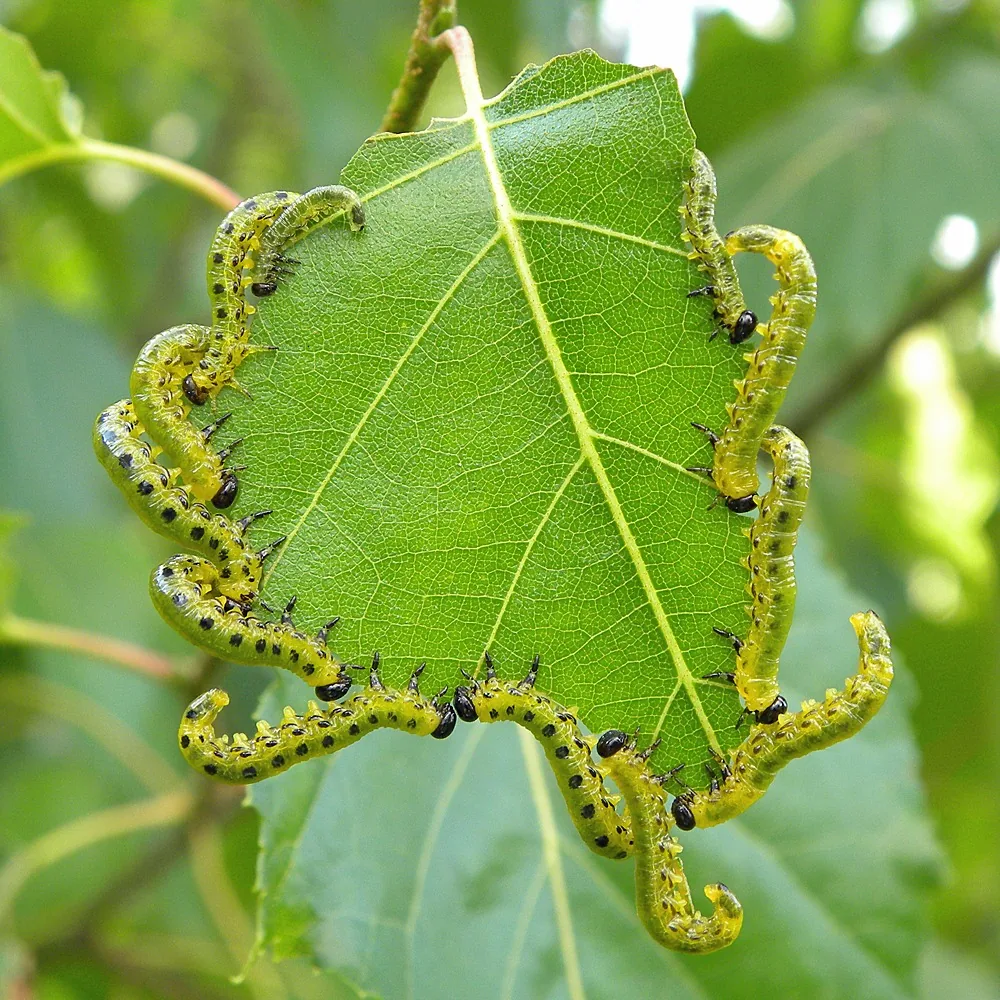
- Larvae have shiny black heads and rows of black spots; young larvae are dark gray, turning yellowish or yellowish-green and up to about 1 inch long when grown.[1][2]
- Disturbed or resting larvae hold an S-shaped pose with the rear end raised.[1]
- Adults are about 1/2 inch long and look like small black wasps.[1]
Where it lives
Found on native and non-native birches in Massachusetts and Minnesota.[1][2]
Biology and life cycle
Prepupae overwinter in cocoons in the soil, pupate in spring and emerge as adults in May to lay eggs on the leaves.[1][2]
First-generation larvae feed from about May to early July; a second, overlapping generation can feed from mid-July through September.[1][2]
Damage and signs
Health risk
Control
Traps and physical control
Drop larvae into a can of soapy water or prune out and destroy the branch section where a group is feeding.[1]
Pesticides
Numbers rarely reach levels that need chemical treatment; check birches in spring and again in midsummer.[1][2]
Common questions
- What are the black-spotted larvae lined up on my birch leaves?
- Most likely dusky birch sawfly larvae, which feed in groups from the leaf edges.[1][2]
- Will Bt control dusky birch sawflies?
- No; Bacillus thuringiensis kurstaki kills moth caterpillars, not sawfly larvae, so UMass recommends hand removal first.[1]
Sources
- UMass Extension Landscape, Nursery and Urban Forestry Program (Landscape Insect & Mite Guide), “Croesus latitarsus (Dusky Birch Sawfly).” www.umass.edu/agriculture-food-environment/landscape/publications-resources/insect-mite-guide/croesus-latitarsus (accessed 2026-10-16)
- University of Minnesota Extension, “Sawflies (Yard and Garden Insects).” extension.umn.edu/yard-and-garden-insects/sawflies (accessed 2026-10-16)
- iNaturalist, “Nematus latitarsus taxon page (order and family).” www.inaturalist.org/taxa/1354151 (accessed 2026-10-06)