On this page
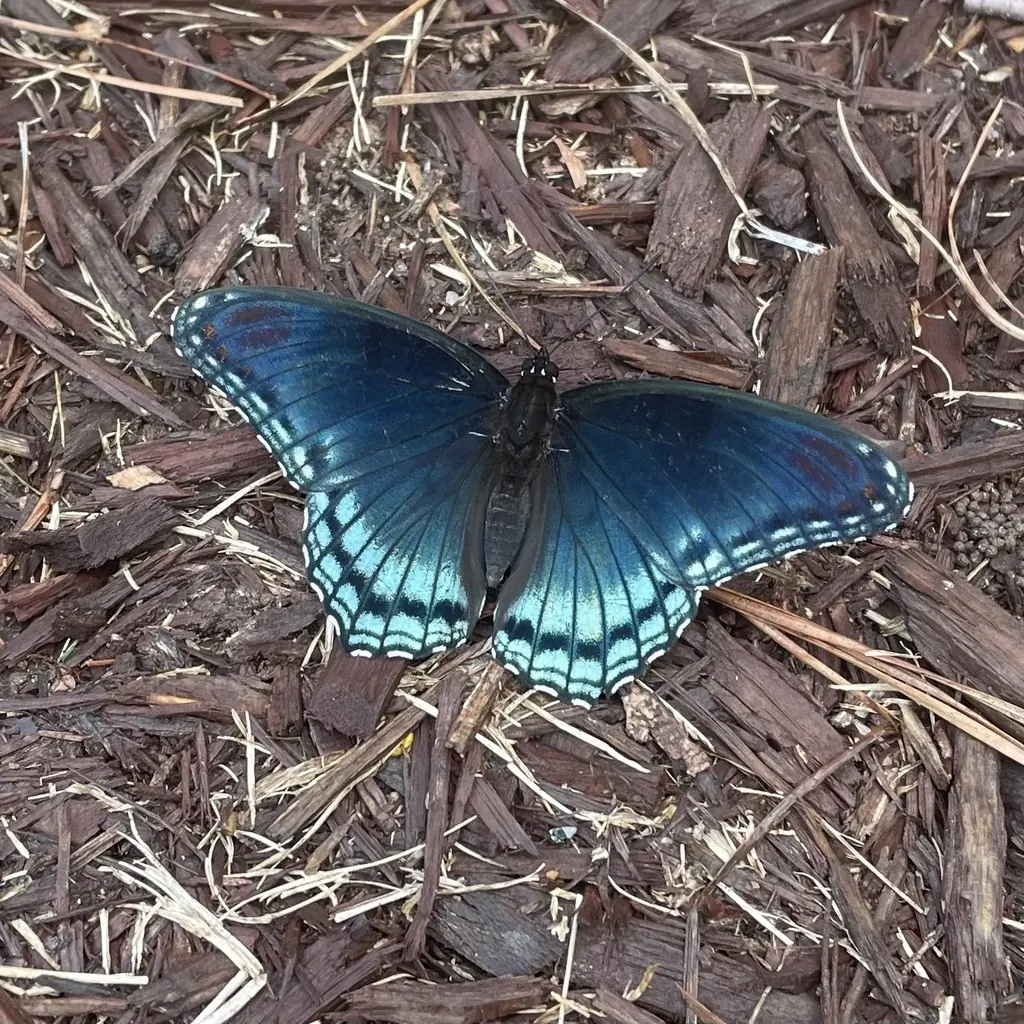
How to identify it
Look-alikes
| Look-alike | How to tell them apart |
|---|---|
| Pipevine swallowtail | It is considered a mimic of the poisonous pipevine swallowtail, which shares its range.[1] |
Where it lives
A forest butterfly also common in wooded suburban areas; MU Extension reports caterpillars from early summer to fall.[1][2]
Biology and life cycle
There are two generations a year; young caterpillars eat the leaf tip and rest on a 'frass spar' extended from the midrib.[1][2]
Damage and signs
- Hosts include willow, apple, wild cherry, wild crab, elm and oak; feeding is not a concern.[2]
Health risk
Control
Prevention
Common questions
Sources
- University of Florida IFAS Extension (EDIS, Featured Creatures), “Red-Spotted Purple, Limenitis arthemis astyanax (EENY-447/IN814).” ask.ifas.ufl.edu/publication/IN814 (accessed 2026-10-15)
- University of Missouri Extension (Caterpillars in Your Yard and Garden, IPM1019), “Caterpillars in Your Yard and Garden, page 36: Red-spotted purple.” extension.missouri.edu/publications/ipm1019-36 (accessed 2026-10-15)
- iNaturalist, “Limenitis arthemis taxon page (order and family).” www.inaturalist.org/taxa/60607 (accessed 2026-10-06)