On this page
How to identify it
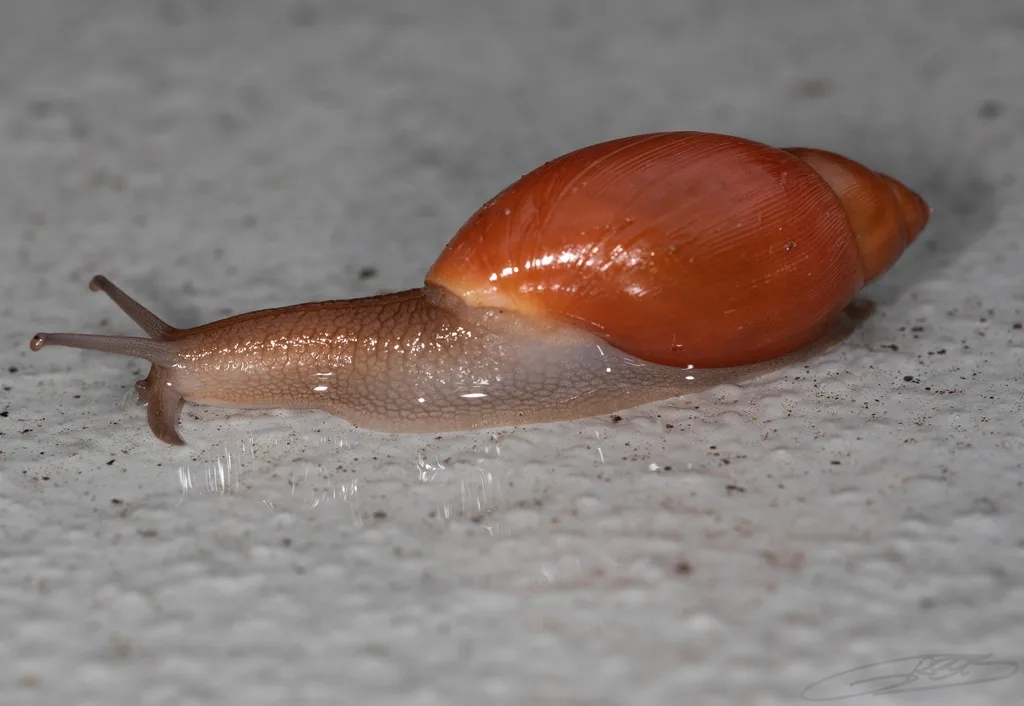
- The long, spindle-shaped shell is light brown, reddish brown, pinkish or grayish and reaches up to about 3 inches; the stretched-out body can reach about 4 inches.[1][2]
- The upper tentacles are about three times longer than the short lower ones, and two lip-like lappets help it follow prey slime trails.[1]
Look-alikes
| Look-alike | How to tell them apart |
|---|---|
| Decollate snail | Another predatory snail, used in California against brown garden snails; its pinkish-brown shell loses its upper whorls as it grows.[2] |
Where it lives
Native to tropical North America; in the US recorded from Alabama, Florida, Georgia, Louisiana, Mississippi, South Carolina, southeastern Texas and, as an introduced species, Hawaii.[1][2]
Biology and life cycle
Individuals live up to 24 months, and adults lay 25 to 35 eggs in a shallow pocket of soil that hatch in 30 to 40 days.[2]
It sometimes burrows under mulch and boards, follows prey into water, and gathers in small numbers to mate after rain.[1]
Damage and signs
Health risk
Control
Biological control
No control is needed in gardens, where it eats slugs and snails, unless native snails need protecting.[1]
Common questions
Sources
- NC State Extension, “Rosy Wolf Snail (PDIC Factsheet).” content.ces.ncsu.edu/rosey-wolf-snail (accessed 2026-10-16)
- University of Florida IFAS Extension (EDIS, Featured Creatures), “Snail-Eating Snails of Florida (EENY-251).” ask.ifas.ufl.edu/publication/IN523 (accessed 2026-10-16)
- iNaturalist, “Euglandina rosea taxon page (order and family).” www.inaturalist.org/taxa/121012 (accessed 2026-10-06)