⚖️ Educational use only. Always read and follow the full product label — the label is the law under FIFRA. Full disclaimer → | ⚗️ Mixing Calculator →
🏷️ Brand Names — Same Active Ingredient
Alpine WSG — BASF — water-soluble granule professional
Zylam Liquid Systemic — PBI Gordon — tree/shrub systemic
Safari 20 SG — Valent — ornamental use
Scorpio — Whitmire — baiting and surface
🎯 What It Kills
✓ Ants✓ Cockroaches✓ Bed Bugs✓ Emerald Ash Borer✓ Aphids✓ Whiteflies✓ Japanese Beetle (adult)✓ Scale
⚙️ How It Works
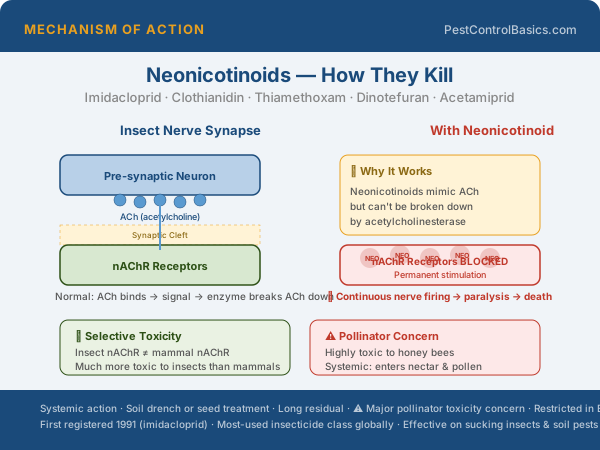
Dinotefuran is a third-generation neonicotinoid with faster uptake than imidacloprid and broader activity. Notable for bed bug and ant surface spray efficacy, and rapid tree systemic uptake.
⚗️ Mixing & Application
Alpine WSG: 0.2–0.4 oz per gallon for ants and cockroaches. Zylam for trees: 1 fl oz per 2 inches trunk diameter as soil drench.
Example
0.5 oz
per gallon
⚗️ Mixing Calculator
Enter your sprayer size and target rate — get the exact amount to pour. Backpack, hand sprayer, hose-end, or skid unit.
⚠️ Safety
- ⚠ Highly toxic to bees — systemic in plants
- ⚠ Do not apply to trees in bloom
- ⚠ Neonicotinoid — rotate modes of action for resistance management
🐛 Pests This Treats — Learn More
Click any pest to view its full identification guide, biology, and treatment options.
🌿 Environmental & Ecological Impact
⏱️ Residual & Re-entry Timeline
🔹
Apply
Follow label mixing and application rates
🔸
Re-entry: 2–4 hours (until dry)
Keep people and pets out of treated area
🟢
Effective period: 3–6 months
Active residual — killing or repelling target pests
🔄
Reapply
Re-treat when pest activity returns or residual expires
🔄 Alternatives & Related Products
Same chemical class or different approaches to the same pests.
🔄Imidacloprid
Same class: Neonicotinoid
🔄Same class: Neonicotinoid
Clothianidin
Same class: Neonicotinoid
🔄Same class: Neonicotinoid
Thiamethoxam
Same class: Neonicotinoid
↔️Same class: Neonicotinoid
Pyrethrin
Different approach: Botanical Pyrethrin
↔️Different approach: Botanical Pyrethrin
Boric Acid
Different approach: Inorganic
Different approach: Inorganic
❓ Frequently Asked Questions
Q: Is dinotefuran safe for pets?
Follow the product label. Keep pets out of treated areas until completely dried (2–4 hours for sprays). Once dry, treated surfaces pose minimal risk to dogs and cats.
Q: Can I use dinotefuran indoors?
Check the specific product label — formulations vary. Baits and dusts often have indoor labeling; concentrates and granulars are typically outdoor.
Q: How long does dinotefuran last after application?
Residual varies by formulation, surface type, weather, and UV exposure. Indoor applications last longer than outdoor. Check the product label for re-application intervals.
Q: What should I do if exposed?
Remove contaminated clothing, wash skin with soap and water. For eye contact, rinse 15–20 minutes. For ingestion or severe symptoms, call Poison Control (1-800-222-1222). Have the product label available.
📋 Safety Data Sheet (SDS)
Alpine WSG — Safety Data Sheet
View the official SDS document for this product directly on the CDMS label database.

📚 Sources: EPA Pesticide Labels · NPIC Pesticide Info
Published: Jan 1, 2025 · Updated: Apr 7, 2026
🔮
Reviewed by Derek GiordanoContent reviewed by a licensed pest management professional and cross-referenced against EPA, university extension, and manufacturer technical data. Last reviewed: April 2026.