πŸ”’ Licensed Only Active: diphacinone

Diphacinone β€” Ditrac, Ramik

Diphacinone is a first-generation anticoagulant rodenticide in Ditrac and Ramik. Slower than second-gen products but lower secondary poisoning risk. Complete guide.

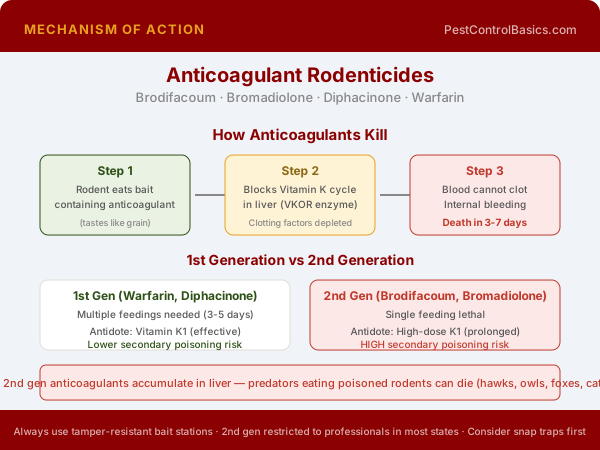
Rodenticide Anticoagulant mechanism of action diagram

How rodenticide anticoagulant works β€” illustrated mechanism of action

βš–οΈ Educational use only. PestControlBasics.com is not a licensed PCO. The label is the law under FIFRA. Always read your complete product label before mixing or applying. Full disclaimer β†’ | βš—οΈ Mixing Calculator β†’

🏷️ Brand Names β€” Same Active Ingredient

⚠️ Don't buy duplicates. All products below contain diphacinone as the active ingredient. Buying two different brands is buying the same pesticide twice β€” they differ only in price, concentration, and formulation type.
Ditrac All-Weather Blox
Bell Labs Β· Bait block Β· 0.005% diphacinone
Professional
Ramik Brown Pellets SAME ACTIVE INGREDIENT
Motomco Β· Pellet bait Β· 0.005% diphacinone
Consumer/Professional
Ramik Mini Bars SAME ACTIVE INGREDIENT
Motomco Β· Bait bar Β· 0.005% diphacinone
Consumer/Professional
Ditrac Tracking Powder
Bell Labs Β· Tracking powder Β· 0.1% diphacinone
Professional β€” CAUTION

🎯 Target Pests

βœ“Norway Ratβœ“Roof Ratβœ“House Mouseβœ“Volesβœ“Ground Squirrels (some formulations)

πŸ”¬ How It Works

Diphacinone is a first-generation anticoagulant β€” the original class of anticoagulant rodenticides. It requires multiple feedings over several days to achieve a lethal dose, unlike second-generation anticoagulants (bromadiolone, brodifacoum) where a single feeding is sufficient.

Lower secondary poisoning risk: Because diphacinone requires multiple feedings and is metabolized more rapidly, the risk of secondary poisoning to raptors, pets, and predators is significantly lower than second-generation products. Many integrated pest management programs prefer diphacinone precisely because of this.

βš—οΈ Mixing & Application Rates

Ready-to-use. Tracking powder formulations (0.1%) are restricted-use in many applications β€” verify state requirements.

Rat control β€” bait stations
4–8 blocks per station
Requires multiple feedings β€” maintain fresh bait continuously for at least 2 weeks. Replace any bait that becomes wet, moldy, or contaminated. Lower secondary poisoning risk than second-gen products.
Mouse control
1–3 blocks per station
Place stations every 8–12 feet along active runways. Requires 3–7+ days of feeding for lethal dose accumulation.
Example
0.5 oz
per gallon
βš—οΈ Mixing Calculator
Enter your sprayer size and target rate β€” get the exact amount to pour. Backpack, hand sprayer, hose-end, or skid unit.
Open Calculator β†’

⚠️ Safety & Precautions

  • Lower secondary poisoning risk than bromadiolone or brodifacoum β€” a key advantage in wildlife-sensitive areas
  • Antidote: Vitamin K1 (same as all anticoagulants)
  • Tamper-resistant bait stations required for outdoor use
  • Tracking powder formulations (0.1%) require additional PPE and applicator precautions
  • Keep away from children and non-target animals

πŸ“„ SDS / Label Resources

Ditrac SDS available from Bell Labs. Ramik products SDS available from Motomco. For tracking powder formulations, additional hazard information applies β€” obtain SDS before purchasing.

πŸ“„ CDMS Label Database πŸ›οΈ EPA Label Search

πŸ› Pests This Treats β€” Learn More

Click any pest to view its full identification guide, biology, and treatment options.

πŸ› Ants β†’ πŸ› House Mouse β†’ πŸ› Norway Rat β†’ πŸ› Roof Rat β†’ πŸ› Scales β†’ πŸ› Squirrels β†’ πŸ› Ticks β†’ πŸ› Voles β†’

🌿 Environmental & Ecological Impact

🐝 Bees / PollinatorsNONE
🐟 Fish / Aquatic LifeLOW
🐦 BirdsHIGH
πŸ• Mammals / PetsHIGH
🦐 Aquatic InvertebratesLOW
πŸ’‘ First-generation anticoagulant rodenticide. Lower secondary poisoning risk than 2nd-gen but still significant.

❓ Frequently Asked Questions

Q: Is diphacinone safe for pets?
Follow the product label. Keep pets out of treated areas until completely dried (2–4 hours for sprays). Once dry, treated surfaces pose minimal risk to dogs and cats.
Q: Can I use diphacinone indoors?
Check the specific product label β€” formulations vary. Baits and dusts often have indoor labeling; concentrates and granulars are typically outdoor.
Q: How long does diphacinone last after application?
Residual varies by formulation, surface type, weather, and UV exposure. Indoor applications last longer than outdoor. Check the product label for re-application intervals.
Q: What should I do if exposed?
Remove contaminated clothing, wash skin with soap and water. For eye contact, rinse 15–20 minutes. For ingestion or severe symptoms, call Poison Control (1-800-222-1222). Have the product label available.

πŸ“‹ Safety Data Sheet (SDS)

πŸ“‹

Diphacinone β€” Safety Data Sheet

View the official SDS document for this product directly on the CDMS label database.

Diphacinone Safety Data Sheet page 1
πŸ“„ Diphacinone β€” Safety Data Sheet Β· View the complete SDS document above or download below
βš–οΈ Educational use only. PestControlBasics.com is not a licensed PCO. The label is the law under FIFRA. Always read your complete product label before mixing or applying. Full disclaimer β†’ | βš—οΈ Mixing Calculator β†’
πŸ“š Sources: EPA Pesticide Labels Β· NPIC Pesticide Info
Published: Jan 1, 2025 Β· Updated: Apr 7, 2026
🔮
Reviewed by Derek GiordanoContent reviewed by a licensed pest management professional and cross-referenced against EPA, university extension, and manufacturer technical data. Last reviewed: April 2026.