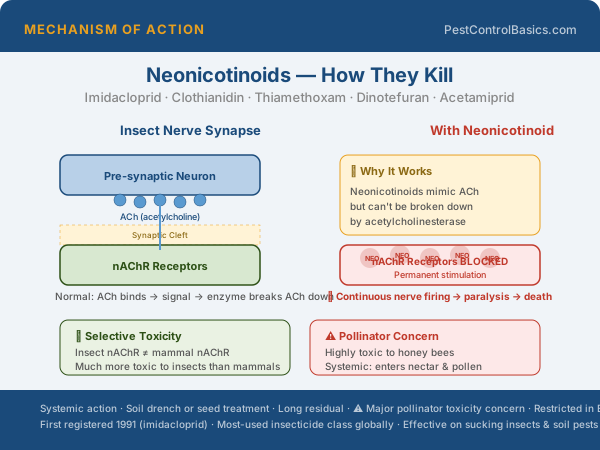
Neonicotinoid mechanism of action diagram

How neonicotinoid works β€” illustrated mechanism of action Β· PestControlBasics.com

πŸ§ͺ Active Ingredient Profile

Imidacloprid (Neonicotinoid) Profile

Neonicotinoid

Imidacloprid was the first widely used neonicotinoid insecticide. It's the active ingredient in some of the most successful pest products ever developed β€” from Advantage flea treatment to Premise termite treatment to Merit lawn grub control.

πŸ§ͺ
CAS Number
138261-41-3
Mode of Action
Binds irreversibly to nicotinic acetylcholine receptors in insect nervous systems β€” causes continuous nerve stimulation, paralysis, and death
βš–οΈ Educational use only. Always read and follow the full product label β€” the label is the law under FIFRA. Full disclaimer β†’ | βš—οΈ Mixing Calculator β†’

πŸ“‹ Key Facts at a Glance

Chemical Class
Neonicotinoid
Signal Word
Caution
Systemic Activity
Yes β€” absorbed by plants and transported through vascular tissue
Key Products
Advantage (fleas), Premise (termites), Merit (lawn grubs), Bayer Tree & Shrub
Soil Residual
Very long β€” years in soil, significant leaching risk
Bee Toxicity
HIGH β€” major regulatory concern; avoid application to flowering plants
Aquatic Toxicity
Moderate to high through leaching/runoff

🎯 Primary Uses in Pest Control

Imidacloprid is used across multiple application categories: flea and tick prevention (veterinary spot-ons and collars), termite soil barrier treatments (Premise β€” competes with Termidor), grub control in lawns (Merit), systemic tree and shrub treatments, and some indoor pest control applications.

πŸ›‘οΈ Safety Summary

Low acute mammalian toxicity in standard use. Well-tolerated by dogs and cats at veterinary use rates. Primary environmental concern is systemic plant uptake β€” imidacloprid applied to soil or plant roots makes pollen and nectar toxic to bees. Significant regulatory pressure in Europe and growing concern in the US.

πŸ”¬ Resistance Status

Resistance to imidacloprid is emerging in some aphid and whitefly populations due to heavy agricultural use. In structural pest control, resistance in target species is less documented than for pyrethroids. Still highly effective for termites and lawn grubs when applied correctly.

🏷️ Common Products Containing Imidacloprid

Advantage (fleas)Premise 75 (termites)Merit 75 WP (grubs)Bayer Tree & Shrub ProtectGrub-Ex

🦺 Personal Protective Equipment (PPE)

Required PPE varies by formulation and application method. Always read the product label β€” the label is the law and overrides general guidance.

⚠️ Label compliance: The product label is a legal document under FIFRA. Applying any pesticide in a manner inconsistent with its label is a federal violation.

πŸ“‹ Application Best Practices

πŸ’‘ Storage: Store in original container, away from children, in a cool dry location. Never transfer to food or beverage containers. Check local regulations for disposal β€” most areas have household hazardous waste collection events.
Example
0.5 oz
per gallon
βš—οΈ Mixing Calculator
Enter your sprayer size and target rate β€” get the exact amount to pour. Backpack, hand sprayer, hose-end, or skid unit.
Open Calculator β†’

🌿 Environmental & Resistance Considerations

Responsible pesticide use protects both effectiveness and the environment:

πŸ“š Sources: EPA Pesticide Labels Β· NPIC Pesticide Info
Published: Jan 1, 2025 Β· Updated: Apr 7, 2026

πŸ› Pests This Treats β€” Learn More

Click any pest to view its full identification guide, biology, and treatment options.

πŸ› Ants β†’ πŸ› Aphid β†’ πŸ› Fleas β†’ πŸ› Grubs β†’ πŸ› Mites β†’ πŸ› Scales β†’ πŸ› Termites β†’ πŸ› Ticks β†’ πŸ› Whitefly β†’

🌿 Environmental & Ecological Impact

🐝 Bees / PollinatorsVERY HIGH
🐟 Fish / Aquatic LifeLOW
🐦 BirdsMODERATE
πŸ• Mammals / PetsLOW
🦐 Aquatic InvertebratesHIGH
πŸ’‘ Major concern for pollinators. Systemic β€” present in pollen and nectar. Restricted in some states.

πŸ”„ Alternatives & Related Products

Same chemical class or different approaches to the same pests.

πŸ”„
Clothianidin
Same class: Neonicotinoid
πŸ”„
Thiamethoxam
Same class: Neonicotinoid
πŸ”„
Dinotefuran
Same class: Neonicotinoid
↔️
Pyrethrin
Different approach: Botanical Pyrethrin
↔️
Boric Acid
Different approach: Inorganic

❓ Frequently Asked Questions

Q: Is imidacloprid safe for pets?
Follow the product label. Keep pets out of treated areas until completely dried (2–4 hours for sprays). Once dry, treated surfaces pose minimal risk to dogs and cats.
Q: Can I use imidacloprid indoors?
Check the specific product label β€” formulations vary. Baits and dusts often have indoor labeling; concentrates and granulars are typically outdoor.
Q: How long does imidacloprid last after application?
Residual varies by formulation, surface type, weather, and UV exposure. Indoor applications last longer than outdoor. Check the product label for re-application intervals.
Q: What should I do if exposed?
Remove contaminated clothing, wash skin with soap and water. For eye contact, rinse 15–20 minutes. For ingestion or severe symptoms, call Poison Control (1-800-222-1222). Have the product label available.
🔮
Reviewed by Derek GiordanoContent reviewed by a licensed pest management professional and cross-referenced against EPA, university extension, and manufacturer technical data. Last reviewed: April 2026.