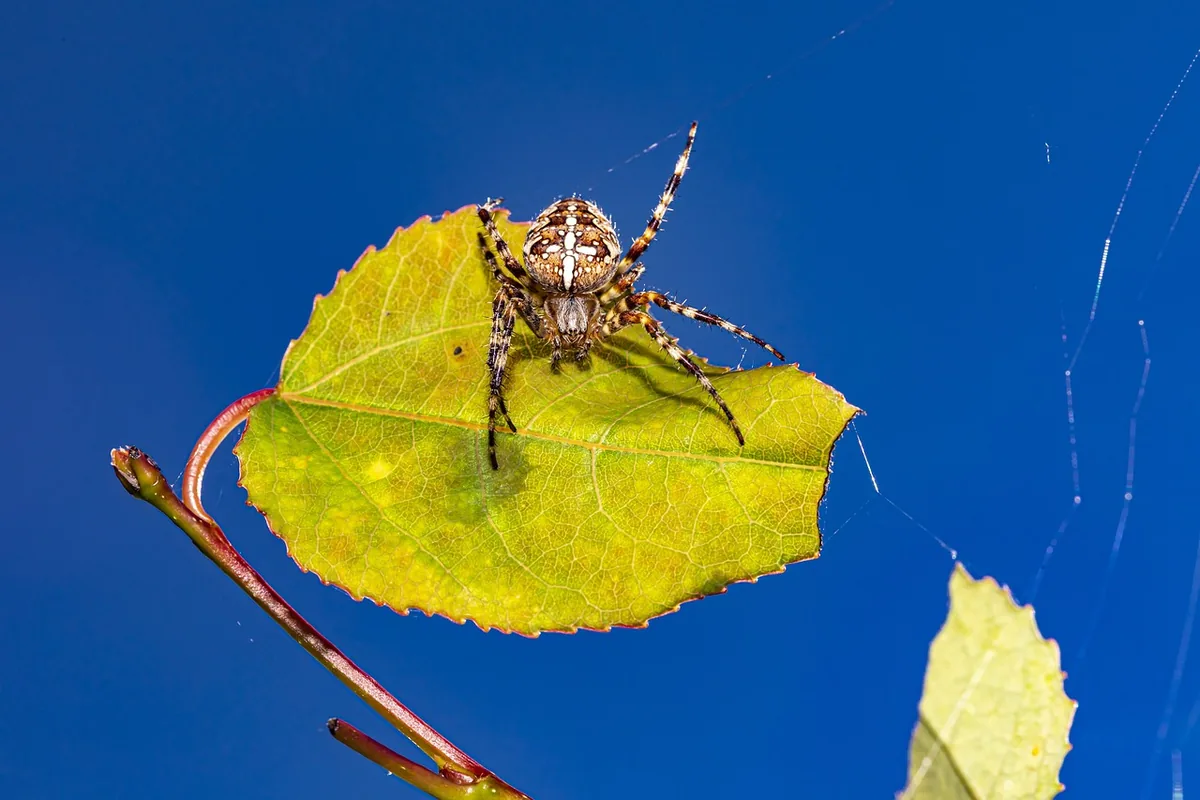
Every fall, homeowners report a sudden increase in spider sightings inside their homes. The explanation isn't a migration indoors — most of these spiders have been living in your home all year. What changes in September and October is male spider behavior. Males that have been hiding in wall voids, basements, and corners all summer emerge and begin actively wandering to find females for mating. This makes them visible in living spaces for the first time.
According to the University of Minnesota Extension, fall spider sightings increase by as much as tenfold in September and October — not because more spiders exist, but because males that were previously sedentary begin covering large distances in search of mates. Wolf spiders are the most dramatic example — large, fast, and suddenly appearing on living room floors. They're not entering from outside. They've been hunting cockroaches and crickets in your basement since spring.
A secondary factor is temperature differential. As nights cool below 50°F, some outdoor spiders are genuinely drawn toward warmer structures. But this accounts for a relatively small percentage of the spiders you're seeing — the majority were already residents.
Understanding which spiders are active in your home during fall helps you distinguish harmless wanderers from the rare species that warrant concern:
Wolf spiders: Large (body up to 1.5 inches, leg span up to 3 inches), hairy, fast-moving ground hunters. They don't build webs — they actively stalk prey on the ground, which is why you find them running across floors. Males wander widely in fall seeking females and can cover surprisingly large areas of a home in a single night. Despite their alarming size and speed, wolf spiders are completely harmless to humans. Their bite is no worse than a bee sting, and they almost never bite defensively.
Yellow sac spiders: Small (about the size of a nickel), pale yellow to light green, found on walls and ceilings at night. They build small silk retreats in upper corners and where walls meet ceilings. Yellow sac spiders are the most common biting spider in U.S. homes — they occasionally bite when trapped against skin in bedding or clothing — but bites are mild, comparable to a mosquito bite, and resolve without medical treatment. Males wander actively in fall.
Common house spiders (Parasteatoda tepidariorum): The small tan spiders behind cobwebs in corners, window frames, and ceiling junctions. You notice more webs in fall because spiders that hatched in spring have reached full size, building larger, more visible webs. These are the quintessential "cobweb spiders" and are utterly harmless — they rarely leave their webs and almost never bite.
Outdoor spiders coming in: Some spiders do enter homes in fall seeking warmth — particularly brown recluses in the Midwest/South, garden spiders (Araneus species) that wander through open doors, and cellar spiders (daddy longlegs) that cluster in basements. But outdoor entry is supplementary to the main cause: indoor spiders becoming more visible due to mating behavior.
It's not your imagination — spider webs genuinely are larger and more visible in September and October. Several factors converge:
Spiders are fully grown. Spiders that hatched from egg sacs in spring have been growing all summer. By fall, they've reached maximum adult size, and larger spiders build proportionally larger webs. An orb weaver's web in October can be 2–3 times the diameter of the same species' web in June.
Morning dew makes webs visible. Fall's cooler nights produce heavy dew that coats outdoor webs, making them dramatically visible in morning light. The webs were there all summer — you just couldn't see them without the moisture droplets.
Web-building increases before egg laying. Female orb weavers, garden spiders, and other web builders increase their food intake in early fall to develop eggs. More feeding means more active web maintenance and larger capture surfaces. According to the Smithsonian Entomology Department, female orb weavers can consume 2–3 times their body weight daily in the weeks before egg-laying.
After laying eggs (typically in October), most outdoor web-building spiders die with the first hard frost. The egg sacs overwinter, and the cycle restarts in spring.
In most of the U.S., no. The vast majority of spiders in homes are harmless predators eating pest insects you'd rather not have. The North Carolina State University Cooperative Extension emphasizes that of the 3,000+ spider species in North America, only two groups are medically significant: black widows (found in garages, crawl spaces, outdoor storage — rarely in living areas) and brown recluses (limited to the Midwest and South — check the verified range map).
If you are finding spiders in your home in fall, the most likely species are wolf spiders, yellow sac spiders, common house spiders, and cellar spiders — all harmless. The instinct to spray or squash is understandable but usually counterproductive, since these spiders provide continuous, free pest control.
If you live in brown recluse territory (roughly the region from Nebraska south to Texas, east to Georgia, and north to Ohio), fall spider sightings warrant a quick identification check. Brown recluses are most active in fall, and unlike other species, they do enter living areas — closets, shoes left on floors, bedding, and boxes are common encounter sites.
Three identification features:
1. Six eyes in three pairs. Most spiders have eight eyes. Recluses have six, arranged in three pairs (dyads) — one pair in front and one pair on each side. You'll need a magnifying glass or phone camera zoom to see this clearly.
2. Violin marking on the cephalothorax. A dark fiddle-shaped marking with the neck pointing toward the abdomen. However, this marking varies in intensity and is unreliable as a sole identifier — several harmless species have similar markings.
3. Uniformly colored legs. Recluse legs are one solid color with no stripes, spots, or bands. If the spider has banded legs, it is not a brown recluse, regardless of other features.
If you confirm a brown recluse, targeted treatment is warranted: CimeXa dust in wall voids and cracks, glue boards along baseboards, reducing clutter, and keeping clothes and shoes off floors. A professional inspection may be appropriate if multiple recluses are found.
Reduce prey insects. Spiders go where the food is. If you have fewer crickets, cockroaches, and flies inside, you'll have fewer spiders. CimeXa dust in wall voids, behind outlet covers, and in cracks kills crawling insects that spiders feed on — and incidentally kills any spiders that contact it as well.
Seal entry points. For the spiders that are genuinely entering from outside, sealing gaps around windows, doors, utility penetrations, and dryer vents keeps them out. Pay particular attention to garage doors (the single largest opening in most homes) and basement windows — the two most common spider entry points. Weatherstripping and door sweeps are inexpensive and highly effective.
Switch to yellow LED exterior lights. Standard white lights attract flying insects, which attract web-building spiders that set up near light sources. Yellow or warm-amber LEDs emit minimal UV and reduce insect attraction by 80% or more, which in turn dramatically reduces spider web-building near doors, porches, and windows. This is one of the cheapest and most impactful changes you can make.
Glue boards along walls. Inexpensive glue traps placed flat along baseboards in the basement, garage, and behind furniture catch wandering spiders effectively. Spiders follow wall edges when traveling, making baseboards the highest-traffic spider zone. Check traps weekly — what you catch reveals which species are present and how large the population is. This doubles as monitoring and control.
Declutter storage areas. Spiders thrive in undisturbed clutter — cardboard boxes, piled clothing, garage shelving, stacks of newspapers. Reducing harborage sites reduces populations directly. Replace cardboard boxes with sealed plastic bins in basements and garages, and periodically shake out stored items like holiday decorations, rarely worn shoes, and folded linens before use.
Spiders are uniquely resistant to surface-applied pesticides. Unlike ants and cockroaches, which drag their bodies across treated surfaces, spiders walk on the tips of their tarsal claws — the very end of their legs. This minimizes their contact with surface residues and makes broadcast perimeter spraying far less effective against spiders than against other pests.
Additionally, most residential spider species don't forage — they sit in webs or ambush prey from fixed positions. They're not crossing your baseboards regularly the way ants and roaches do. This means a perimeter spray that works well for ants may not contact a spider for weeks, if ever.
The most effective spider "treatment" is indirect: reduce the prey insects that attract them. A home with minimal cockroach, cricket, and fly activity naturally supports fewer spiders. CimeXa dust applied inside wall voids, behind outlet covers, and in cracks is one of the few products that works well against spiders because it's a desiccant — any insect or arachnid that contacts it loses its waxy coating and dehydrates, regardless of leg posture.
A single house spider consumes an estimated 2,000+ insects per year, including cockroaches, silverfish, crickets, drain flies, and fruit flies. A basement with 5–10 cobweb spiders is eliminating tens of thousands of pest insects annually at zero cost. This is the definition of biological control, and it's working 24/7 without any effort on your part.
If the aesthetics of cobwebs bother you, remove the webs with a duster or vacuum — but consider leaving the spider. It will rebuild its web in 24–48 hours and continue its pest control work. If a spider must be removed, capture it in a cup and release it in the garage or basement rather than killing it.
The exception to this tolerance policy is medically significant species. If you've confirmed a brown recluse or black widow, removal and targeted treatment are warranted — but these species account for a tiny fraction of fall spider sightings.
Male spiders that have been hiding all year emerge to search for mates in September and October. They're not entering from outside — they're becoming visible for the first time as reproductive instincts drive them into open areas of your home.
The vast majority are harmless. Wolf spiders, yellow sac spiders, and common house spiders — the most frequent fall species — pose no medical threat. Only black widows and brown recluses are medically significant, and brown recluses are restricted to the Midwest and South.
Broadcast spraying for spiders is generally ineffective. Spiders walk on their leg tips, minimizing contact with surface pesticides. Reducing prey insects, sealing entry points, switching to yellow LED lights, and using glue board monitors are all more effective than chemical spraying.
Studies show minimal long-term effectiveness for peppermint oil, eucalyptus, and commercial spider repellents. They may provide brief deterrence but evaporate quickly. Physical exclusion and habitat modification are far more reliable.
Look for six eyes in three pairs (not eight), a violin-shaped marking on the body, and uniformly colored legs with no stripes. Geography is the most reliable test — if you're outside the Midwest/South range, it's almost certainly not a recluse. See the verified range map.
Generally, no. They're beneficial predators consuming thousands of pest insects annually. The exception is confirmed brown recluses or black widows, which warrant targeted treatment. For all other species, relocation or tolerance is the recommended approach.
Pest control content on the internet has grown dramatically in volume but not in average quality, and the signals that distinguish reliable sources from unreliable ones are worth knowing. Reliable content typically cites specific products by active ingredient rather than only by brand, references regional variation in pest pressure and treatment efficacy, acknowledges treatment failures and the conditions under which they occur, and avoids absolute claims about results. Unreliable content tends to make universal claims, recommend specific brand products without identifying alternatives, omit the conditions under which advice applies or fails, and write in a tone optimized for affiliate conversion rather than reader understanding. The other useful signal is whether the source discusses cost-benefit and threshold thinking — at what point does treatment become worth doing — versus only providing how-to instructions with the assumption that treatment is the right answer. Sources that engage with the decision dimension are usually more reliable than sources that skip past it. None of these signals are perfect, but applied consistently they filter out a meaningful portion of the lower-quality content that dominates search results for many pest topics.
Pet-safe is a marketing phrase that does specific work, and the work it does is narrower than most pet owners assume. A product labeled pet-safe is generally one that, when used according to label directions and after the specified re-entry interval, presents a low risk of acute toxicity to pets at expected exposure levels. That is not the same thing as zero risk, and it doesn't say anything about chronic exposure, behavioral effects, or exposure to pets with unusual physiology, age, or pre-existing conditions. The other thing it doesn't account for is real-world misuse: pets that lick treated surfaces immediately after application, products applied in higher concentrations than directed, or applications in locations the label didn't anticipate. The practical interpretation is that pet-safe products are a reasonable choice when used carefully, but the safer overall practice with any pet in the home is to keep animals out of treatment areas until products are fully dry or absorbed, choose lower-toxicity formulations like bait stations over surface sprays when feasible, and ask explicitly about ingredients and re-entry intervals rather than relying on the label phrase alone.
Most households treat pest control as an emergency expense rather than a line item, and the resulting spend is almost always higher than what a planned program would have cost. A property that allocates a modest annual budget toward inspections, preventive perimeter work, and one or two scheduled treatments at high-pressure times of year typically spends a fraction of what a comparable property spends on crisis response to a single major infestation. The math is straightforward: a moderate cockroach, rodent, or bed bug job typically costs more than a year of preventive service, and the labor and disruption costs to the household are not trivial either. Building a budget also forces the kind of structured thinking that catches problems early — when a homeowner has already decided to allocate funds, they're more willing to call for an inspection at the first ambiguous sign, rather than waiting until the situation is unambiguous and more expensive. The shift from reactive to planned spending is one of the highest-leverage changes a household can make in this category.