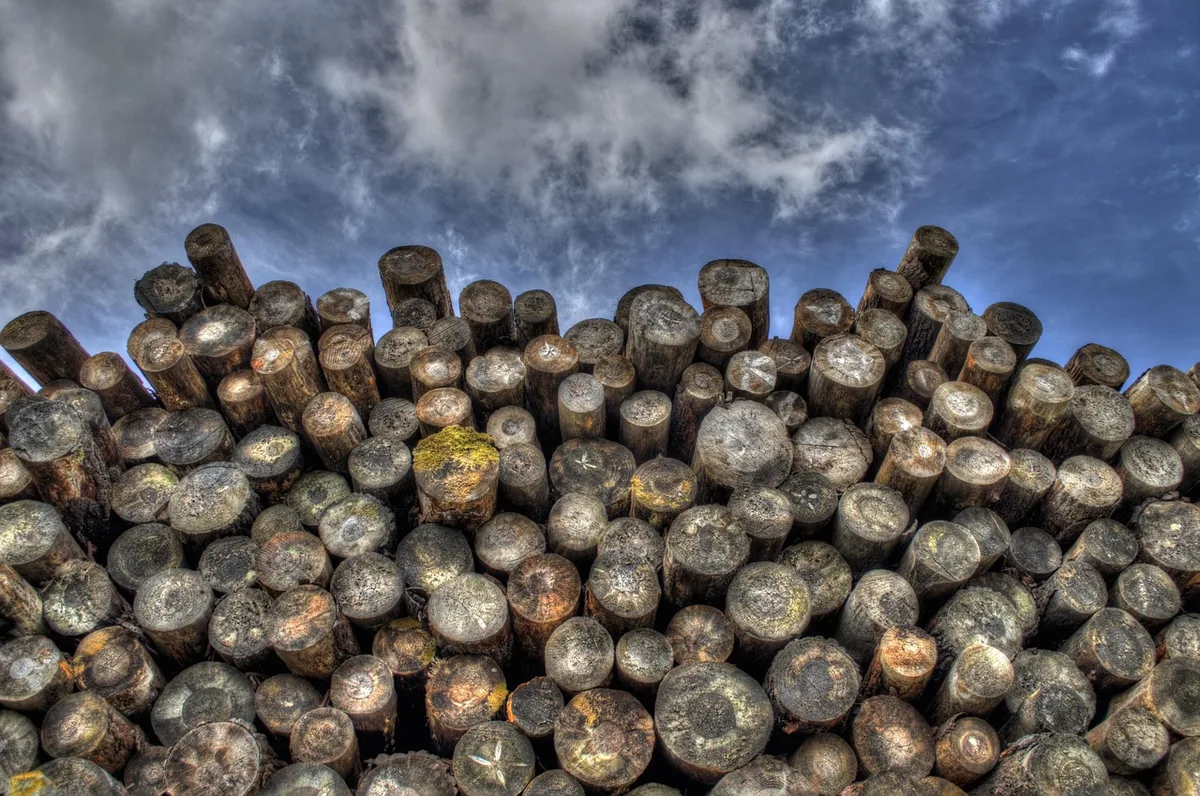
A stack of firewood is a thriving ecosystem — carpenter ants nesting in damp logs, bark beetles tunneling under bark, spiders hunting in the gaps, centipedes sheltering underneath, and sometimes termites feeding on ground-contact wood. Stacking firewood against your house or inside your garage is equivalent to building a pest bridge from the yard directly into your home.
The National Pest Management Association (NPMA) identifies improperly stored firewood as one of the top five preventable causes of residential pest problems. Every winter, pest control companies field calls from homeowners who brought firewood inside and triggered a mass emergence of dormant insects — carpenter ants streaming out of logs, bark beetles emerging from under bark, cluster flies awakening in warm air. These situations are entirely preventable with proper storage practices.
The good news: you don't need chemicals or expensive equipment. Correct firewood storage requires only four things — distance, elevation, airflow, and discipline about how much comes indoors at a time.
Distance — 20 feet minimum: Store firewood at least 20 feet from the house and never against an exterior wall. Carpenter ants and termites in a woodpile against the house will eventually find their way into the structure. The 20-foot buffer also prevents spiders, centipedes, and earwigs from using the woodpile as a staging area for entering the home. If space constraints make 20 feet impossible, 10 feet is the absolute minimum — but never stack wood directly against the foundation, siding, or porch.
Elevation — 6 inches off the ground: Stack wood on a metal rack, concrete blocks, or pallets at least 6 inches off the ground. Ground contact promotes moisture retention, fungal decay, and provides direct access for subterranean termites that forage through soil. Elevated wood dries faster (seasoned wood burns better), allows air circulation underneath, and eliminates the soil-to-wood pathway that termites use. Metal racks are ideal because they don't rot and don't provide additional harborage.
Cover the top, not the sides: A tarp, lean-to roof, or dedicated firewood cover sheds rain and snow from the top of the stack. But never wrap the entire stack in a tarp — enclosed wood traps moisture, promotes fungal growth, and creates the dark, humid environment that every wood-loving pest prefers. Air circulation through the sides is essential for drying and pest deterrence. If using a tarp, drape it over the top only and let it hang a few inches down the sides.
Burn oldest wood first (FIFO rotation): Rotate your stack so you burn the oldest wood first. Stack new deliveries on one end and take from the other. Wood that sits for more than one full season develops larger pest populations, higher moisture content, and more advanced fungal decay — all of which increase the chance of bringing pests inside.
Only bring in what you'll burn that day: This is the single most important rule. Don't stockpile firewood inside the house, garage, or mudroom — even overnight. The warmth of an indoor environment triggers dormant insects to emerge. Cluster flies, bark beetles, spiders, carpenter ants, and earwigs that were dormant in cold wood become active within hours of warming up. Bring in 2–3 logs at a time, directly before burning.
Carpenter ants: Nest in damp, decaying wood — particularly logs with soft, punky heartwood. Bringing infested logs inside doesn't establish a satellite colony immediately (they need specific conditions), but it introduces foraging workers into your home that may locate moisture-damaged structural wood. If carpenter ants are emerging from multiple logs, the entire batch may be compromised. Look for large black ants (⅜ to ½ inch) and sawdust-like frass pushed out of small holes.
Bark beetles and wood-boring beetles: Live under bark and in sapwood. Their larvae tunnel through wood, and adults emerge through small round exit holes. They won't infest your home's framing lumber (they require bark and specific moisture levels), but their emergence indoors is alarming — dozens of small beetles appearing on windowsills and walls — and creates unnecessary exterminator calls. Removing bark from firewood before stacking eliminates most beetle habitat.
Termites: Subterranean termites can infest firewood stored in direct ground contact, particularly logs sitting on soil for extended periods. Termites won't survive long in split, stacked, drying wood — but a woodpile against your foundation gives foraging termite colonies a direct pathway to your home's structural wood. This is the most consequential risk of improper firewood storage because termite damage costs an average of $3,000–$5,000 to repair.
Overwintering insects: Cluster flies, brown marmorated stink bugs, Asian lady beetles, and western conifer seed bugs all overwinter in stacked firewood. They enter a state of dormancy in cold temperatures but become active rapidly when warmed indoors. This is the most common source of winter insect complaints — seemingly spontaneous appearances of flies, beetles, or stink bugs from firewood brought inside.
Spiders, centipedes, earwigs, crickets: All shelter in the gaps between stacked logs. Wolf spiders are particularly common firewood inhabitants. Shake or brush off individual logs before bringing them inside — a quick inspection outside prevents most hitchhikers from entering your home.
Not all firewood pest colonization is equal. Some signs indicate normal incidental habitation (spiders sheltering in gaps), while others suggest the wood itself is compromised and should be burned promptly or kept far from the house:
Fine sawdust piles beneath logs (frass): Indicates active boring beetles or carpenter ants inside the wood. The insects are actively tunneling and will continue to emerge as long as the wood remains.
Soft, punky wood that crumbles when probed: Advanced fungal decay — this wood is prime habitat for carpenter ants and attracts moisture-dependent pests. Burn it immediately rather than storing it.
Mud tubes on log surfaces: Termite foraging tubes. If you see these, move the entire stack away from the house and inspect your foundation for additional termite evidence. Consider a professional termite inspection.
Ant trails on or between logs: Active foraging pathways, possibly connected to a colony nesting inside one or more damp logs. Large black ants (½ inch) are carpenter ants; small black ants are typically harmless pavement or field ants.
Moving firewood long distances is the primary vector for spreading some of the most destructive invasive forest pests in North America. The Don't Move Firewood campaign, supported by the USDA and state forestry departments, identifies firewood transport as responsible for introducing invasive species to new regions far faster than natural spread.
Emerald ash borer (EAB): Has killed hundreds of millions of ash trees across North America since its introduction. EAB larvae live under bark and are invisible from outside. Moving infested firewood has introduced EAB to dozens of new states and provinces. Many states now prohibit transporting firewood across state lines or more than 50 miles from its source.
Asian longhorned beetle (ALB): Attacks maple, birch, elm, and other hardwoods. ALB infestations have required the destruction of thousands of trees in affected areas. Firewood movement is a known pathway for ALB spread.
Spotted lanternfly: While primarily spread through egg masses on surfaces, firewood stored outdoors can harbor egg masses on bark surfaces. Transporting this wood moves the pest to new areas.
Spring: Inspect the remaining winter woodpile for moisture damage and pest evidence before adding new wood. Compost or burn any logs showing advanced decay, soft wood, or active pest tunneling. Clean the area under and around the rack — accumulated bark and debris harbor pests.
Summer: This is the optimal seasoning period. Freshly split wood should dry over summer for use the following winter. Ensure good air circulation and keep vegetation trimmed away from the woodpile — tall grass and weeds against the stack increase humidity and provide cover for pests.
Fall: Assess the stack for readiness. Well-seasoned wood (6+ months of drying) has cracks in the end grain, a hollow sound when knocked together, and moisture content below 20%. Wet or unseasoned wood burns poorly, produces more creosote, and harbors more pests than properly dried wood.
Winter: Active use period. Remember the daily rule — bring in only what you'll burn that session. Store the indoor-use logs in a metal firewood holder, not a pile on the floor, to contain any emerging insects.
Never store firewood indoors for more than a day. Even a small stack next to the fireplace serves as a pest reservoir. Indoor warmth causes dormant insects to emerge — sometimes hundreds of beetles, flies, or ants from a single batch of logs. Use a small metal firewood carrier that holds 3–5 logs maximum.
Never stack firewood against the house. This applies to every exterior wall, including the garage, shed, and porch columns. Wood against siding creates moisture traps that damage the structure and creates a direct pathway for wood-destroying insects to find structural lumber.
Never use pressure-treated or painted lumber as firewood. These contain chromated copper arsenate (CCA), creosote, or other chemicals that produce toxic smoke when burned. Only burn untreated natural wood.
At least 20 feet, elevated 6 inches off the ground on a rack or blocks. Never against an exterior wall. If 20 feet is impossible, 10 feet is the absolute minimum.
Yes. Firewood in ground contact attracts subterranean termites, and a woodpile against the foundation provides a foraging pathway directly to structural wood. Elevation and distance eliminate this risk.
Never. Burning treated wood releases toxic fumes. Proper storage — distance, elevation, airflow — prevents pest problems without chemicals.
Only a small amount for short-term use (1–2 days). Don't store large quantities in the garage — warmth causes dormant insects to emerge.
No. Firewood transport is the primary way emerald ash borer and other invasive species spread. Buy local, burn local. Many states have quarantine regulations with fines.
Carpenter ants, bark beetles, wood-boring beetles, spiders, centipedes, earwigs, crickets, cluster flies, stink bugs, and occasionally termites. Most are harmless hitchhikers prevented by shaking logs before bringing them inside.
Pest control content on the internet has grown dramatically in volume but not in average quality, and the signals that distinguish reliable sources from unreliable ones are worth knowing. Reliable content typically cites specific products by active ingredient rather than only by brand, references regional variation in pest pressure and treatment efficacy, acknowledges treatment failures and the conditions under which they occur, and avoids absolute claims about results. Unreliable content tends to make universal claims, recommend specific brand products without identifying alternatives, omit the conditions under which advice applies or fails, and write in a tone optimized for affiliate conversion rather than reader understanding. The other useful signal is whether the source discusses cost-benefit and threshold thinking — at what point does treatment become worth doing — versus only providing how-to instructions with the assumption that treatment is the right answer. Sources that engage with the decision dimension are usually more reliable than sources that skip past it. None of these signals are perfect, but applied consistently they filter out a meaningful portion of the lower-quality content that dominates search results for many pest topics.
An inspection is the cheapest tool in pest management, and homeowners systematically underspend on it. The economics are unambiguous: an annual or semiannual inspection costs a small fraction of what any moderate treatment costs, and it catches problems while they're still cheap to address. Termite damage detected in its first season requires perimeter treatment; the same damage discovered three years later may require structural repairs running into five figures. Rodent activity detected through droppings before nesting establishes requires sealing and a few traps; the same activity discovered after a multi-generation infestation has set up in wall voids requires removal, exclusion, sanitation, and sometimes drywall work. The pattern repeats across nearly every pest category. Even households that don't engage a regular pest service should treat the annual inspection as a baseline expense — equivalent to the way they probably treat HVAC tune-ups, gutter cleaning, or smoke detector battery changes. The marginal cost of one trained set of eyes on the property each year is one of the most defensible expenses in home maintenance.
Renovation work is one of the highest-value moments for pest intervention, and it's also one of the most consistently missed. When walls are open, when slabs are exposed, when crawlspaces are accessible, when sill plates are visible — these are the windows during which exclusion work, soil treatment, perimeter sealing, and harborage elimination can be done at a fraction of their normal cost and with dramatically better completeness. The same caulk-and-foam exclusion job that takes hours of awkward work after the fact can be done in minutes when the wall cavity is open. A pre-construction termite soil treatment is dramatically more effective than any post-construction equivalent, but it has to happen before the slab is poured. Even non-structural renovations like flooring replacement, kitchen rework, or basement finishing create windows during which the home's pest-relevant geometry can be improved. The cost of pulling in a pest professional during the renovation envelope, even just for an inspection and recommendations, is almost always recovered in reduced future treatment costs and avoided structural damage. The conversation to have with general contractors is whether they're willing to coordinate with a pest specialist during the open-wall phase, and most reputable contractors are, particularly on larger jobs where the small additional scheduling complexity is offset by the value-add for the homeowner.