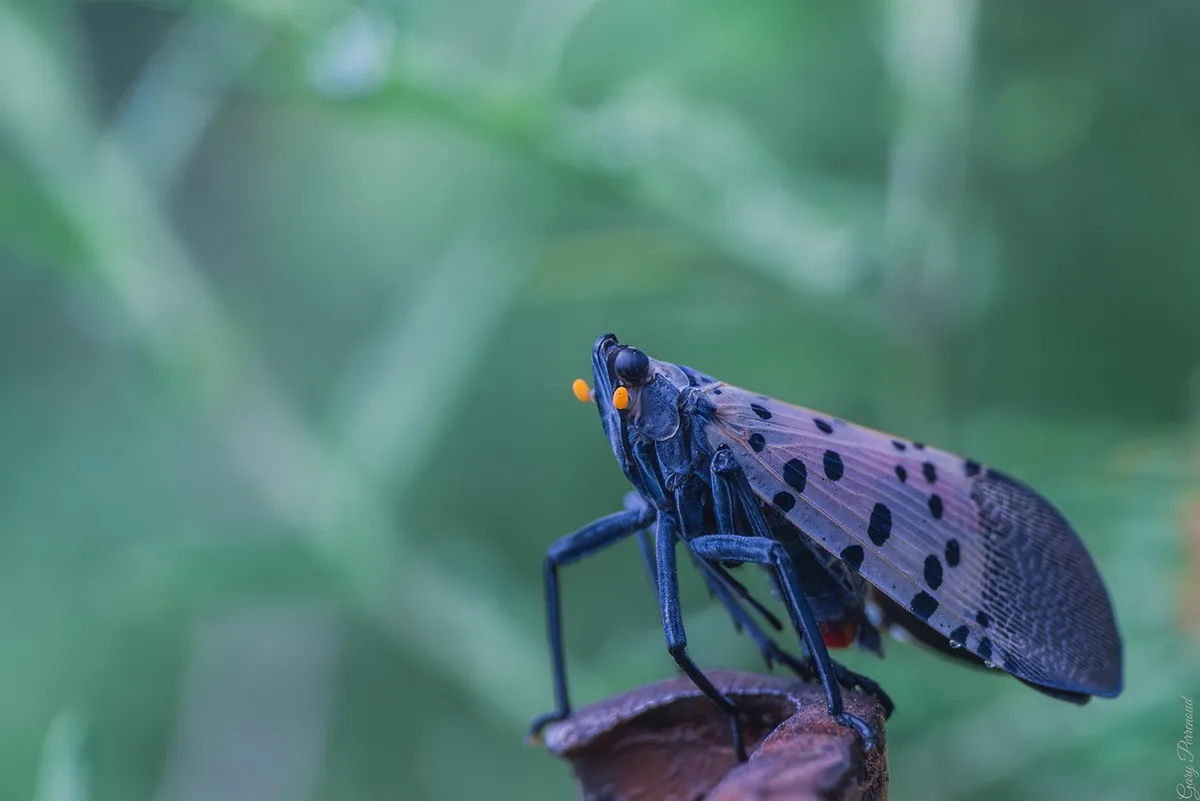
The spotted lanternfly — the polka-dotted planthopper that has spread across the eastern U.S. since it first turned up in Pennsylvania about a decade ago — just got a more worrying entry in the scientific record. Researchers compiling existing studies along with new field observations have expanded the list of plants the insect is known to feed on to 103 species worldwide. Of those, 56 are present in North America. The previous picture of what this pest will eat was already broad. This update makes it broader, and that has direct implications for how far the lanternfly can spread and how hard it is to contain.
For an invasive insect, the host-plant list is essentially a map of where it can go and how much damage it can do. A specialist pest that feeds on only one or two plants is, in a sense, self-limiting — run out of that plant and the infestation stalls. A generalist that can feed on dozens of species has far more room to establish, spread, and persist. The longer the host list, the more landscapes are vulnerable and the harder eradication becomes.
The spotted lanternfly was already known as a broad feeder, with a strong preference for tree-of-heaven (Ailanthus altissima), itself an invasive plant. The expanded count confirms that its appetite extends well beyond that favorite — into grapevines, hardwoods, fruit trees, and ornamentals — and that a majority of the plants it will use are already growing in North America. That's the part that should get attention: the food supply for this pest is not a limiting factor here.
Spotted lanternflies don't bite people or pets and they don't damage homes structurally, which leads some homeowners to write them off as merely gross. The economic threat is real, though, and it concentrates in agriculture — grapes and vineyards in particular, where heavy feeding can weaken or kill vines, plus various tree fruits and hardwoods. As the insects feed, they excrete a sugary substance called honeydew that coats leaves, cars, decks, and furniture and grows a black sooty mold, which is the part most suburban residents end up dealing with directly.
A wider confirmed host range raises the ceiling on potential agricultural losses and complicates the quarantine-and-contain strategy that states have used to slow the spread. It's a reminder that the lanternfly is an economic pest first, even if homeowners experience it as a sticky, swarming nuisance.
The wider host list doesn't change the front-line advice, but it does raise the stakes on following it. The single most valuable thing an individual can do is help limit the spread.
Learn to recognize all the life stages. This is where most people go wrong. The early nymphs look nothing like the showy spotted adult — they're small and black with white spots, and they're routinely mistaken for ticks or beetles. Later nymphs turn red with black and white markings before the winged adult appears in late summer. If you only know the adult, you'll miss the bug during the months when it's easiest to knock back. Our complete spotted lanternfly profile shows each stage.
Scrape egg masses in fall and winter. The insect overwinters as grayish, mud-like egg masses laid on tree bark, stone, outdoor furniture, vehicles, and equipment. Scraping them into a bag with rubbing alcohol or hand sanitizer destroys the next generation before it hatches.
Don't move it. Much of the lanternfly's long-distance spread is human-assisted — egg masses and adults hitchhiking on cars, trailers, firewood, and outdoor gear. Check your vehicle and equipment before traveling out of an infested area, and don't transport firewood. Our guide to preventing spotted lanternfly spread covers the inspection routine.
Report sightings if you're in a new area. If you spot one in a region where it hasn't been established, your state agriculture department or local extension office wants to know. Early detection is what gives a containment program a chance.
A host-plant list growing to 103 species, with more than half of them already present in North America, confirms what entomologists have suspected: the spotted lanternfly is a true generalist with plenty to eat across the continent. That makes eradication unlikely and containment the realistic goal — and containment depends heavily on ordinary people recognizing the bug at every life stage, destroying egg masses, and not giving it a free ride to the next county.