On this page
How to identify it
Look-alikes
| Look-alike | How to tell them apart |
|---|---|
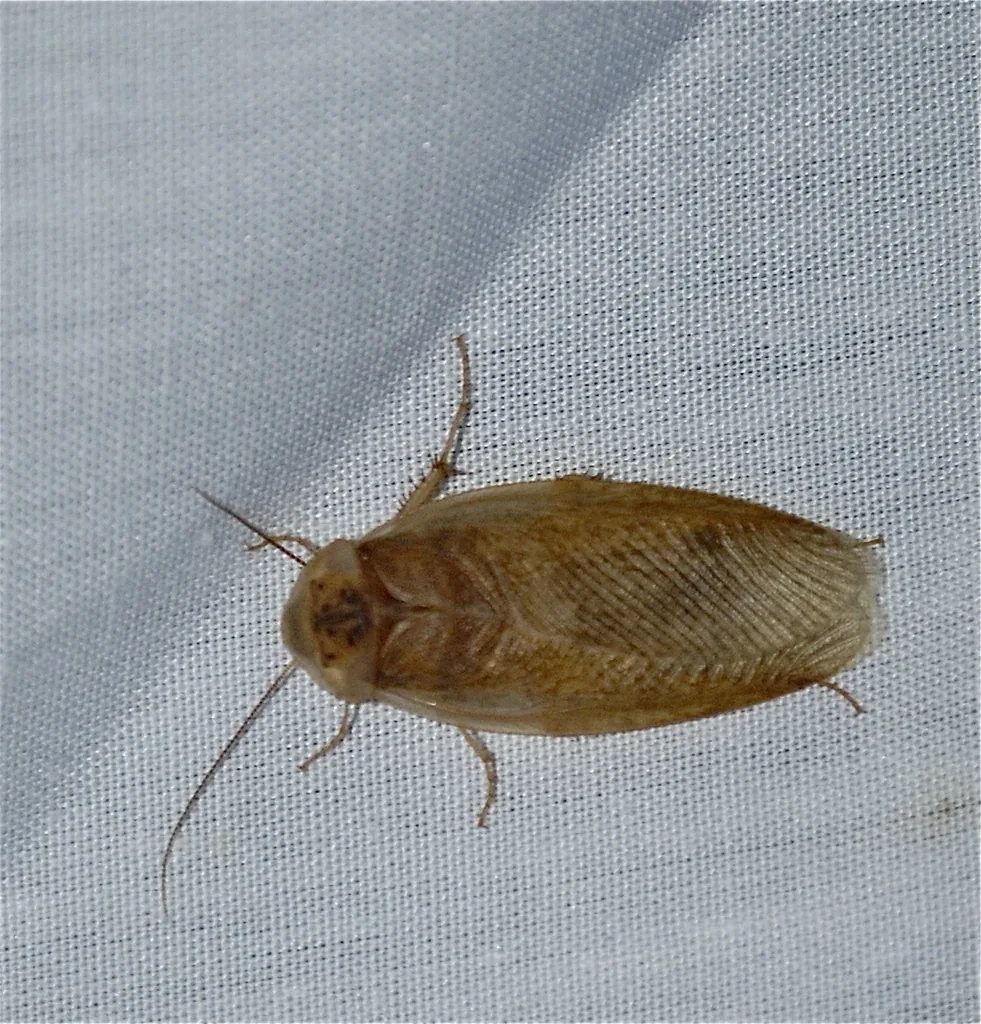
| House-infesting cockroaches | A single pale, winged roach that comes in through a door at night in desert areas is likely a desert cockroach male, which won't live indoors, rather than a roach breeding inside.[1] |
Where it lives
Native to dry habitats of the Southwest and Mexico; a 2014 revision of the genus described 39 new species, raising the total from 9 to 48.[2][1]
Biology and life cycle
Females and nymphs live underground in sand, and adults appear in summer.[1][2]
In a laboratory study, adult males lived less than two months after their final molt.[3]
Damage and signs
- They live entirely outdoors in sandy soil and are not considered pests.[1]
Health risk
They are not pests and are not known to live indoors.[1]
Control
Keep them out
The winged males are drawn to lights at night, so keeping doors and screens closed when lights are on keeps them out; they won't survive or breed indoors.[1]
Common questions
- What is the pale, winged cockroach at my porch light?
- In the Southwest, a pale tan, flat roach with long wings that flies to lights at night is likely a male desert (sand) cockroach.[1][2]
- Will desert cockroaches infest my house?
- No; they live outdoors in sandy soil and are not known to live indoors.[1]
Sources
- University of New Mexico, Museum of Southwestern Biology, “Desert Sand Cockroach (arthropods gallery).” msb.unm.edu/divisions/arthropods/resources/arthropods%20gallery/desert-sand-cockroach.html (accessed 2026-10-17)
- Entomology Today (Entomological Society of America), “39 New Species of Cockroach Discovered in the Southwestern US and Mexico (February 27, 2014).” entomologytoday.org/2014/02/27/39-new-species-of-cockroach-discovered-in-the-southwestern-us-and-mexico/ (accessed 2026-10-17)
- Entomological Society of Washington, “Biology of a desert sand cockroach, Arenivaga investigata (Proceedings of the Entomological Society of Washington 85(3): 598-600, 1983; Internet Archive copy).” archive.org/download/biostor-75269/biostor-75269.pdf (accessed 2026-10-17)
- iNaturalist, “Arenivaga taxon page (order and family).” www.inaturalist.org/taxa/122620 (accessed 2026-10-06)