On this page
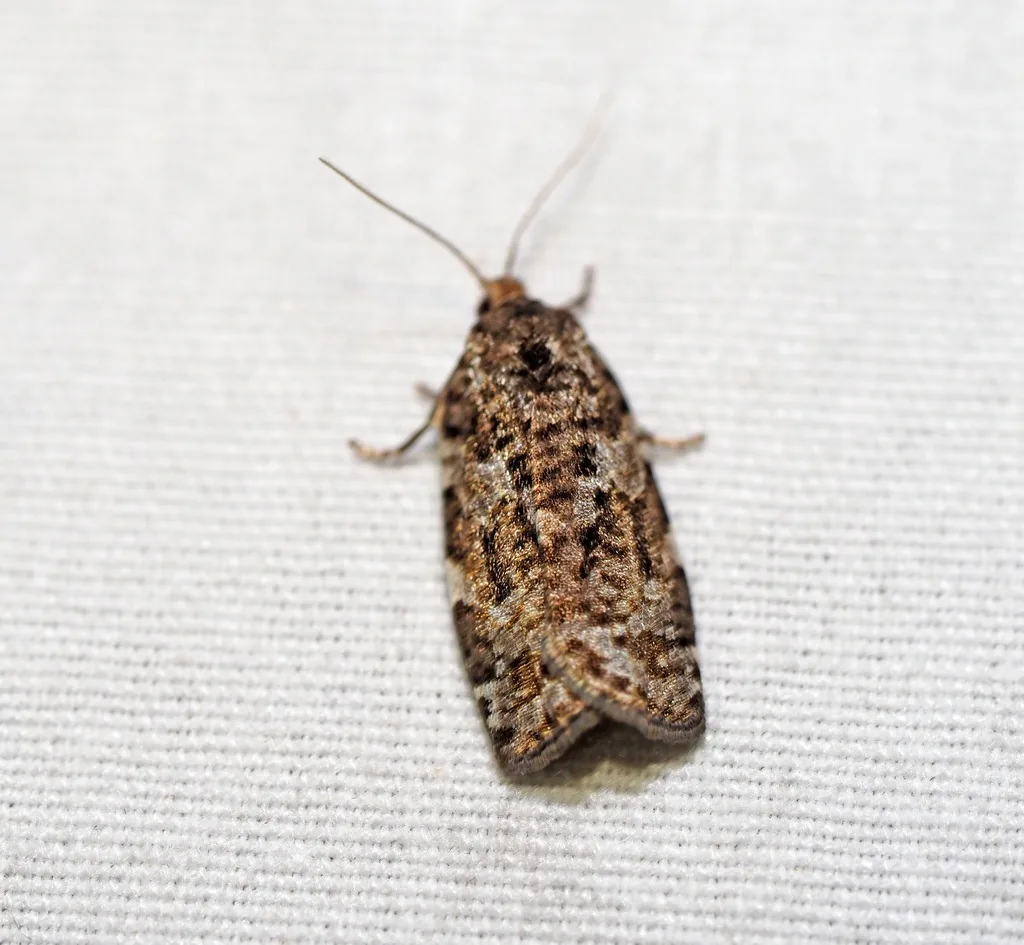
How to identify it
Look-alikes
| Look-alike | How to tell them apart |
|---|---|
| Western spruce budworm | A related budworm of western conifers.[1] |
Where it lives
Native across northern coniferous forests; in New England it is usually a concern only in the north, and it has been active in Minnesota every year since at least 1954.[1][2]
Biology and life cycle
There is one generation a year; females lay eggs in clusters of 10 to 150 on needles in July and August, and moths can ride winds as far as 50 miles.[1]
First-instar larvae feed little, overwinter as second instars and resume heavy feeding the next spring.[1]
Damage and signs
Health risk
Control
Prevention
In forests, thinning, avoiding overmature stands and reducing reliance on fir lower outbreak risk.[1][2]
Biological control
Parasitic wasps and flies and bad weather help regulate populations.[1]
Pesticides
Spraying forests is expensive and not very successful, but it is an option for saving yard trees.[2]
Common questions
Sources
- UMass Extension Landscape, Nursery and Urban Forestry Program (Landscape Insect & Mite Guide), “Choristoneura fumiferana (Spruce Budworm).” www.umass.edu/agriculture-food-environment/landscape/publications-resources/insect-mite-guide/choristoneura-fumiferana (accessed 2026-10-16)
- University of Minnesota Extension (Forestry), “Eastern spruce budworm.” extension.umn.edu/natural-resources/forestry-and-wildlife/forestry/forest-pests-and-diseases/eastern-spruce-budworm (accessed 2026-10-16)
- iNaturalist, “Choristoneura fumiferana taxon page (order and family).” www.inaturalist.org/taxa/208521 (accessed 2026-10-06)