On this page
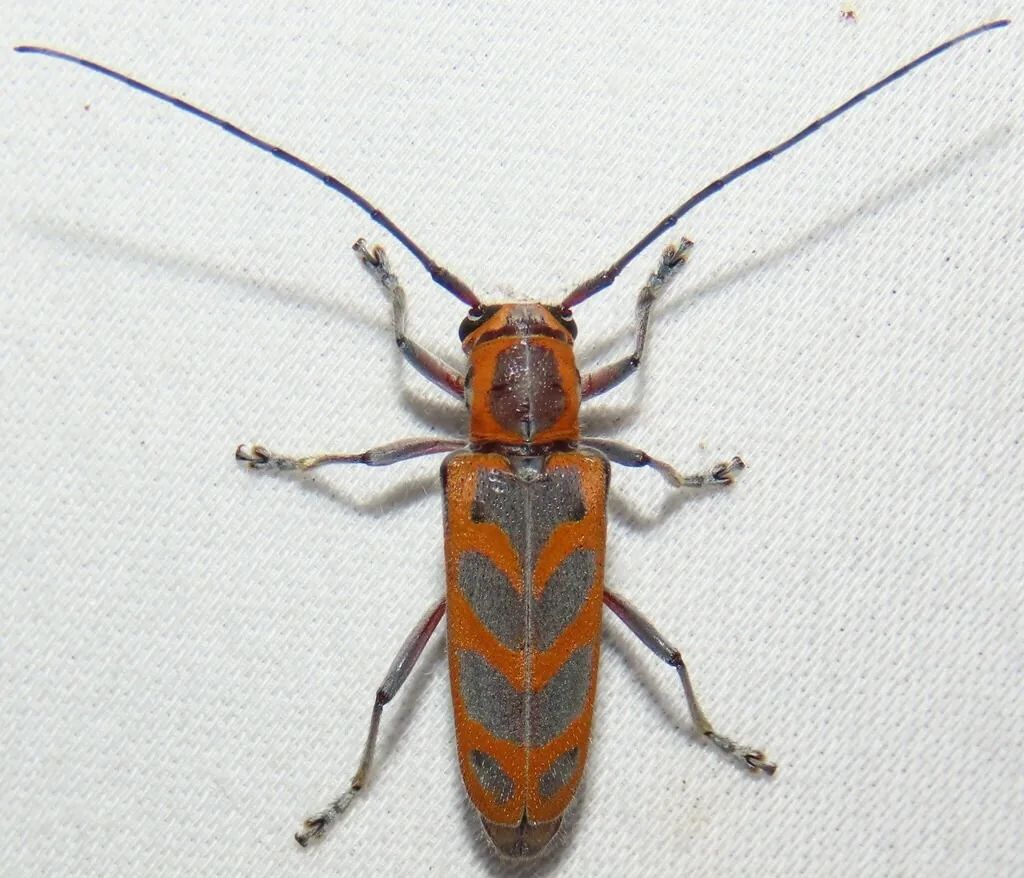
How to identify it
Look-alikes
| Look-alike | How to tell them apart |
|---|---|
| Elm bark beetles | The elm borer can carry the Dutch elm disease fungus but is not its main vector; elm bark beetles are.[1] |
Where it lives
Found where American elm grows, including Missouri and Minnesota.[1][2]
Biology and life cycle
Larvae bore galleries under the bark of elm trees.[1]
Adults are seen outdoors from May to August, but indoors they most often appear in winter.[1][2]
Damage and signs
Health risk
Harmless to people.[2]
Control
Prevention
Indoors no wood treatment is called for: the beetle is harmless to people and does not re-infest the wood it emerged from.[2]
Common questions
Sources
- Missouri Department of Conservation, “Elm Borer (Field Guide).” mdc.mo.gov/discover-nature/field-guide/elm-borer (accessed 2026-10-16)
- University of Minnesota Extension (What insect is this?), “Elm borer.” apps.extension.umn.edu/garden/diagnose/insect/indoor/beetles/medium/elmborer.html (accessed 2026-10-16)
- iNaturalist, “Saperda tridentata taxon page (order and family).” www.inaturalist.org/taxa/144007 (accessed 2026-10-06)