On this page
How to identify it
Where it lives
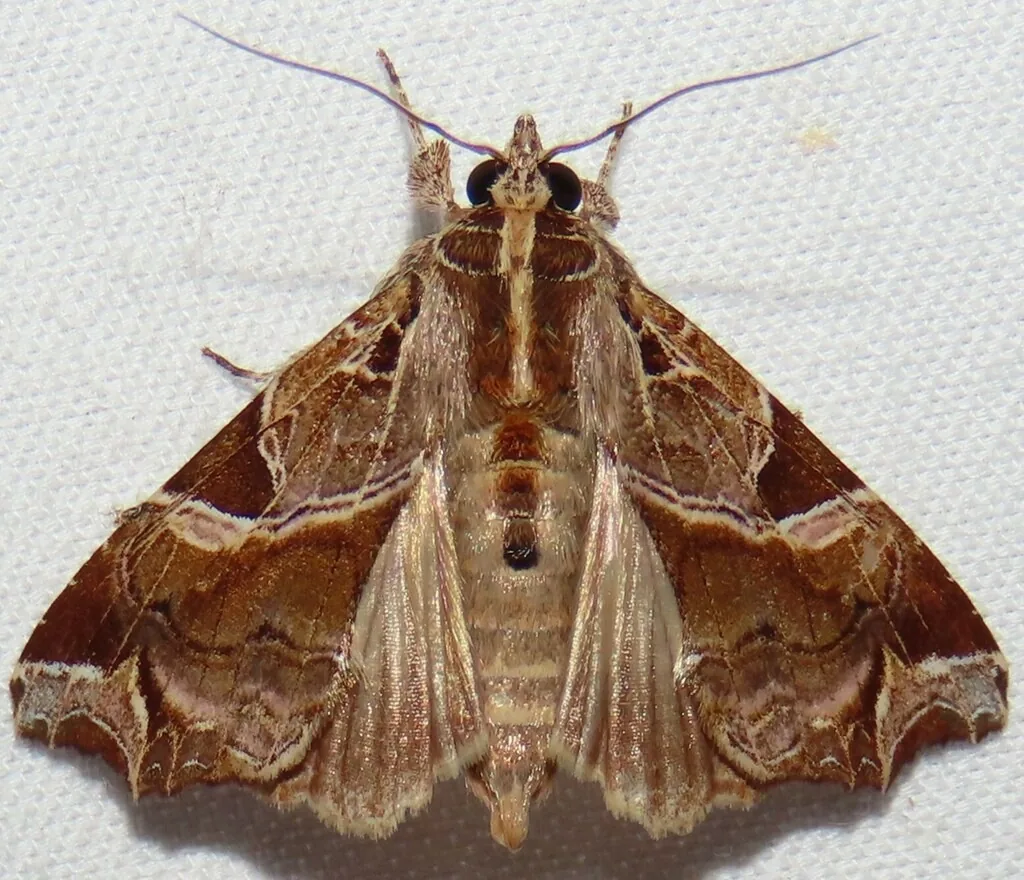
Native to Florida and tropical America; it appears in greenhouses farther north, including Michigan, on plants shipped from the South.[1][2][3]
Biology and life cycle
Eggs are laid singly under fern leaflets near the tips, about 465 per female in one study, and hatch in 5 to 7 days.[1][3]
Young caterpillars feed at night on tender leaflets; older ones hide on the stems at the base of the plant or in the soil by day, and mature in about 36 days.[1]
Damage and signs
Health risk
Control
Traps and physical control
Shake infested ferns to dislodge caterpillars, and inspect new ferns before bringing them into a greenhouse.[1][3]
Biological control
A Bt product labeled for caterpillars (not a mosquito strain) controls them.[2]
Pesticides
Ferns are sensitive to many liquid pesticides; NC State suggests a dust, and Michigan State notes resistance to some pyrethroids.[1][3]
Common questions
Sources
- NC State Extension, “Florida Fern Caterpillar (PDIC Factsheet).” content.ces.ncsu.edu/florida-fern-caterpillar-1 (accessed 2026-10-16)
- Mississippi State University Extension (Bug's Eye View), “Florida Fern Caterpillar (Bug's Eye View, Vol. 3, No. 24, 2017).” extension.msstate.edu/newsletters/bugs-eye-view/2017/florida-fern-caterpillar-vol-3-no-24 (accessed 2026-10-16)
- Michigan State University Extension, “Florida fern caterpillar larvae found on Boston ferns in greenhouses (2015).” canr.msu.edu/news/florida_fern_caterpillar_larvae_found_on_boston_ferns_in_greenhouses (accessed 2026-10-16)
- iNaturalist, “Callopistria floridensis taxon page (order and family).” www.inaturalist.org/taxa/143649 (accessed 2026-10-06)