On this page
How to identify it
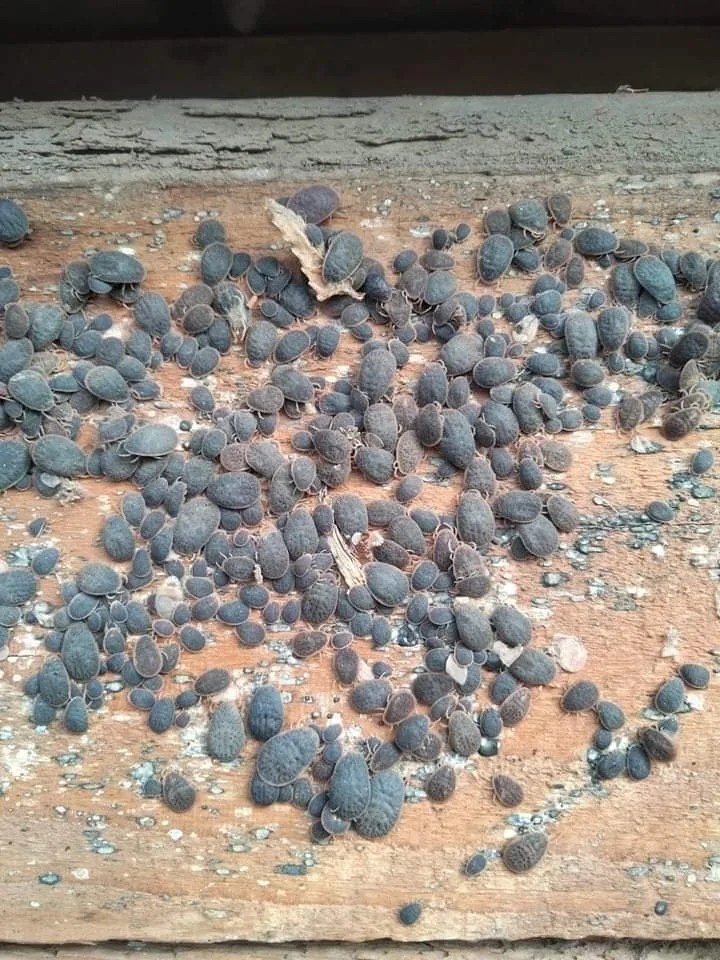
- Adults are light reddish brown to dark brown with wrinkled skin and about 6 to 9 mm (0.24 to 0.35 inch) long; as soft ticks they look very different from the hard ticks found on dogs and cats.[1]
- They hide in cracks and crevices near the roosts during the day, so the best time to find them on birds is at night, when they feed.[2][1]
Look-alikes
| Look-alike | How to tell them apart |
|---|---|
| Chicken mite (red mite) | Also hides in the coop by day and feeds at night, but it is a tiny mite rather than a tick up to about a third of an inch long.[1] |
Where it lives
Changes in poultry housing have nearly eliminated it from commercial flocks, but it still turns up in small backyard flocks; UF/IFAS covers it as a poultry pest in Florida.[1][2]
Biology and life cycle
A female lays several batches of eggs, about 25 to 100 or more per batch and 700 or more in her lifetime, and needs a blood meal for each batch; under favorable conditions development from egg to adult takes about 30 days.[2][1]
Larvae stay on the bird for up to five days while feeding; nymphs and adults feed at night, adults engorging in 30 to 45 minutes, and return to their hiding places after each meal.[2][1]
Adults can survive more than a year without a blood meal, so leaving a coop empty for a long time usually won't get rid of them.[1][2]
Damage and signs
Health risk
Both sources describe it as a parasite of poultry; neither reports bites on people.[2][1]
Control
Prevention
Use screens and other barriers to keep wild birds and rodents out of the coop.[1]
Sanitation
Sanitation is the best control: remove ticks from their hiding places, eliminate or seal cracks and crevices near the roosts, and clean out litter where ticks hide.[2][1]
Pesticides
Pyrethroid treatments of the poultry house help but aren't completely effective, so getting rid of fowl ticks takes persistent effort; use products labeled for the site.[2][1]
Common questions
Sources
- University of Kentucky Cooperative Extension (Animal and Food Sciences), “Common External Parasites of Poultry (ASC-206, J. Jacob and T. Pescatore; revised September 2017).” web.archive.org/web/20241116021457/afs.ca.uky.edu/sites/afs.ca.uky.edu/files/ASC206.pdf (accessed 2026-10-17). Archived copy (Internet Archive, captured 2024-11-16); the original page https://afs.ca.uky.edu/sites/afs.ca.uky.edu/files/ASC206.pdf returns 404 (file removed).
- UF/IFAS Extension (EDIS), “External Parasites of Poultry (ENY-290/IG140, P. E. Kaufman; reviewed July 2022).” web.archive.org/web/20251220211336/edis.ifas.ufl.edu/publication/IG140 (accessed 2026-10-17). Archived copy (Internet Archive, captured 2025-12-20); the original page https://edis.ifas.ufl.edu/publication/IG140 returns 410 Gone (publication retired from EDIS).
- iNaturalist, “Argas persicus taxon page (order and family).” www.inaturalist.org/taxa/263516 (accessed 2026-10-06)