On this page
How to identify it
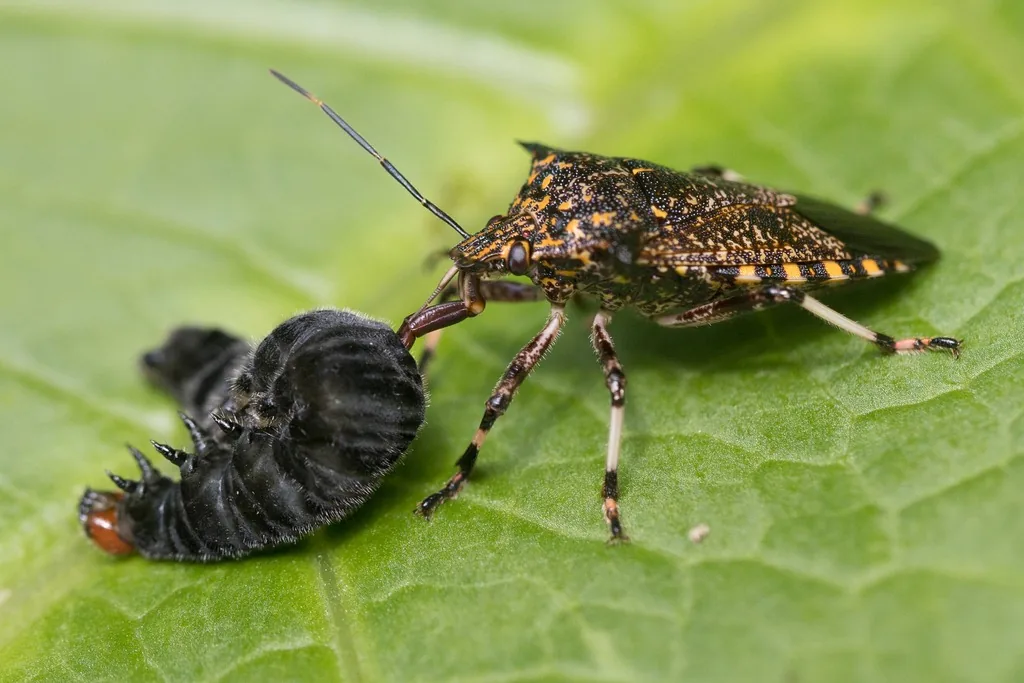
- Adults are 3/4 to 1 inch long, flat and speckled brown, with a double-pointed spine on each shoulder and a short stabbing beak.[1][2]
- The wing tips lack speckles and are shinier and veined; the abdomen edges are spotted.[2]
- Young nymphs are blue-black with red abdomens; older nymphs are blue-black with red keels on the thorax and grow up to about 5/8 inch.[1][2]
Look-alikes
| Look-alike | How to tell them apart |
|---|---|
| Florida predatory stink bug | Its first-stage nymphs are hard to tell from Euthyrhynchus floridanus nymphs; both have blue-black fronts and red abdomens.[1] |
Where it lives
Found in the southern United States, south to Mexico, Colombia and Brazil; Florida records cover the whole peninsula.[1]
Biology and life cycle
Eggs are laid 100 to 200 at a time in masses usually four to five rows wide.[1][2]
Nymphs stay in groups and pass through five stages; in the lab, egg to adult took about 59 to 60 days.[1][2]
Nymphs begin capturing prey in the second stage.[1]
Damage and signs
Health risk
Control
Traps and physical control
Usually leave it alone; where it is eating catalpa sphinx caterpillars kept as fish bait, pick the bugs off by hand into soapy water, since insecticides would kill the caterpillars too.[2]
Common questions
Sources
- University of Florida IFAS Extension (EDIS, Featured Creatures), “Predatory Stink Bug, Alcaeorrhynchus grandis (EENY-165).” ask.ifas.ufl.edu/publication/IN322 (accessed 2026-10-16)
- NC State Extension, “Giant Strong-Nosed Stink Bug (PDIC Factsheet).” content.ces.ncsu.edu/giant-strong-nosed-stink-bug (accessed 2026-10-16)
- iNaturalist, “Alcaeorrhynchus grandis taxon page (order and family).” www.inaturalist.org/taxa/296201 (accessed 2026-10-06)