On this page
How to identify it
Where it lives
Reported from North Carolina, Mississippi and other states, wherever rose of Sharon and hibiscus grow.[1][2]
Biology and life cycle
Adults overwinter in leaf litter; starting in late April and May, females lay eggs in masses of 1 to 36 on the plants.[1]
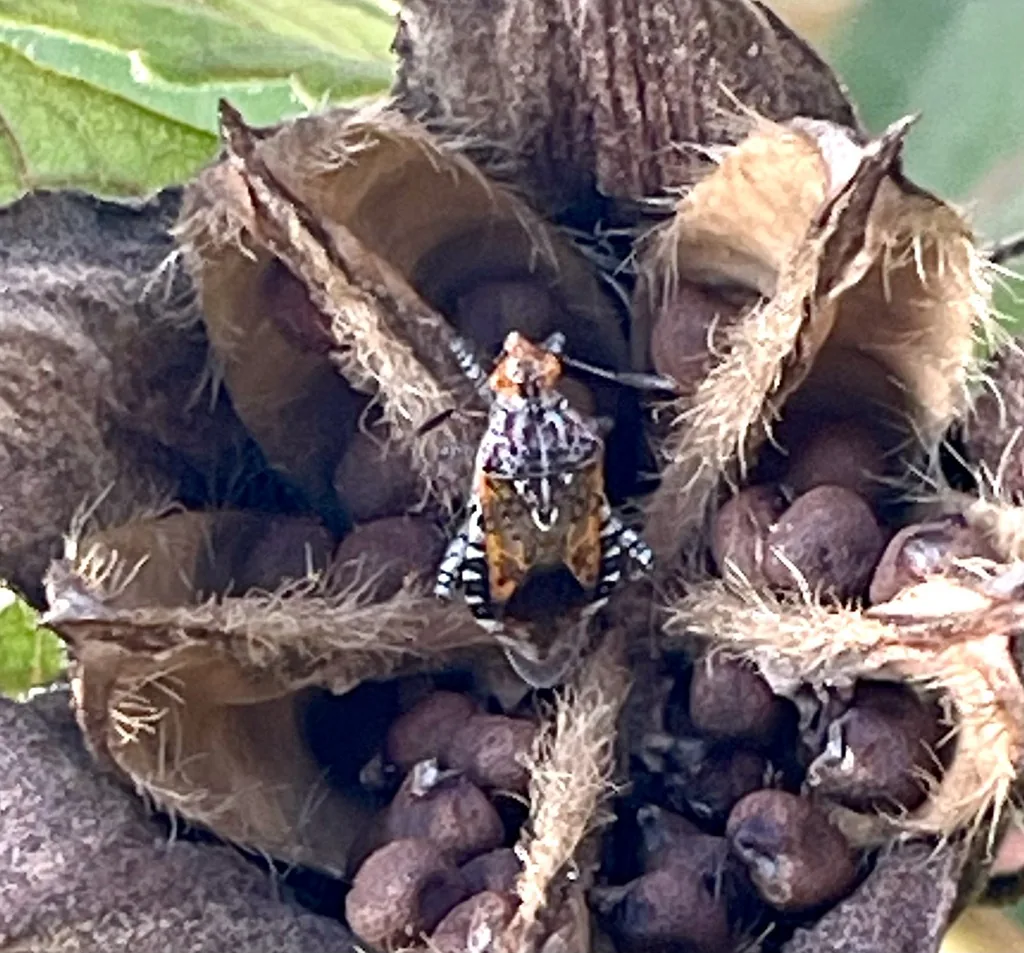
The bugs are most noticeable in late summer and fall, congregating on seed pods.[2]
Damage and signs
Health risk
Control
Traps and physical control
Control is usually unnecessary; pick bugs off by hand if they bother you.[1][2]
Pesticides
If they become abundant, treat buds and spent blooms with a product labeled for plant bugs, avoiding open flowers to protect pollinators.[1]
Common questions
Sources
- NC State Extension, “Hibiscus Scentless Plant Bug (PDIC Factsheet).” content.ces.ncsu.edu/hibiscus-scentless-plant-bug (accessed 2026-10-16)
- Mississippi State University Extension (Bug's Eye View), “Hibiscus Plant Bug (Bug's Eye View, Vol. 5, No. 29, 2019).” extension.msstate.edu/newsletters/bugs-eye-view/2019/hibiscus-plant-bug-vol-5-no-29 (accessed 2026-10-16)
- iNaturalist, “Niesthrea louisianica taxon page (order and family).” www.inaturalist.org/taxa/479475 (accessed 2026-10-06)